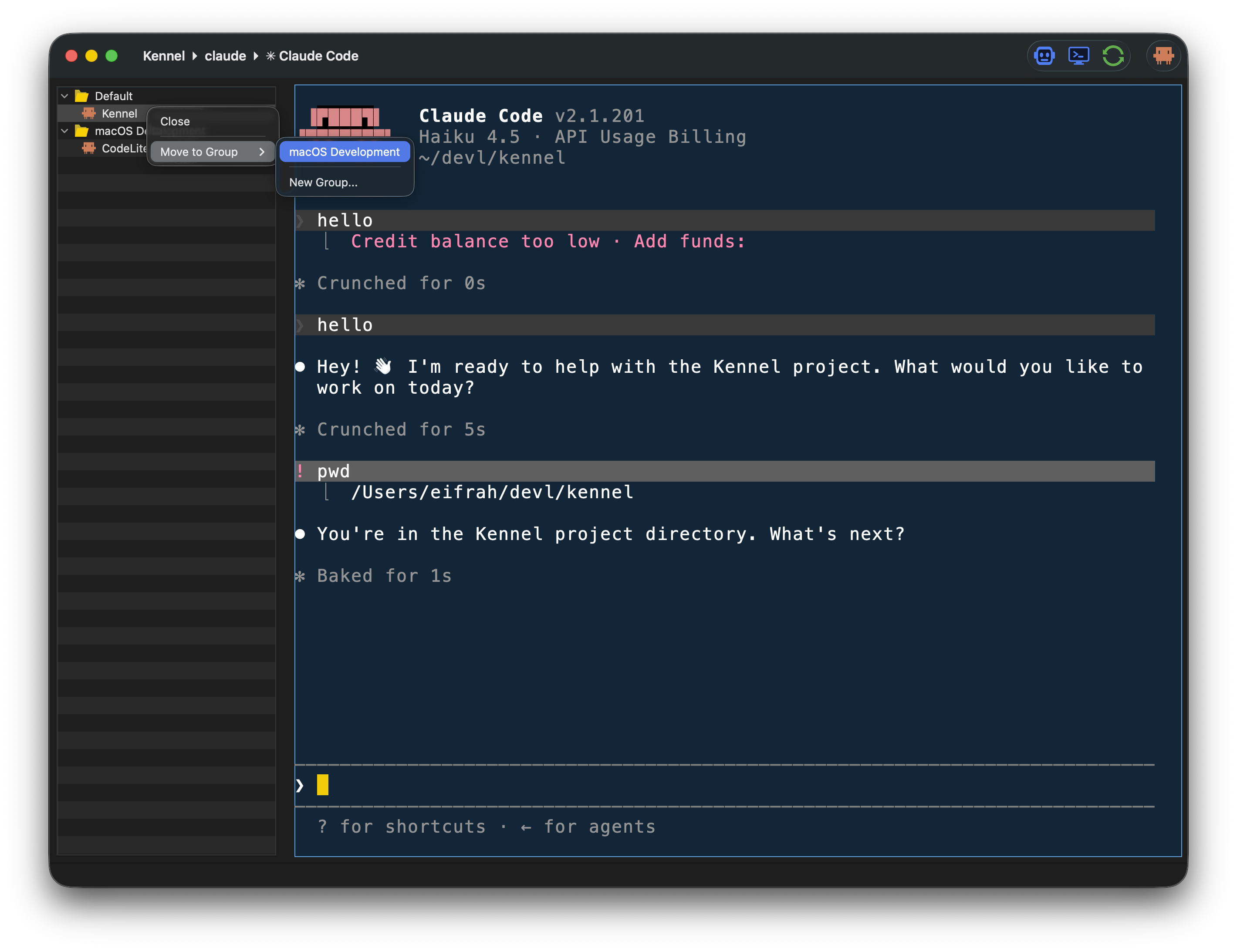
Developers have introduced Kennel — a cross-platform desktop application designed for the centralized management of interactive AI CLI agents, such as Claude Code, Kiro CLI, or OpenAI Codex.

What Happened
The Kennel application allows you to group sessions in a single window using a sidebar and provides full functionality via PTY (pseudo-terminal), supporting interactivity, colors, and prompts. A key technical feature is the ability to save session states between application or system restarts by utilizing the native continuation flags of agents, such as --continue or --resume.
Context
With the emergence of autonomous CLI agents, developer workflows have become fragmented. Existing tools often lack session persistence, turning work with them into a series of ephemeral chats that require constant manual context management.
Why It Matters for the Industry
The emergence of specialized interfaces like Kennel signals a shift from one-off AI interactions to full-fledged management environments for agentic sessions. This creates a workflow management abstraction layer for CLI-oriented tools, laying the foundation for the development of specialized Agentic IDEs, where session state management will become a core function.
Why It Matters for Users
For developers using AI agents via the command line, Kennel reduces the cognitive load when switching between tasks and eliminates the need to hunt through scattered terminal tabs. Users gain the ability to instantly return to unfinished dialogues with agents without fear of losing progress when closing a window or restarting a system.
What Is Not Yet Known / Limitations
There are varying assessments regarding the scalability of the solution: while some see this as a new UX pattern for an Agent Dashboard, experts point to the potential limitations of the current desktop architecture for large-scale corporate sectors.
Sources
Author
Look at AI, Editorial Team