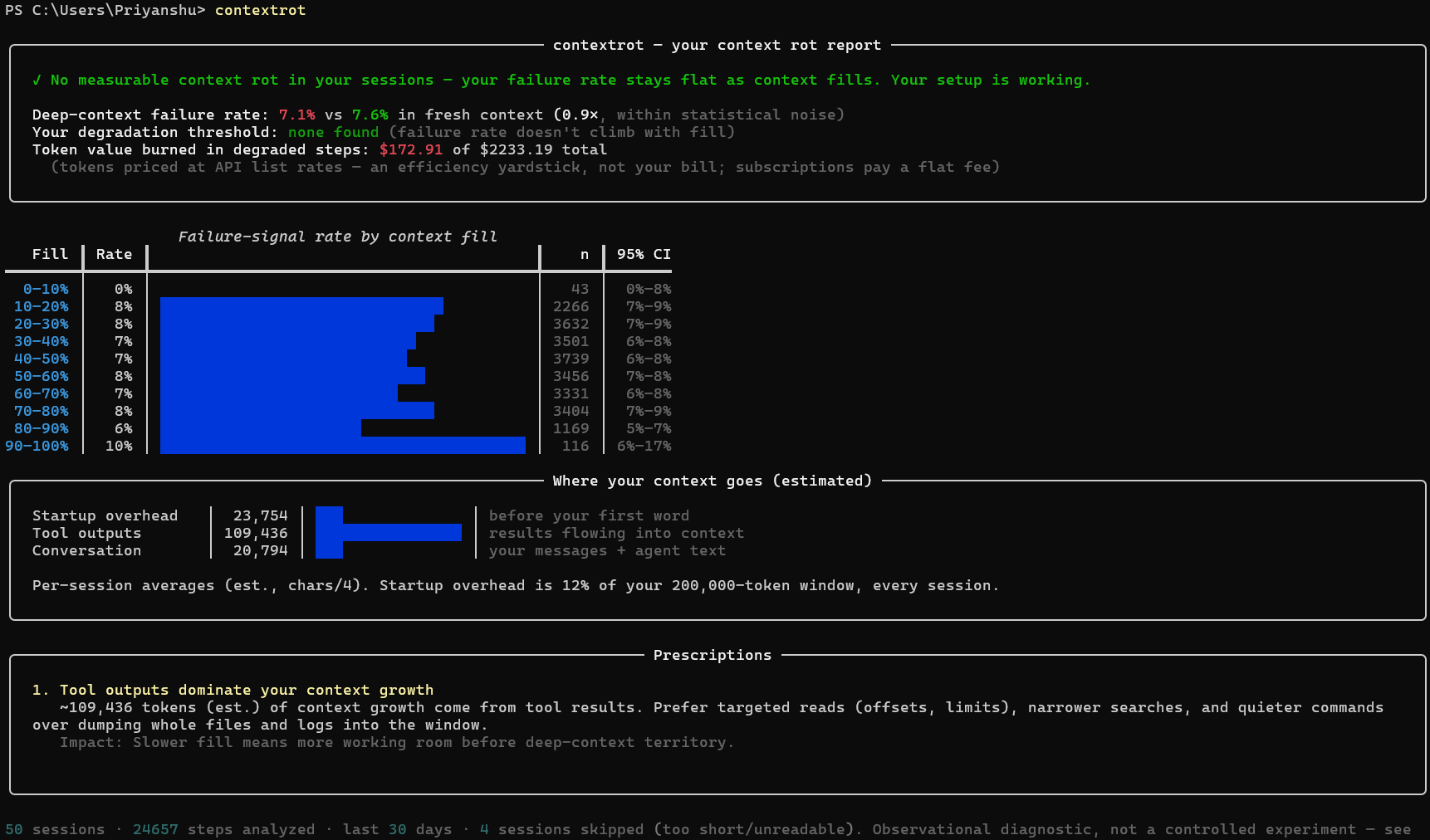
The open-source tool contextrot has been introduced, designed to identify the moment of "context rot" in AI agents, such as Claude Code, as their context window becomes saturated.
What Happened
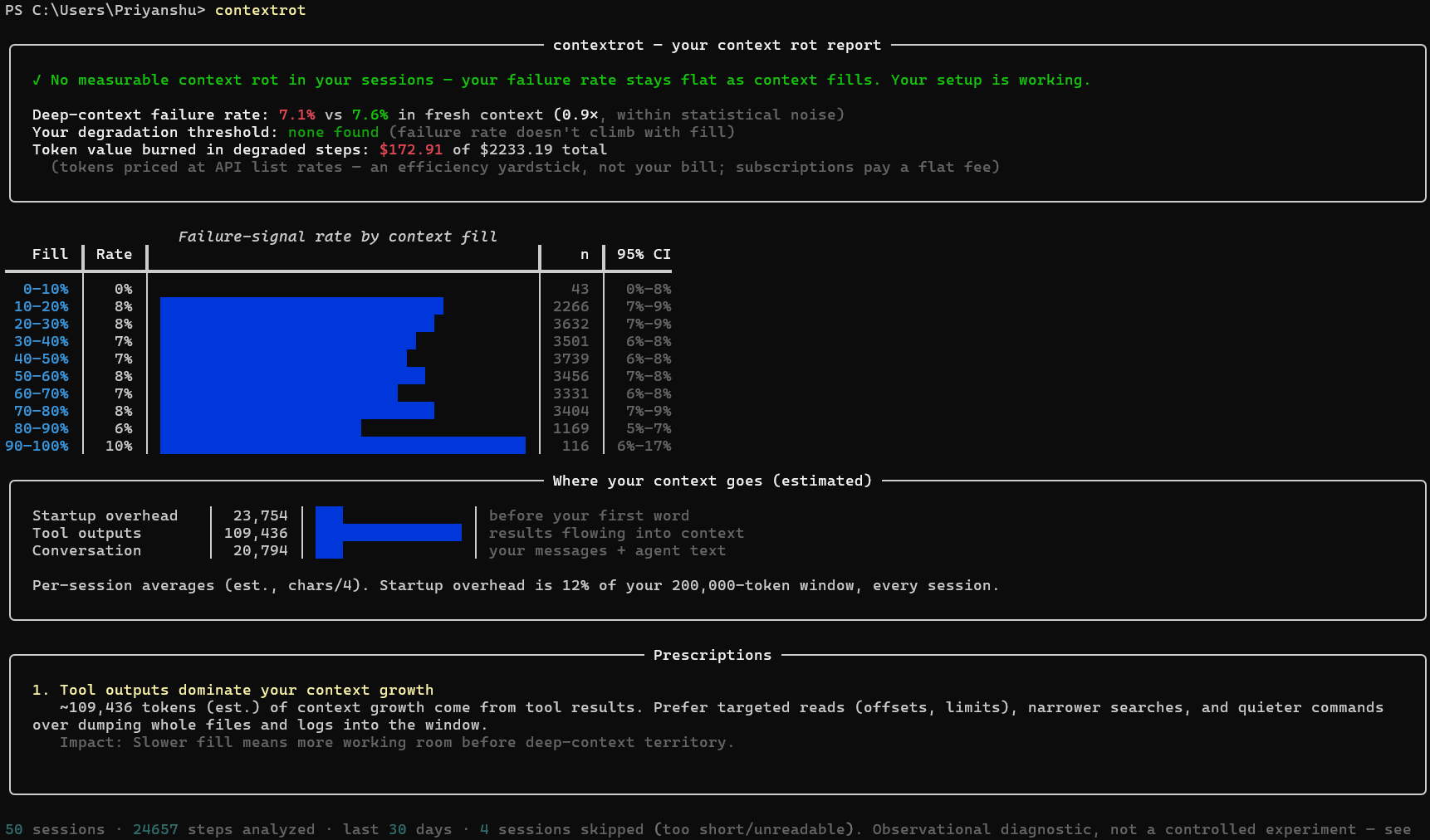
A developer has introduced the contextrot utility, which analyzes local session logs of AI agents. The tool enables the detection of specific performance degradation patterns, including code editing errors, the emergence of infinite retry loops, and excessive file re-reading.
Context
The problem of model quality degradation in long contexts remains highly relevant. Traditional synthetic benchmarks often fail to reflect the actual behavior of agents during real-world work cycles, whereas analyzing actual session logs provides a more objective picture of LLM limitations in practical tasks.
Why It Matters for the Industry
The tool allows for a transition from laboratory testing to real-world performance assessment of agents under user workloads. This paves the way for creating new standards for evaluating long-context reliability and integrating monitoring mechanisms directly into Integrated Development Environments (IDEs) or the runtime layers of autonomous systems.
Why It Matters for Users
Users can utilize contextrot to audit the efficiency of their AI assistants, helping them understand exactly when a model begins to malfunction due to information overload. This allows for timely session length management, optimized token usage, and avoids wasting time correcting agent errors.
Sources
Author
Look at AI, Editorial Team