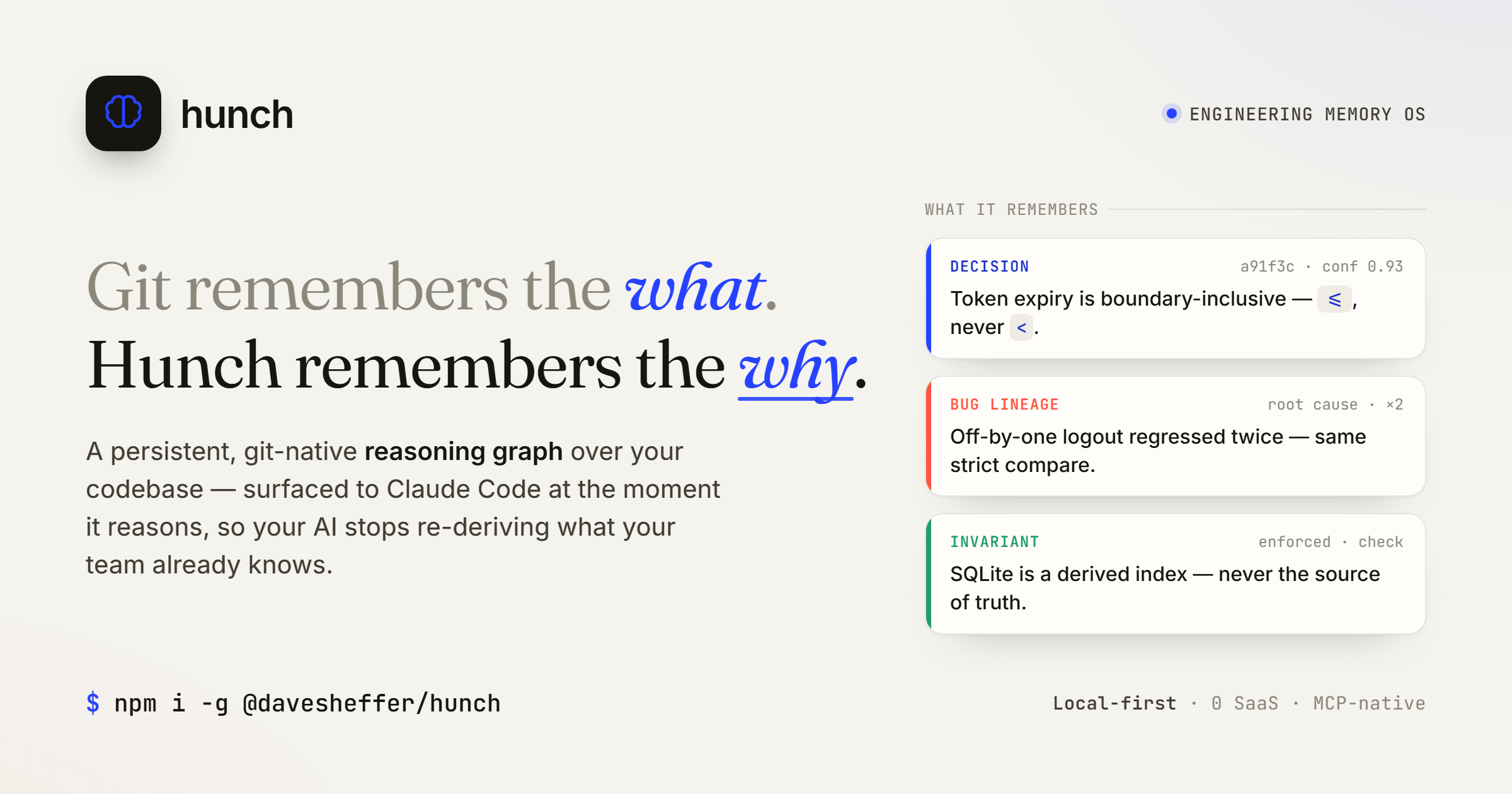
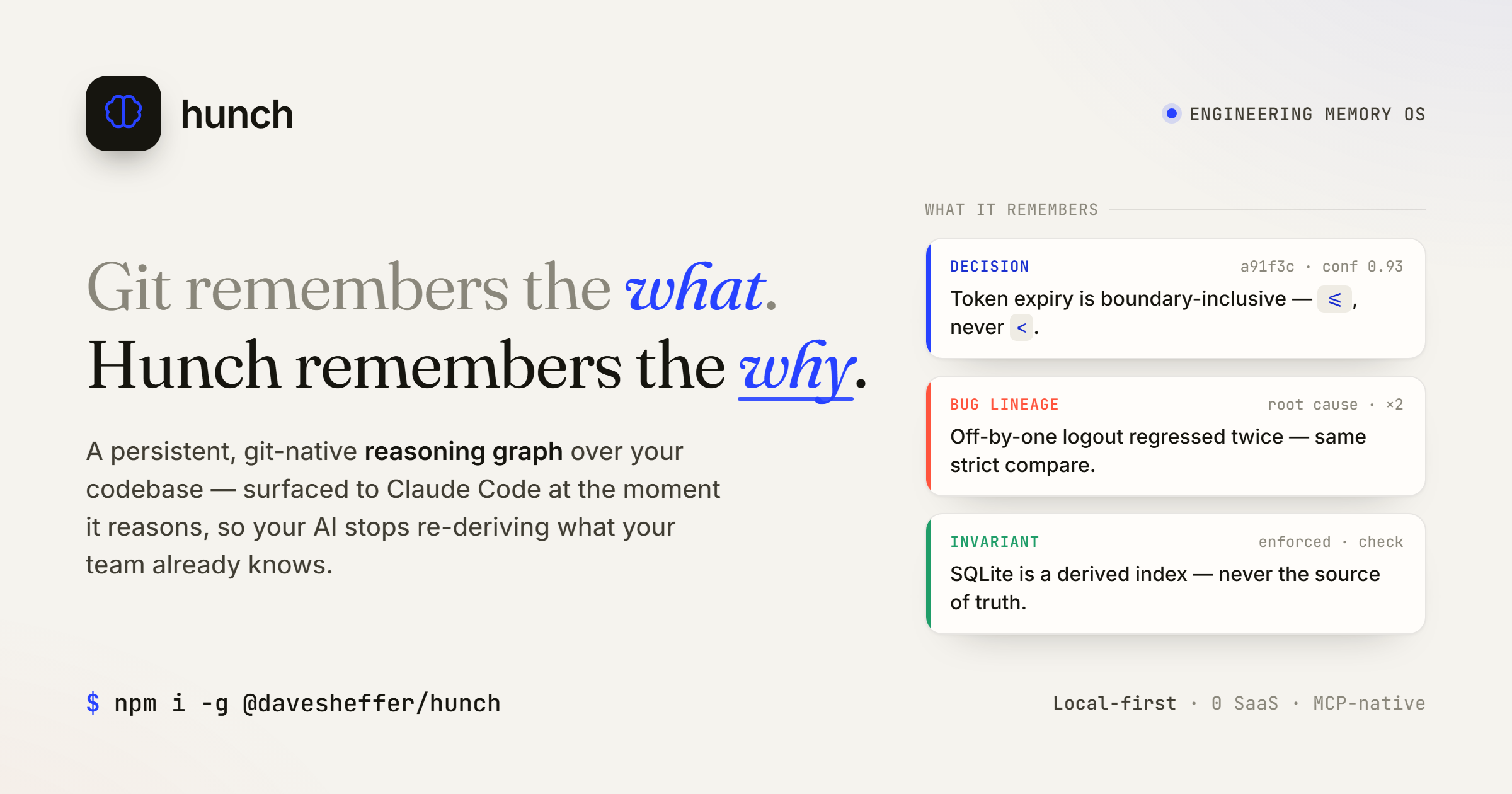
Developers have introduced Hunch—a CLI tool that turns ephemeral AI work sessions into a structured knowledge graph integrated with Git, enabling assistants to understand not just code syntax, but the logic behind architectural decisions.
What Happened
Hunch serves as a memory layer for development teams, capturing intent, decisions made, and constraints through integration with Git, commits, and tests. The tool supports the MCP protocol and allows the use of CLAUDE.md files, helping to prevent regressions where AI agents attempt to re-implement previously rejected solutions.
Context
Modern AI assistants suffer from the problem of statelessness, meaning every new session starts from scratch without understanding the history of changes. Hunch moves from simple syntax analysis to the analysis of decision-making semantics, using Git as the primary source of truth to synchronize AI "memory" with the actual development history.
Why It Matters for the Industry
For the industry, this represents a shift from "chat-with-code" interactions to a model of "agents with accumulated context." Creating "cumulative" memory through causal graphs allows for maintaining architectural integrity when using autonomous agents and forms a new memory layer that operates via a decision graph within the repository, rather than through standard RAG on documentation.
Why It Matters for Users
Developers using Cursor, Claude Code, or Windsurf can use Hunch to "train" their assistants to account for the history of decisions made. This reduces the number of iterations required to fix typical AI errors and prevents agents from suggesting approaches that the team has already rejected in the past.
What Is Not Yet Known / Limitations
Expert opinions vary from optimistic to moderately neutral, depending on the focus on business value versus potential enterprise risks when implementing architectural memory.
Sources
Author
Look at AI, Editorial Team