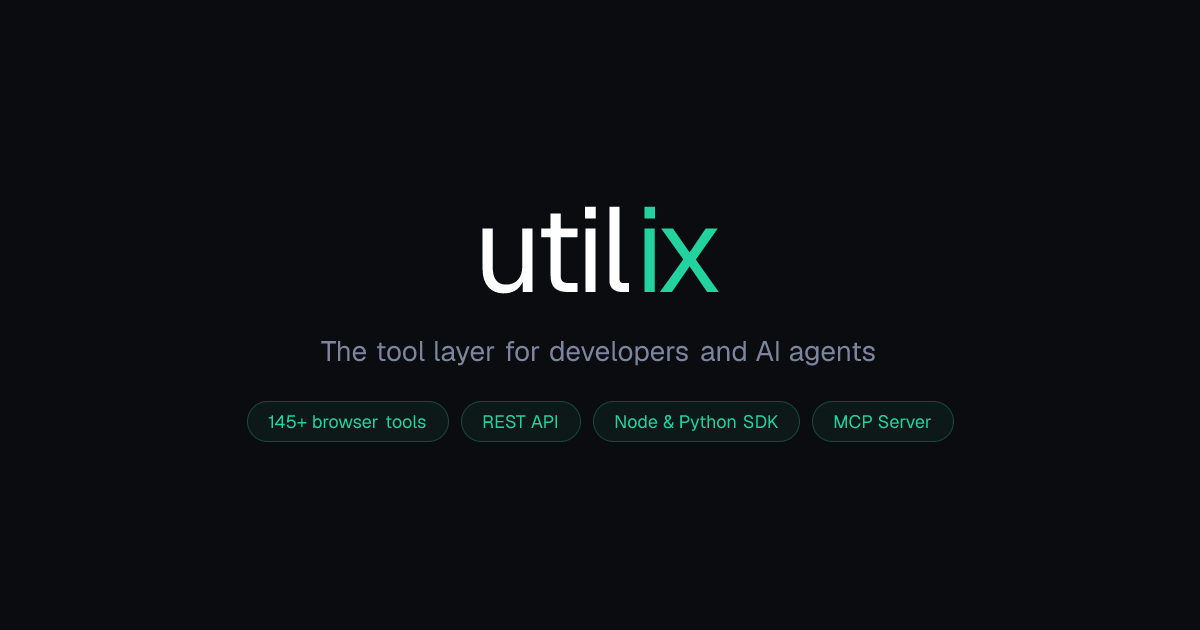
Utilix has been introduced—a new tool layer providing more than 145 utilities for developers and autonomous AI agents. The platform enables integration via REST API, SDKs for Node.js and Python, and supports the MCP protocol for direct operation in environments such as Claude Desktop and Cursor.
What Happened
Developers have launched the Utilix platform, offering an extensive toolkit: ranging from SVG generation and converting text to Regex or CLI commands to security functions such as PII (Personally Identifiable Information) detection and secret leak searching. The service is available via API, SDK, and an MCP server.
Context
Instead of creating fragmented custom functions, Utilix acts as a unified abstraction layer. It is an infrastructure solution aimed at standardizing access to technical tools for LLM applications through modern protocols, such as the Model Context Protocol (MCP).
Why It Matters for the Industry
The emergence of specialized tool layers reduces the complexity of developing agentic systems, allowing companies to use ready-made, tested functions instead of writing their own wrappers. This promotes market standardization by separating "brain" providers (LLMs) from "hand" providers (specialized tools).
Why It Matters for Users
Developers can significantly accelerate the prototyping of agentic workflows by connecting the Utilix MCP server to their preferred development tools (Cursor, Claude Desktop). This allows AI assistants to perform complex tasks, such as parsing HAR files, generating JSON schemas, or checking code for secrets, directly within the working environment.
What Is Not Yet Known / Limitations
Using third-party MCP servers and APIs may expand the attack surface and create additional risks during data transmission, requiring careful attention to privacy and security issues.
Sources
Author
Look at AI, Editorial Team