
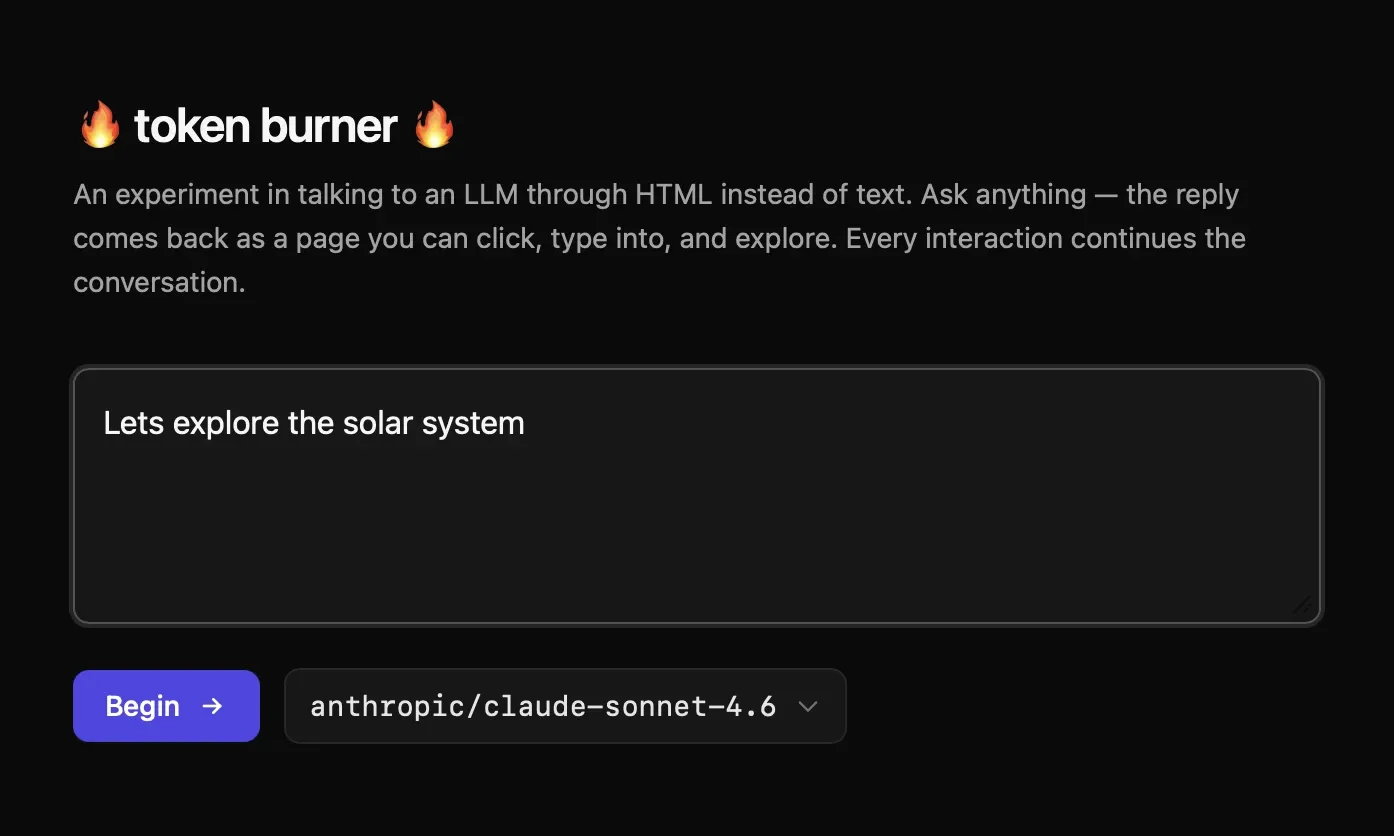
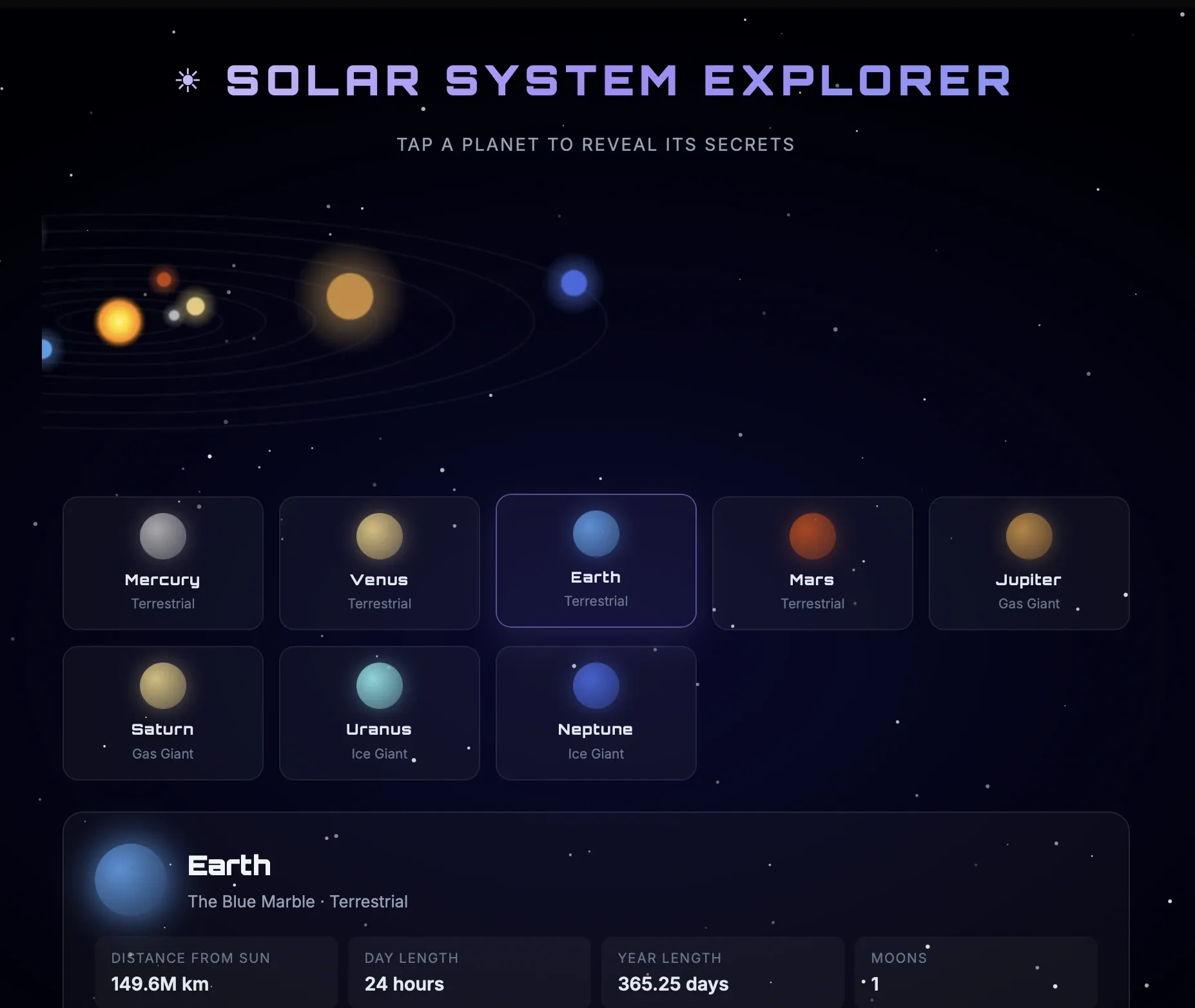
A developer has introduced an architectural experiment called "LLM as a Web Server," in which a large language model acts as a full-fledged web server, creating dynamic interfaces in real time.

What Happened
As part of the experiment, the model generates a dynamic HTML page for every user request, utilizing modern libraries such as Tailwind, D3, and Three.js. To manage context effectively and reduce token costs, a "summary trick" is applied: instead of passing the entire raw HTML code of previous responses, the model receives only a brief description of its past actions.
Context
The project demonstrates a fundamental shift in LLM usage: moving from the role of a passive coding assistant to an active dynamic view layer. This enables the concept of Generative UI, where the user interface is not pre-designed but synthesized at the moment of the request to suit a specific task.
Why It Matters for the Industry
For the industry, this signifies a transition toward adaptive systems that change logic and design based on user context. In the long term, this could become the standard for agentic interfaces, where interaction occurs not with rigid components, but with dynamically generated tools.
Why It Matters for Users
Readers and users can expect the emergence of "reasoning" interfaces. Instead of fixed buttons and menus, the web applications of the future will be able to render only the elements necessary for the user right here and now, providing an unprecedented level of personalization.
What Is Not Yet Known / Limitations
At this stage, the solution is an architectural proof-of-concept. Critical issues exist regarding latency, high inference costs, and output unpredictability, making the use of full-scale LLMs for rendering every page unacceptable for current production environments.
Sources
Author
Look at AI, Editorial Team