
A new utility, Claude Desktop Switcher (CSW), has arrived for macOS users, allowing them to effectively separate work and personal profiles within the Claude Desktop application. Written in Rust using Tauri v2, the tool provides isolation for accounts, chat history, and system memory without disrupting the application's core configuration.
What Happened
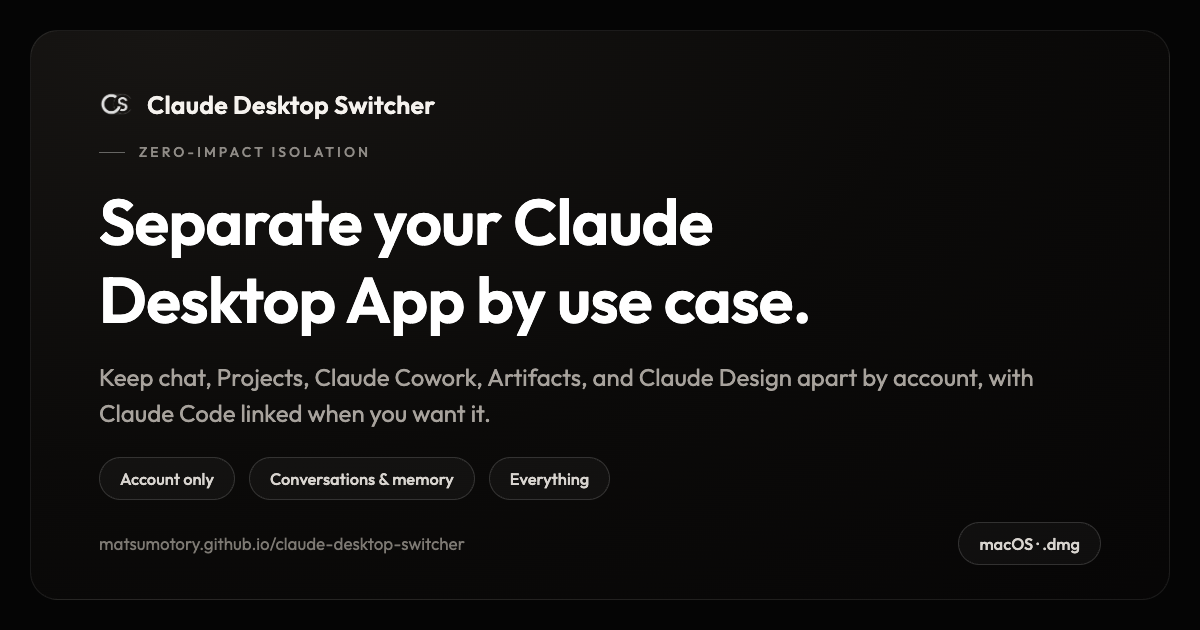
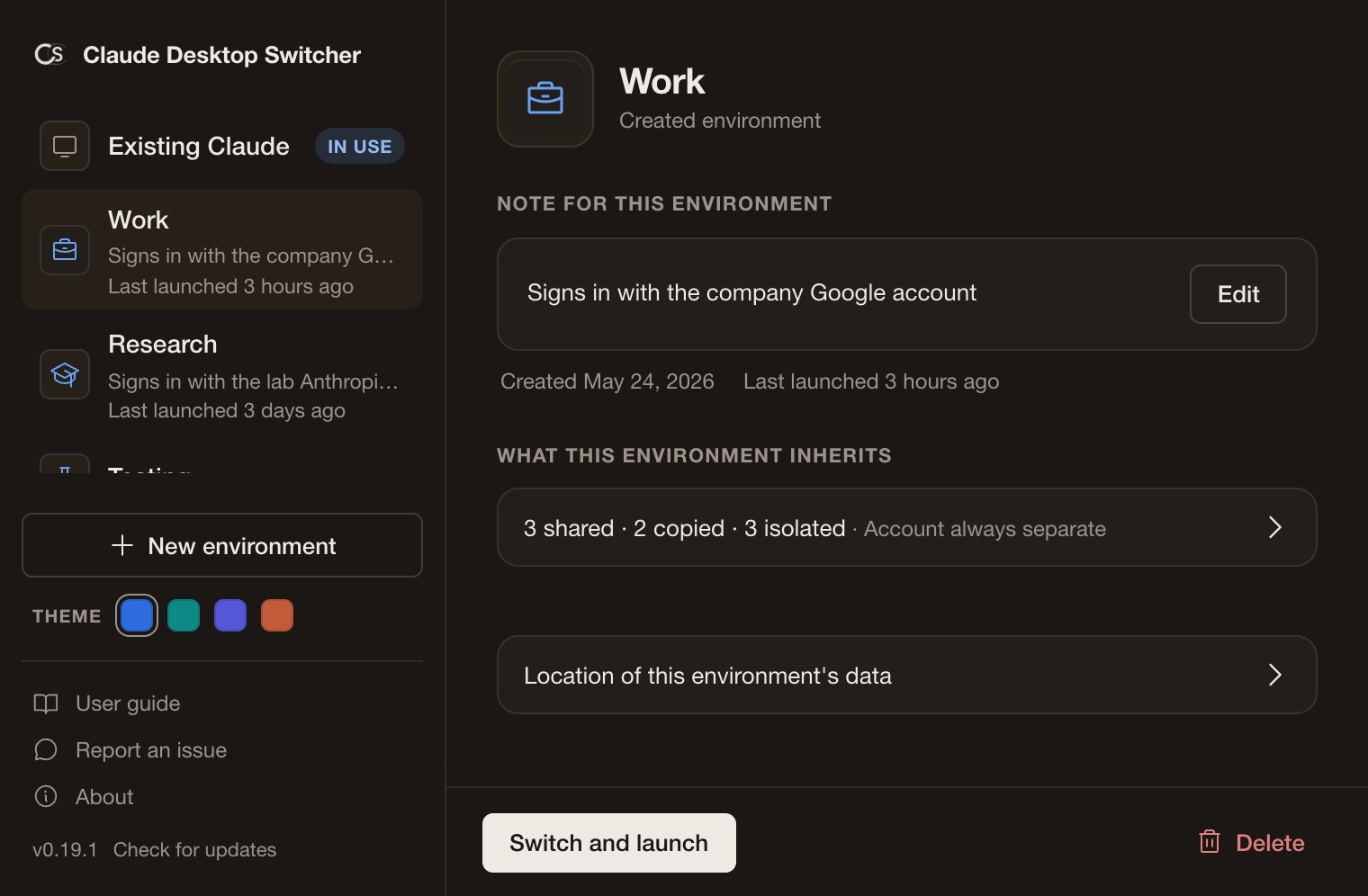
A developer has introduced Claude Desktop Switcher (CSW)—a macOS tool that enables the management of multiple independent instances of Claude Desktop. The utility offers three operating modes: full isolation of all data ("Separate Everything"), separation of only history and memory, and separation of accounts exclusively. The technical implementation based on Rust and Tauri v2 ensures high performance and security when manipulating local configurations.
Context
With the growing use of desktop AI applications, a need has emerged for tools to manage local context. Users require a mechanism that allows them to separate professional and personal sessions (Work vs Personal) at the file system level to avoid mixing data and chat histories within a single application.
Why It Matters for the Industry
The emergence of such tools demonstrates a growing demand for specialized software to manage the local data of AI applications. This opens a niche for creating multi-persona management systems and a "local management layer" on top of proprietary AI clients, which could lead to the standardization of context management mechanisms at the system API level.
Why It Matters for Users
macOS users gain the ability to run several independent Claude working environments simultaneously. This allows for efficient switching between personal and professional tasks without the risk of mixing context, chat history, or memory data, all without resorting to manual profile management or using multiple devices.
What Is Not Yet Known / Limitations
There is a need for additional security verification of this tool for use in corporate environments (Enterprise AI).
Sources
Author
Look at AI, Editorial Team