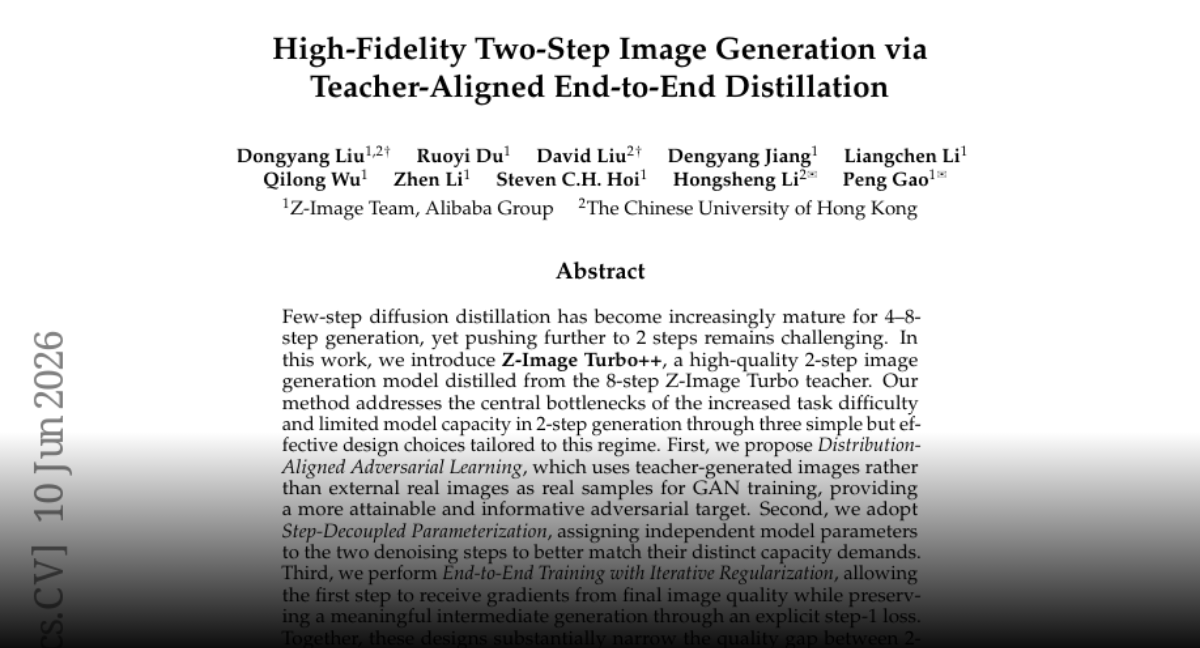
The Z-Image team from Alibaba has introduced Z-Image Turbo++, a new architecture for ultra-fast image generation that reduces the diffusion process to just two steps without significant loss of quality.

What Happened
Researchers from Alibaba have developed a distillation method that shifts image generation from a resource-intensive computational task to a near-instantaneous response mode. At the core of Z-Image Turbo++ is the use of teacher-aligned distributions for adversarial training, parameter separation for each step, and an end-to-end training method with iterative regularization. This approach bypasses the loss of detail and the appearance of artifacts typically associated with aggressive step reduction.
Context
Previous versions of the architecture required at least 8 diffusion steps to achieve acceptable results. The proposed approach aims to resolve the fundamental contradiction between inference speed and the visual accuracy of Text-to-Image (T2I) models.
Why It Matters for the Industry
For the industry, this means the potential for a radical reduction in computational costs and latency when working with generative models. This technology could change API standards for content generation, making high-quality inference accessible even with limited computing power and fueling the race for speed in the open-source architecture segment.
Why It Matters for Users
For end users, this translates to the emergence of tools with near-instantaneous image generation. Such models are ideal for integration into mobile applications and real-time services where a seamless user experience without waiting for request processing is crucial.
What Is Not Yet Known / Limitations
At the current stage of research, there is a lack of data regarding the practical verification of this technology in real production environments and information concerning official release timelines.
Sources
Author
Look at AI, Editorial Team