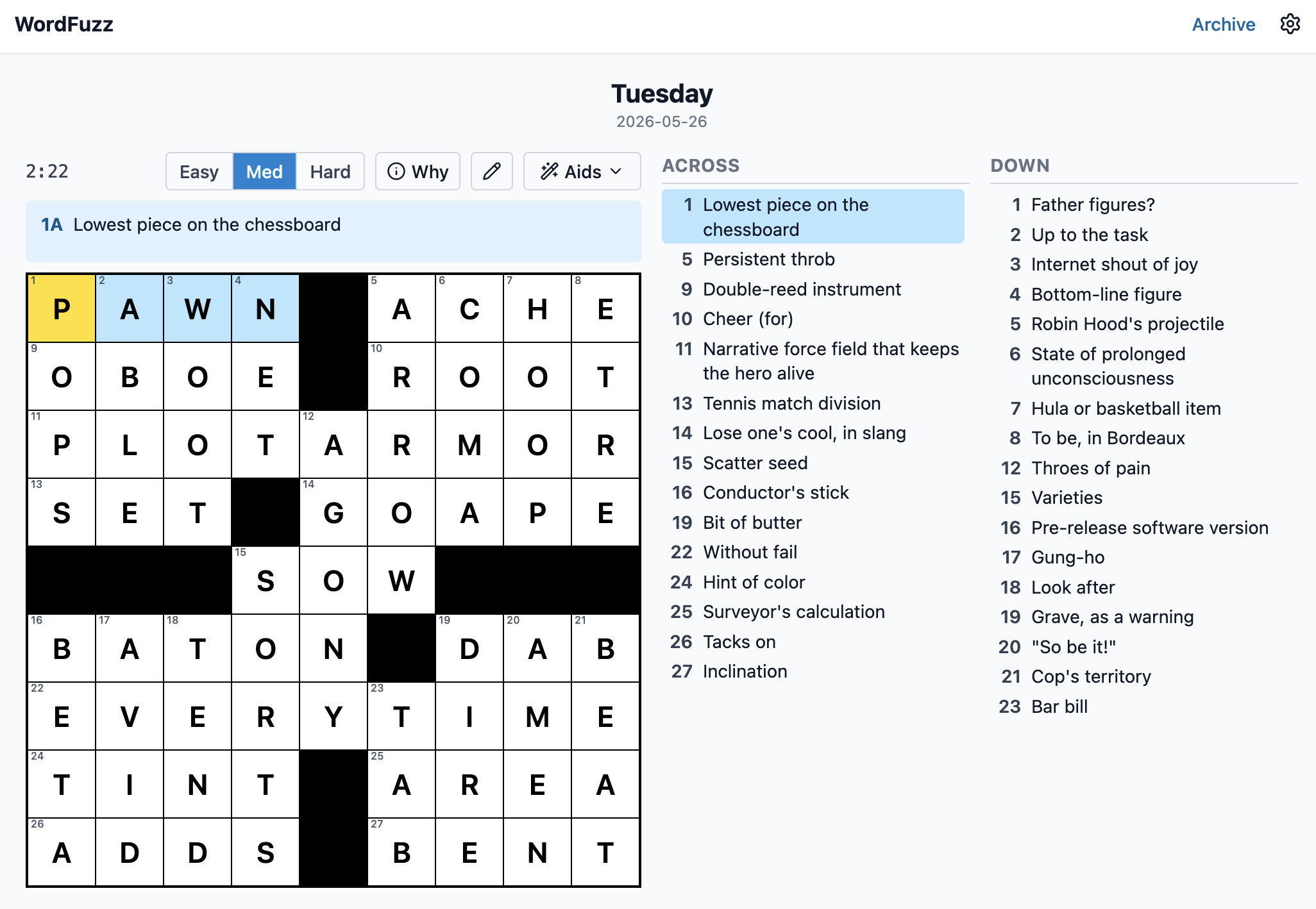
A developer has introduced xword-pipeline—a comprehensive tool for automatically creating dense crosswords that combines the computational power of Rust with the linguistic capabilities of Anthropic's Claude.


What Happened
The xword-pipeline project has been introduced to automate the creation of high-difficulty crosswords. The system uses a high-performance engine written in Rust to solve the combinatorial problems of grid filling, while the Claude model is responsible for generating multi-level clues (ranging from easy to expert), performing automatic quality assurance (QA), and creating answer explanations.
Context
Traditionally, creating high-quality crosswords requires significant human resources. This tool implements a hybrid approach: systems programming handles the heavy mathematical workload, while the LLM is applied selectively for creative tasks, allowing for optimized API usage costs.
Why It Matters for the Industry
The project demonstrates a viable architectural pattern for the specialized content creation industry: using systems programming languages as filters or optimizers for LLM agents. This allows for the creation of complex, structured products with strict logical constraints without excessive computational costs.
Why It Matters for Users
The tool allows users to create professional-grade crosswords with varying difficulty levels using their own API keys. For testing and verifying generated puzzles, a web application called WordFuzz is provided.
What Is Not Yet Known / Limitations
There are potential legal risks associated with mimicking the New York Times style and the licensing of the dictionary lists used.
Sources
Author
Look at AI, Editorial Staff