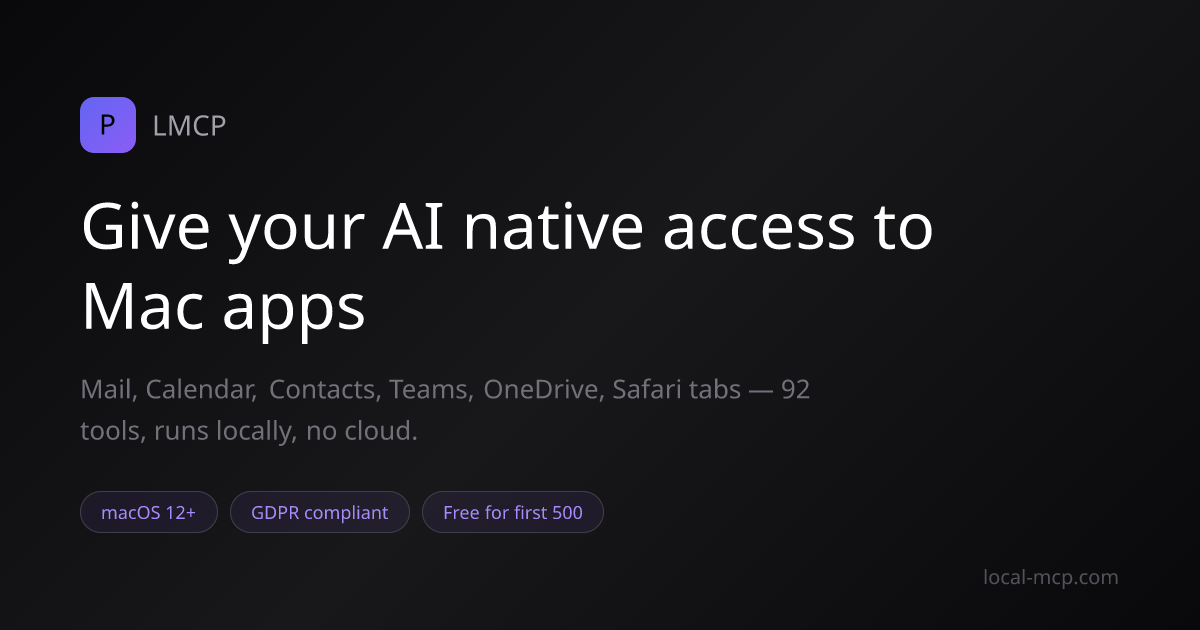
LMCP has been introduced — a new automation layer that allows AI agents, such as Claude, ChatGPT, and Cursor, to interact directly with local software on macOS, Windows, and Linux using the Model Context Protocol (MCP).
What Happened
Developers have introduced LMCP, a tool that enables the integration of popular LLM agents with desktop software, including Microsoft Office, Apple Mail, and Slack. The system operates without the need for complex API keys or cloud intermediaries, implementing 100% local task execution. To ensure connectivity with cloud models, an encrypted WebSocket tunnel (Cloud Relay) is used.
Context
The Model Context Protocol (MCP) is becoming the standard for providing models with access to various contexts and tools. LMCP acts as a practical abstraction layer that solves the problem of labor-intensive individual integration setups (OAuth flows) for each application, turning the operating system into an interactive environment for AI agents.
Why It Matters for the Industry
For the industry, this means simplifying the process of integrating LLMs with users' local ecosystems and lowering entry barriers for agent developers. The emergence of LMCP promotes the standardization of 'Model-to-OS' interaction, which could lead to the formation of a 'Personal AI OS' market and a paradigm shift in OS management from GUI-centric to Agentic-driven workflows.
Why It Matters for Users
Users gain the ability to delegate real control of calendars, email, and files directly on their computers to AI agents. This allows for rapid prototyping and the use of powerful assistants without manual configuration of dozens of API integrations, while maintaining a high level of control over data privacy.
What Is Not Yet Known / Limitations
Technical specialists point to the need for a deeper security audit, as the use of Cloud Relay creates potential points of control or data interception, despite the claimed protections.
Sources
Author
Look at AI, Editorial Team