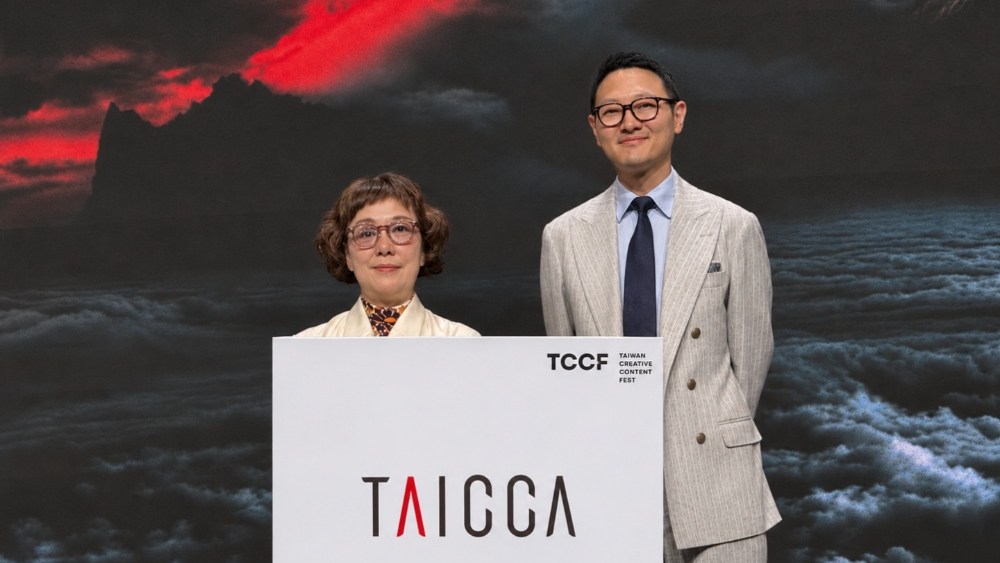
Visual effects studio Weta FX, known for its work on *The Lord of the Rings* and *Avatar*, has noted a turning point in the behavior of its Hollywood clients: a year ago, generative AI was banned in their projects, but now contractors without an AI strategy are not being given work. Simultaneously, Weta announced a partnership with the Taiwanese government agency TAICCA and Moonshine Studio, covering investments, joint AI development, and staff training. If generative models were previously seen as a threat to be walled off by contracts, they are now becoming a mandatory layer of the industrial visual effects pipeline, and the industry is restructuring around new procurement rules.


What Happened
Weta FX CEO Daniel Seah described the shift, which took place within a year, in an interview with Variety: previously, Hollywood studios completely banned generative AI in their projects, but since the third quarter of 2025, the formula has been reversed — "no AI strategy, don't expect work." On November 6, 2026, at the TCCF forum in Taiwan, Weta FX announced a partnership with the government agency TAICCA (Taiwan Creative Content Agency) and Moonshine Studio. The agreement includes investments in Moonshine, joint AI development, staff training, and internships at Weta's offices in Wellington, Melbourne, and Vancouver. The company's CTO, Kimball Thurston, clarified the technological approach: Weta trains its own models for "world modification" rather than chatbots; it applies ready-made generators like Kling and Seedance only with client permission and on hosting outside of China; and it does not plan to replace artists.
Context
Weta FX is not a random speaker in this story: the visual effects for *The Lord of the Rings* and *Avatar* are the studio's calling card, and vendors of this scale are the first to feel changes in the procurement rules of major film studios. A complete ban on generative AI was recently considered the norm, so the transition from "ban — approval — requirement" in just one year is a notably fast pace for the conservative film industry. The Taiwan connection is explained by state policy: TAICCA is a government agency for which supporting AI in creative industries is part of a national strategy, and the deal with Weta FX turns this policy into a concrete market advantage for local studios and talent. Technically, it is also important that ready-made video models like Kling and Seedance are strong on short clips, while feature-length VFX requires consistent 3D worlds over long timelines — Weta bridges this gap with its own models, embedding third-party generators only in an external, controlled loop.
Why This Matters for the Industry
For the industry, the admission criterion has changed: the presence of an AI strategy is now checked at the contractor selection stage, so studios without an inventory of models, a description of their application boundaries, and data provenance information are dropping off shortlists. Post-production budgets are shifting toward staff training, integrating external generators with legally permissible hosting, and auditing consents, while the accounting of permitted models for each project was previously done manually — this is a ready-made niche for new tools. Value for the client is shifting from raw generation quality to control: licensing, jurisdiction of placement, and compatibility with their own 3D stack. Thurston's phrase that ready-made generators have "fundamentally killed part of the competition" records the same fact: on basic generation, contractors can no longer be distinguished, and those who can embed models under client constraints are winning. Separately, the Taiwan deal looks like an exportable scenario: national subsidies, joint developments, and internships strengthen a country's creative cluster faster than point private initiatives.
Why This Matters for Users
For artists, the key point is Weta FX's direct promise: the company does not plan to replace people with generation; "world modification" models are designed as a tool within the pipeline, working under artist review. The practical takeaway for specialists and small studios is that a description of their AI process should now be attached to a classic portfolio, because clients have started requesting this document when selecting contractors. For viewers, the main point for the future is that generative techniques will appear even in the most conservative franchises, but, judging by Weta's position, not instead of artistic control, but within it. The open initiative of the Rongotai Model Train Club is also indicative: it tracks the provenance of training data and images, including LoRA training details and usage metadata — transparency of data sources is gradually becoming as much of a studio argument as the quality of its shots.
What Is Still Unknown / Limitations
The picture is currently described from one side: key conclusions rely on testimony from Weta FX leadership, conveyed by trade publications Variety and Deadline, and are not confirmed by independent statistics on the VFX market. The dating of the shift requires verification with the original source: in the retelling, it is attributed to the third quarter of 2025, whereas in the text of the original post — to the current year. The theses that basic generation is becoming a commodity and that thin wrappers over Kling and Seedance are getting cheaper are an interpretation of one phrase by Thurston: there is no public data on prices, quality, or market shares. Information about Weta's own models is known only from statements: demonstrations, technical specifications, and quality metrics have not yet been published. Finally, it is unclear how quickly the "have an AI strategy — have work" criterion will spread beyond Weta FX's client base and when the data provenance initiative will reach mature practical tools.
Sources
- Variety — Hollywood Has Flipped on GenAI, Says 'Avatar' VFX House Weta FX Chief
- Deadline — Weta CEO Daniel Seah Unpacks TAICCA Partnership
Author
Look at AI, editorial team