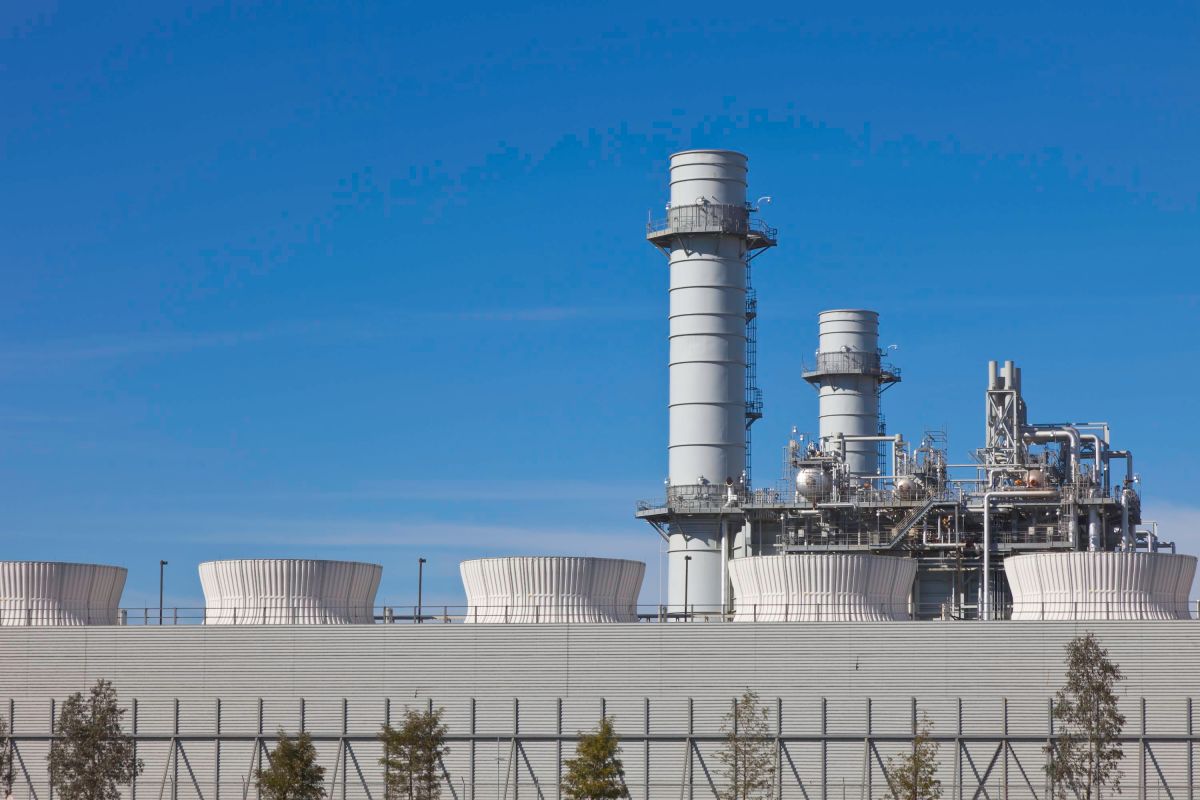
Anthropic is purchasing Caterpillar gas generators with a total capacity of up to 1.7 GW for approximately $3.4 billion, according to the Financial Times. The company acquired orders from equipment supplier OnePWR Solutions, which placed them two years ago but could not finance them, thereby securing generation capacity while bypassing queues for grid connection. For the industry, the deal is further confirmation that the bottleneck for AI scaling is no longer just chip production, but also electricity availability.


What happened
Anthropic closed a deal worth approximately $3.4 billion in late September 2026, acquiring orders for Caterpillar gas generators that OnePWR Solutions, a company based in San Antonio, Texas, had placed two years ago but failed to finance. Anthropic did not acquire OnePWR itself or its employees: the object of the deal was solely the equipment orders. The package included engineering and construction services for the installation of the generators. Deliveries are distributed over time: the first generators will be available in the coming months, with the remainder of the order to be delivered within two years. As a result, Anthropic will receive up to 1.7 GW of its own generation capacity.
Context
The reason for this purchase is the electricity shortage, which has become one of the main constraints on AI infrastructure. According to data cited in a TechCrunch article, global orders for gas turbines exceed 100 GW, while the industry's production capacity is 60–70 GW, and delivery times in the US have stretched to approximately six years. Anthropic is therefore acting in the same way as SpaceX, Alphabet, and Microsoft: instead of waiting in line for grid connection, it is purchasing ready-made generation capacity. This shift in model is also evident in the company's own documents: in its S-1 filed in May, Anthropic stated that it pays $1.25 billion per month to xAI, a subsidiary of SpaceX, for computing power until May 2029. Owning turbines signifies a gradual transition from renting others' capacity to self-sufficiency in energy supply. However, the scale of the problem is much larger: Yahoo Finance headlined an article with the assertion that such a purchase barely dents an energy problem estimated at approximately $895 billion.
Why this matters for the industry
For the industry, the deal is a signal that the bottleneck for computing growth has shifted from chips to watts: the scale of next-generation models is becoming a function of energy availability, not just the number of accelerators. Guaranteed power is becoming part of the product for major vendors, and ready-made turbines and already placed third-party orders are instantly becoming scarce assets, with competition for them now comparable to the fight for chips. The dependence of data centers on natural gas is also increasing, along with the price risks for infrastructure operators. For Anthropic itself, the purchase reduces the concentration of risk on a single computing lessor and potentially makes the planning of large projects more predictable.
Why this matters for users
There is no immediate increase in available computing power for users: the generators are only being installed, and it is still a long way to full capacity. In the medium term, the purchase is an attempt to guarantee power for the data centers that serve the company's services and to reduce the risks of availability constraints. Those building products on the platform should also consider the context from Anthropic's own reporting: it cites risks of fuel price volatility, pipeline constraints, and supply disruptions, meaning that its own generation does not eliminate dependence on fuel infrastructure. A practical step available today is to conduct an audit of dependencies and implement fallback routing and latency monitoring if the product relies on a single provider.
What is still unknown / limitations
Key unknowns remain within the deal itself: the materials do not contain data on how much of the 1.7 GW will go to model training versus inference, nor are there PUE metrics, load factors, or information on tying generation to specific sites. It is also unconfirmed whether the own generation replaces part of the monthly payments to xAI and how the commissioning of capacity will affect API limits, prices, and regional availability—these are currently hypotheses. The estimate of the energy problem at approximately $895 billion should be viewed as a Yahoo Finance headline formulation rather than a verified calculation.
Sources
Author
Look at AI, editorial team