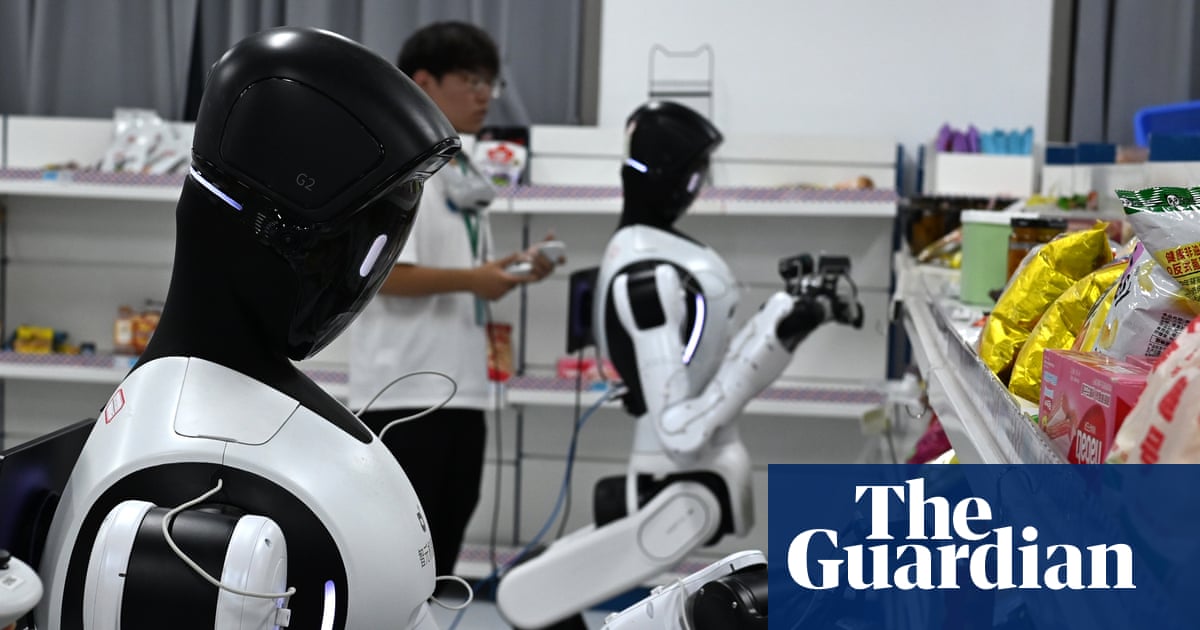
The Chinese stock market has lost approximately $2.4 trillion in capitalization since May 2026: according to Bloomberg, investors have questioned whether the Chinese AI boom will ever reach profitability. The correction is unfolding against the backdrop of an intensifying race for AI supremacy with the US and is accelerating the decoupling of two technological ecosystems—from computing chips to robots.

What happened
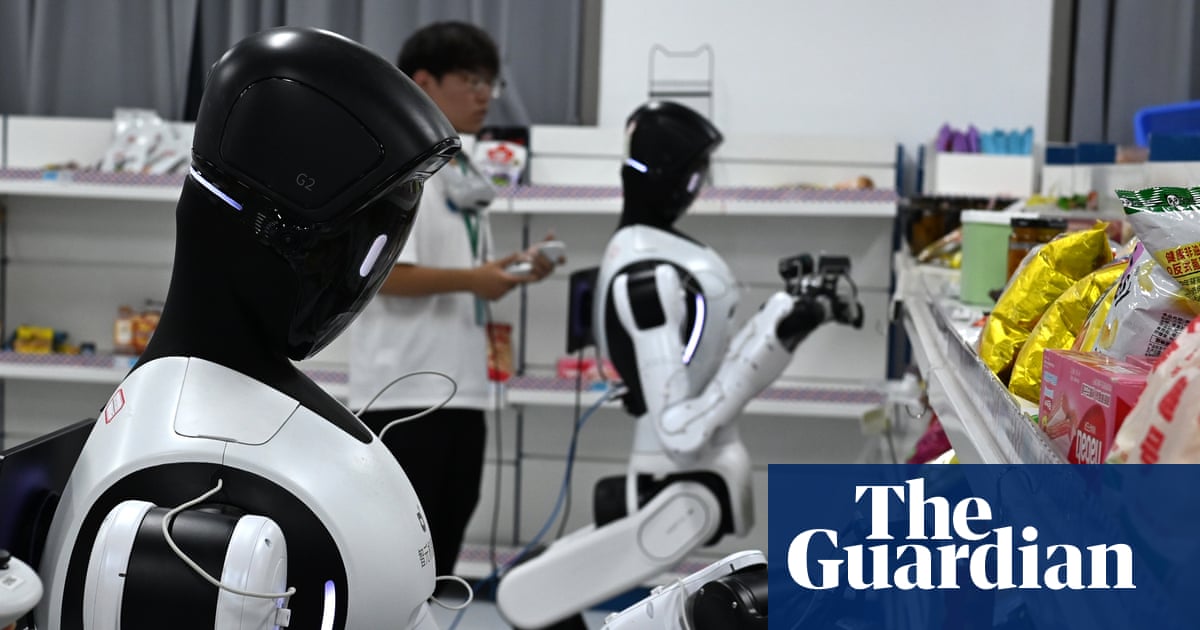
The STAR 50 technology index on the Shanghai Stock Exchange fell by approximately 40% since June, while broad indices of large Chinese companies dropped by roughly 20%, and on October 22, the CSI 300 index entered a bear market. According to Goldman Sachs estimates, AI companies account for more than 40% of the value of the Chinese and Hong Kong stock markets and about 57% of total turnover, meaning a sell-off in one sector immediately transfers to the entire exchange. A telling example is Unitree, a leading Chinese robot manufacturer: at its debut in August 2026, its shares rose by 460% to a valuation of $66 billion, after which they lost nearly half their value. Simultaneously, the external landscape changed: in July 2026, the FCC banned the import of new humanoid robots on national security grounds, Washington is considering a ban on Chinese optical components for data centers, and Chinese regulators ordered companies to stop purchasing Nvidia chips—after which the training of Z.ai's GLM-5.2 model was moved to Huawei chips.
Context
The rise of the Chinese AI sector was driven by state capital rather than consumer demand: household spending is weak, and AI companies are not profitable, yet they receive support, including 60 billion yuan from a new state AI fund. Valuations reflected the narrative rather than the economics: the STAR 50 trades at approximately 100x earnings compared to about 30x for the Nasdaq 100, meaning the market was paying for promises of capabilities rather than verifiable unit economics. In such a configuration, high concentration in a single sector makes the entire exchange sensitive to every release and every failed benchmark—capitalization reacts to marketing signals more strongly than to data. The structural outcome of these events is the fixation of a bipolar fork in computing stacks: the Chinese variant relies on Huawei hardware and state orders, while the American variant relies on Nvidia hardware and political market protection, and the intersection zone between them is narrowing. Importantly, the revaluation is currently local: according to available forecasts, the global AI boom will continue for at least another year, so this is about the redistribution of capital within a single market, not a global halt.
Why this matters for the industry
For the industry, the correction means a shift in design constraints. Teams will align releases and benchmarks with reporting dates, and investors will demand inference monetization metrics, making multi-stack architecture the winning strategy: abstraction over the American Nvidia stack and the Chinese Huawei stack, plus readiness for fallbacks between model providers. Technical teams should conduct a dependency audit: in the bills of materials (BOM) for Chinese humanoid robots, the restriction is already in effect, while the ban on optical components is only under consideration—there is time to prepare supplier replacements before it takes effect. The financial landscape is also being restructured: late-stage rounds in the China-Asia zone will be marked down, the IPO window is narrowing, and in the absence of profits for AI companies, a pause or reduction in excessive compute capex is possible. On a two-year horizon, without the emergence of profitability, filtering will begin: either state-supported laboratories or companies with real monetization will survive, and the Huawei vs. Nvidia split will be fixed as an irreversible duality that will divide the global infrastructure for model evaluation and complicate cross-stack verification of results.
Why this matters for users
It is important for readers to understand that this is a capital correction, not a code correction: model architectures and the quality of model weights have not changed, so the market drop has no direct effect on today's production scenarios using Chinese models. Those following the AI industry should monitor the gap between state financing and real company profits: this is what shows where the "bubble" might burst locally, even when the global boom continues. Buyers and users of Chinese robotics are directly affected by the current FCC ban on importing new humanoid robots, which changes equipment availability and price in US jurisdictions, while the considered ban on optical components adds risks to data center supply chains. Users of free models and tools should consider that a slowdown in open-source releases and a reduction in research budgets at overvalued companies mean less frequent releases of free weights and tools. For cautious investors, the signal is that public AI valuations in China are falling faster than private ones, meaning closed late-stage rounds carry a risk of overvaluation.
What is still unknown / limitations
The material does not provide a public methodology for the key technical case: for GLM-5.2, the fact of the transition to Huawei chips for training is known, but the compute resources used, throughput, power consumption, and token cost are not disclosed, so claims about the scalability of large model training outside the Nvidia stack remain unproven. The ban on Chinese optical components for data centers is only being considered by Washington and may not materialize. The forecast that the global AI boom will last for at least another year is cited without indicating the author of the estimate or its basis. Finally, the lost $2.4 trillion is an aggregate for the entire market; the original publications do not contain a breakdown of how much of this is attributable specifically to AI companies.
Sources
- Chinese markets lose trillions as race for AI supremacy with US takes its toll — The Guardian
- China's Stock Market Has Lost $2.4 Trillion as Investors Doubt Its AI Boom Will Ever Pay Off — Yahoo Finance
Author
Look at AI, editorial team