Following the Comfy Open Source Higgsfield contest (October 2026), a batch of open-source tools for ComfyUI was released, addressing bottlenecks in generative VFX. SameFace measures and corrects face drift after editing and restoration, AInVFX Paint a plate transfers first-frame edits to entire shots with plate export, MatteDesk automates roto and matting with export to Nuke format, and h3-motion and ComfyUI-Dials control motion and mood in the MiniMax H3 model without fine-tuning. The key difference from typical demos is measurable results, studio-native export formats, and open code: every project can be installed for free on your own machine or in the cloud today.

What happened
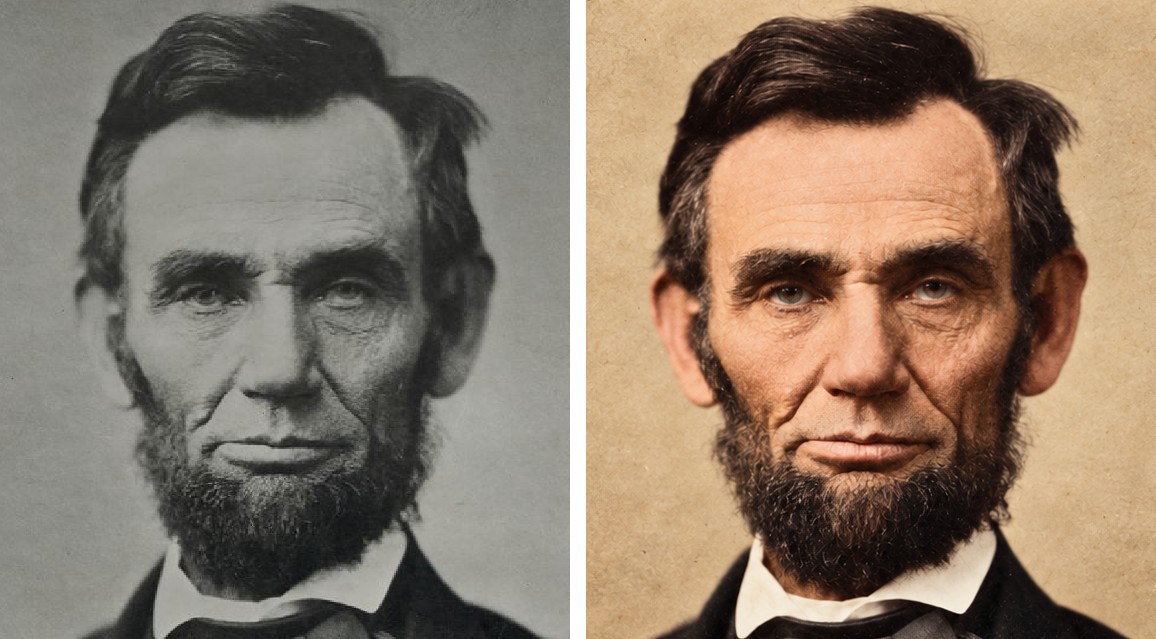
In October 2026, a batch of open-source tools for ComfyUI was released as part of the Comfy Open Source Higgsfield contest. The SameFace node by developer fixed-42 (Apache-2.0 license) measures where image editing shifts facial features and returns them to their original positions: drift is calculated as a percentage of head size, and correction is performed via RAFT optical flow in combination with Grounding DINO, SAM 2.1, and boolean spline warp. In a demo case with a colorized portrait of Lincoln, drift was reduced from 0.83% to 0.010% with peak VRAM around 3.2 GiB. AInVFX Paint a plate (Apache-2.0) operates on plate logic: erasing, inpainting, or lighting changes are applied to the first frame via FLUX 3 Image Klein, object tracking is provided by SAM 3.1, and the propagation of edits to the entire shot is handled by LTX 2.5 with IC-LoRAs; the result is exported as layers in EXR via OCIO, requiring approximately 32 GB VRAM or a cloud Runpod. MatteDesk version 0.50 (GPL-3.0) is a browser-based interactive roto and matting tool using SAM 3.1, CoTracker3, MatAnyone2, VideoMaMa, and BiRefNet/Lucida with optional LTX 2.5 Alpha-Gen; it exports EXR, PNG, and .nk files directly for Nuke. h3-motion by PxTicks (AGPL-3.0) is a React application for MiniMax H3 that extracts an object from a photo using SAM 3.1 and Qwen Image 2.1 and animates it via drag-and-drop. ComfyUI-Dials (AGPL-3.0) assembles "dial" files of about 14 KB for MiniMax H3 from prompt pairs without training, setting motion and mood from Freeze to Zoomies among eight styles; the MATLOWAI/H3-Dials library is published on Hugging Face.
Context
Until recently, generative VFX was held back not by model quality, but by the lack of measurable control, incompatibility with studio formats, and manual labor. After inpainting or restoration, facial features would drift, and this could only be assessed by eye; editing one frame did not propagate to adjacent frames, forcing shot-by-shot rework; roto and matting remained the most labor-intensive and purely manual stages. A separate barrier was format: generative demos delivered images or videos, whereas studio exchange is built on plates—EXR with OCIO and layers from which the final assembly is produced in compositing. A third layer was control over video models: MiniMax H3 and similar models responded to prompts, without interactive intervention in the motion and style of the finished result. Technically, this new wave of tools is not a scientific breakthrough but an engineering orchestration of known models—RAFT, Grounding DINO, SAM 2.1 and SAM 3.1, LTX 2.5, FLUX 3 Klein, CoTracker3, MatAnyone2—over specific pipeline gaps, and it is this precision, combined with openness and reproducibility, that makes it notable.
Why this matters for the industry
The package moves the generative stage from the demo category to production through three mechanisms. A numerical metric for face drift turns the acceptance of generative edits from subjective to measurable: a metric with a displacement map can be integrated into QC and discussed in numbers. The "edit the first frame, then transfer to the shot" approach reduces the cost of frame-by-frame refinement, and export in plate format and .nk output mean that generative nodes are for the first time integrated into the native studio pipeline rather than living alongside it. The MatteDesk REST API paves the way for batch processing and agent services around matting, while no-training "dials" for MiniMax H3 demonstrate a cheap format for controlling video models—slider files that can be combined with LoRA and even affect audio. For startups, this simultaneously reduces content costs and creates new niches—such as a Paint a plate queue for studios without large GPUs, QA modules based on drift metrics, and hosted wrappers—and blurs the moat of point vendors whose products relied entirely on closed matting or edit transfer. Within a six-month horizon, it is logical to expect public benchmarks for drift and consistency, and within a two-year horizon, the transition of generative VFX to a plate standard: acceptance metrics, programmatic APIs, and native formats as a standard part of the pipeline.
Why this matters for users
Everything is verifiable today, and hardware requirements are specific. SameFace is installed via ComfyUI Manager and works locally: about 1.8 GB of models and a peak of around 3.2 GiB VRAM, which is manageable by most modern cards—restoration of old photos and portrait editing gain face control after each edit. MatteDesk is installed via a Windows installer with automatic model installation, works on NVIDIA from 12 GB (24 GB for optional LTX), and delivers results with .nk export for Nuke—convenient for those who further refine the shot in compositing. Paint a plate is the most demanding: about 32 GB VRAM, so owners of smaller cards are left with cloud Runpod. h3-motion runs on NVIDIA and AMD via ComfyUI: a photo becomes an animation by simply dragging the object. Dials "dial" files weigh about 14 KB, are downloaded from Hugging Face, and are inserted into the H3 workflow, adding a slider instead of new LoRAs. The practical takeaway: readers can freely assemble a working setup for their task—restoring a family archive, cleaning and matting a shot, animating a photo from a single frame—without subscriptions or closed services.
What is still unknown / limitations
The main known unknown is the methodology behind SameFace's numbers. The claimed reduction in drift by almost a hundred times is shown on a single demo case with a portrait of Lincoln, not on a benchmark: there is no dataset, number of samples, baselines, variance by face type, or strict definition of the metric itself, so transferring these values to product acceptance gates is premature. Other characteristics are claimed by the developers, and independent tests are not yet available: the behavior of Paint a plate on complex shots, the quality of MatteDesk on heavy material, and the stability of Dials "dials" beyond the eight defined styles will have to be checked on your own data. These are young contest projects, so licenses, APIs, and hardware requirements may change, and forecasts about the standardization of acceptance metrics are interpretations of a trend, not established facts.
Sources
- GitHub — fixed-42/comfyui-sameface: ComfyUI node SameFace
- GitHub — AInVFX/ainvfx-paintaplate: first-frame plate editing with shot transfer
- GitHub — fishfinger44/MatteDesk: interactive roto and matting for VFX
Author
Look at AI, editorial team