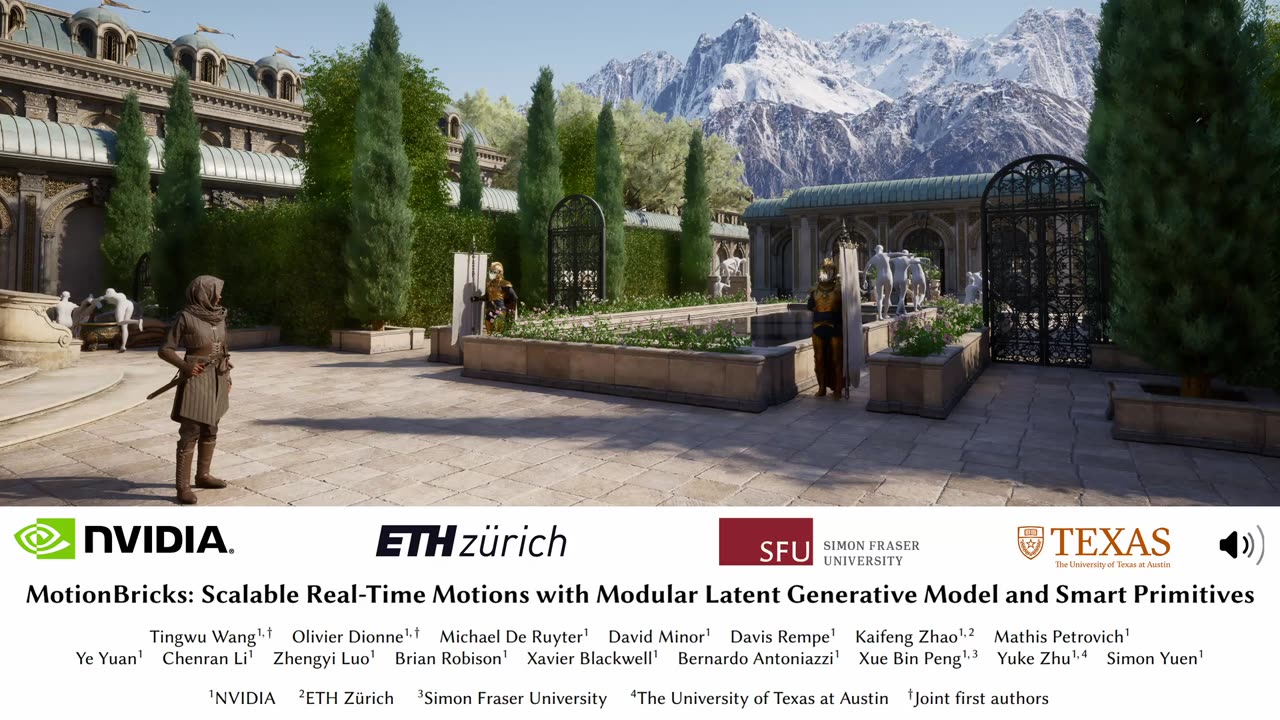
NVIDIA has opened the NVlabs/motionbricks repository with ready-made MotionBricks models—a real-time motion generation system from the SIGGRAPH 2026 paper (arXiv:2604.24833). A single model, trained on the BONES-SEED dataset of over 350,000 mocap clips, is claimed to achieve 15,000 FPS with a latency of approximately 2 ms; it controls both the SOMA human skeleton and the Unitree G1 robot. The models and code are now publicly available.
What happened
The paper "MotionBricks: Scalable Real-Time Motions with Modular Latent Generative Model and Smart Primitives" was accepted to the SIGGRAPH 2026 conference, and simultaneously NVIDIA released the official code in the NVlabs/motionbricks repository at version v0.2.0. The package includes ONNX models and checkpoints for MotionBricks-SOMA-RP-v1 and MotionBricks-G1-RP-v1, published on Hugging Face under the NVIDIA Open Model Agreement. The runtime is built on Warp, Newton, and TensorRT: an NVIDIA GPU is required, and demos were tested on an RTX 4090. Along with the code, ready-made demos and scene editors have been published, so the release is verifiable across all artifacts.
Context
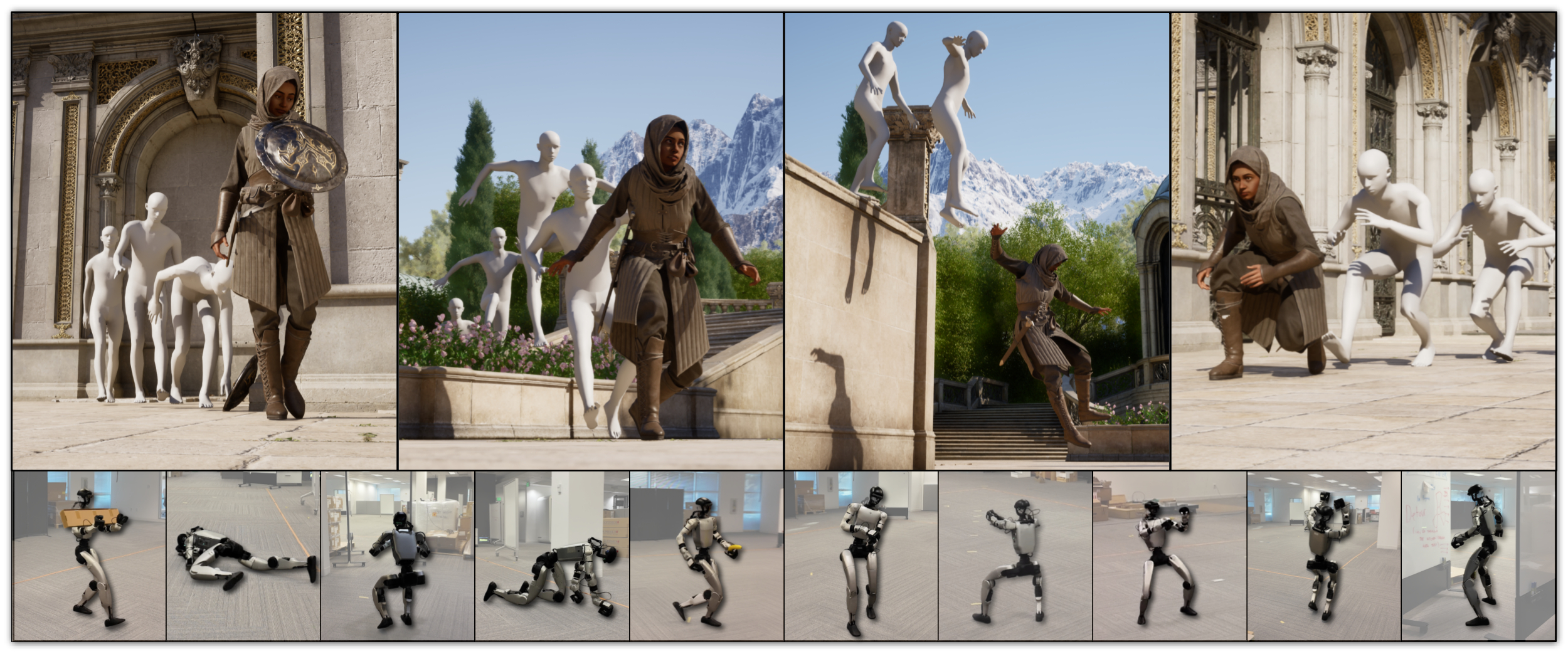
MotionBricks relies on a modular latent generative model and Smart Primitives: interactions are defined not by skill tags, but by proxy keyframes around objects, and the network itself infers the approach, contact, and completion of the action. Walking, running, and strafing are driven by speed and direction commands, while styles ranging from zombie and limping gaits to bouncing, side-stepping, and combat styles, plus sword lifting, squatting, and bench jumping, work as tasks without fine-tuning for a specific scene. The fact that the same set of weights drives both the SOMA skeleton and the Unitree G1 robot indicates policy transferability between body topologies, while the system's affiliation with NVIDIA GR00T Whole-Body Control shows that the company is building a unified locomotion stack. Essentially, motion has shifted from the category of "content created by animators" to "embeddable runtime."
Why this matters for the industry
For the gaming and robotics industries, the system removes manual animation techniques from production—foot locking, blending, and separate collision detection: a single model covers locomotion, styles, and object interactions. The claimed inference performance means that inference is no longer a bottleneck, and the cost of generation per character approaches zero. Zero-shot addition of new tasks via Smart Primitives reduces the cost of content creation and motion prototyping in games and simulations. Meanwhile, NVIDIA's vertical integration—GPU, Warp, Newton, TensorRT, and GR00T Whole-Body Control—is strengthened, and developers receive an open component that can be integrated into products in a pilot mode.
Why this matters for users
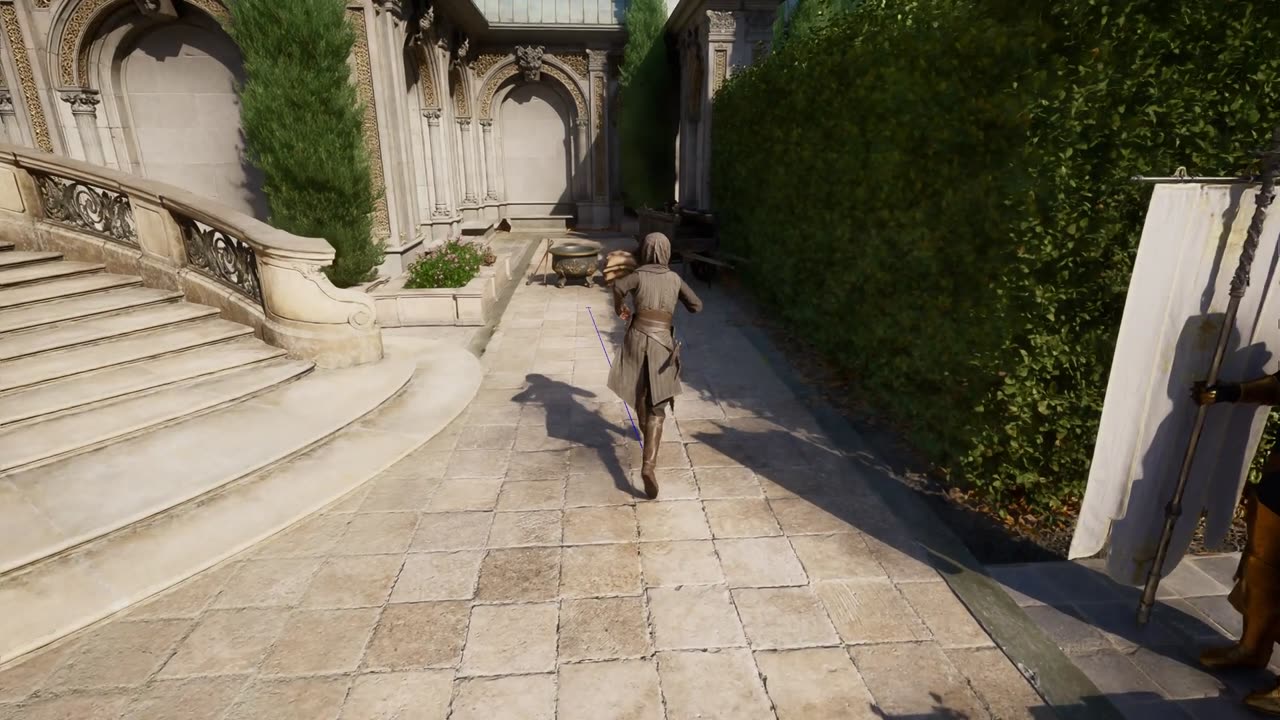
Readers can verify everything hands-on today: download ONNX models or checkpoints from Hugging Face, run the Inbetweener and Scene Preview demos on Windows or Linux with an NVIDIA GPU, and build their own scene in the Smart Primitive and Scene Editor. This is at the pilot and prototype level, so a reasonable first step is a spike on your own content and calculating time savings compared to manual animation: hours for locomotion and interaction prototypes instead of weeks of manual work. It is also worth watching the 2:40 Unreal Engine 5 demo, where transitions between styles and gaits occur directly in the runtime, without blending or foot locking.
What is currently unknown / limitations
The release materials do not include evaluation metrics: contact success rates, physical plausibility, and foot sliding are not reported, and comparisons with baselines and data on model behavior in real production scenes are absent. The conditions for measuring the claimed performance, including accuracy, batching, and the specific pipeline, are not disclosed, so the figures should be read as an upper bound rather than a guarantee. Zero-shot tasks without tags are the release's strongest scientific claim, and it should be tested first: generalization to objects outside the BONES-SEED distribution is usually a weak point for such systems. Finally, this is a research release v0.2.0 with no stated API guarantees, meaning it is a pilot and prototype component, not a stable dependency.
Sources
- MotionBricks: Scalable Real-Time Motions with Modular Latent Generative Model and Smart Primitives (project page, SIGGRAPH 2026)
- NVlabs/motionbricks — official implementation (GitHub, v0.2.0)
- MotionBricks (arXiv:2604.24833)
Author
Look at AI, editorial team