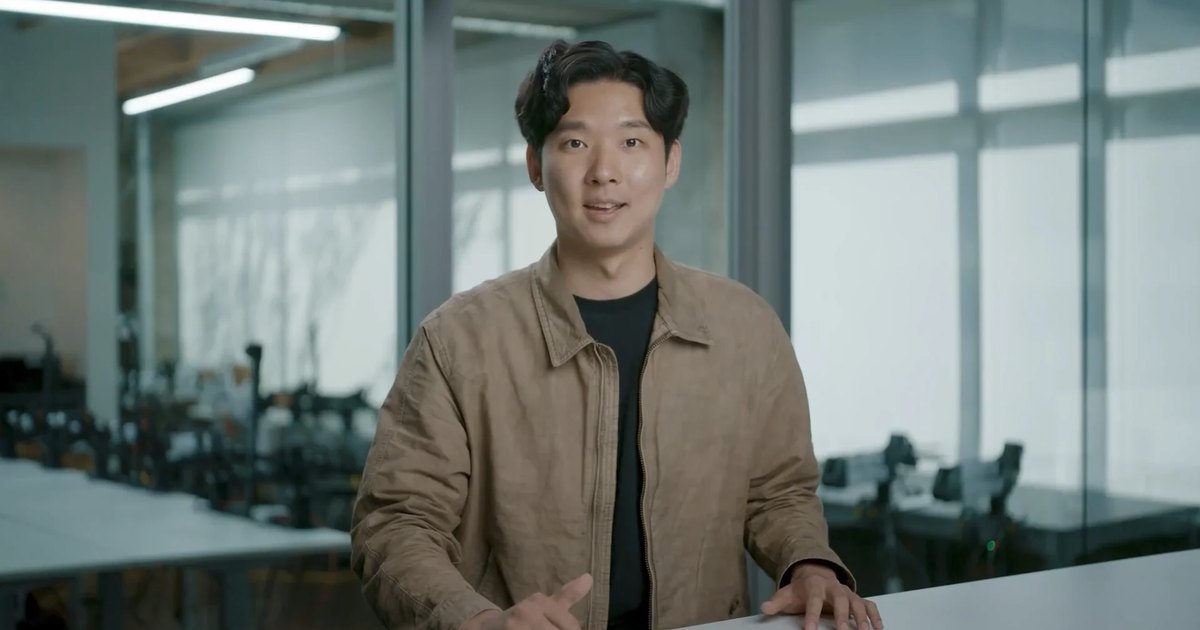
Startup Dream Labs, founded by four former NVIDIA researchers from the GR00T team, exited stealth with a $90 million seed round and opened a public API for the Dream-1 model, which controls bimanual robots it has never been trained on. According to an independent evaluation by Robocurve, Dream-1 scores an average of 59.3% and outperforms LLM agents Gemini 4 Argon, GPT-6 Astra, and Opus 5.5, while each attempt costs 16 times less than the closest competitor.


What Happened
Dream Labs officially exited stealth on October 19, 2026. The $90 million seed round was led by B Capital; Kindred Ventures, Unusual Ventures, SV Angel, and Wing VC also participated. On the same day, the company opened a public API at platform.dreamlabs.ai with two pricing tiers: Dream-1 at $3 per hour and Dream-1-flash at $2 per hour. Dream-1 is a "World Action Model" (WAM): it learns from video and simultaneously predicts future frames and actions. The model takes images from three cameras — head plus two wrists — as input and returns end-effector poses and open/close commands; the robot's own IK solver translates these into joint movements. The claim of working with unfamiliar machines is supported by zero-shot tests on 27 unfamiliar robots in simulation, including the 18-year-old PR2 with a result of 73.8%, and on four real robots without fine-tuning.
Context
The main problem in robotics has long looked like a vicious cycle: for a robot to become useful, it needs data collected on itself, but to collect this data, the robot must already be working. The predecessor, DreamZero, presented in February 2026, still required about 30 minutes of data from a new machine to transfer a skill. Dream-1 reduces this step to zero by choosing the level of abstraction: the model operates at the gripper level — end-effector poses plus open/close commands, while joint movements are calculated by a local IK solver. This design honestly reduces the gap between training and the real machine (embodiment gap), but transfer remains limited to a narrow class of designs — bimanual robots with parallel grippers and three cameras. The independent evaluation by Robocurve was conducted on the RoboDojo-RC Tier 1 benchmark with 120 attempts per configuration: Dream-1 outperforms Gemini 4 Argon with approximately 48%, GPT-6 Astra with 42.5%, and Opus 5.5 with 38.2%, while one attempt costs about $0.15 and takes approximately 1.4–1.5 minutes. In terms of the combination of price and speed, Dream-1 is on the Pareto frontier, and a cloud robotics inference model is for the first time a product comparable to LLM agents in manipulation tasks.
Why This Matters for the Industry
For the industry, the model itself is not the most important factor, but rather how it changes the market structure. Zero-shot transfer via a cloud API breaks the "chicken and egg" cycle: a new bimanual machine with an arm costing approximately $2,000 becomes useful from day one and immediately generates telemetry for the next World Action Models, which in this scenario reduces the value of hand-collected datasets for a specific robot. The barrier to entry for manipulation startups is reduced to an hourly subscription and a cheap arm instead of years of data collection for a specific machine. The public API sets a ready-made integration contract — images from three cameras as input, end-effector poses and open/close commands as output — which fits any bimanual robot with parallel grippers and a working IK solver. If the stated economics hold up under load, the cost per attempt may become a standard metric for model selection in manipulation, and in the coming months, independent replications of the result and reactions from competitors, including NVIDIA GR00T and LLM-agent approaches, are expected.
Why This Matters for Users
You can try this today. If a reader has a bimanual robot with parallel grippers and a working IK solver, the machine can be connected to Dream-1 via platform.dreamlabs.ai at a rate of $3 per hour, or to the faster Dream-1-flash for $2 per hour, and tasks can be run without any fine-tuning. A realistic scenario at this stage is prototypes and pilots on repetitive tasks with a human in the loop, assessing the machine's capabilities before more serious application. The manufacturer's promises should not be taken at face value: Robocurve publishes 120 open runs and video recordings on robocurve.org, where you can see how the model handles tasks and on which configurations — this is ready material for independent verification.
What Is Still Unknown / Limitations
The evidence base for the zero-shot claim is narrow: the bulk of the experiments were conducted in simulation on 27 unfamiliar robots, and there were only four real machines, so transfer to actual new hardware remains the weakest link in the chain of evidence. Applicability is limited to a narrow class of designs — bimanual robots with parallel grippers and a fixed three-camera input scheme. The result in RoboDojo-RC still needs to be confirmed beyond this benchmark: independent replications, runs on new configurations, and comparisons with open VLA models are ahead. The company itself marks the model as a research beta, and it is not validated for safety-critical use.
Sources
- Zero-Shot to New Robots: Introducing Dream-1 | Dream Labs
- Robocurve — Real-world evaluations of physical AI (RoboDojo-RC Tier 1 leaderboard)
- Ex-NVIDIA team Dream Labs exits stealth with a $90M seed and Dream-1 — AICoder
Author
Look at AI, editorial team