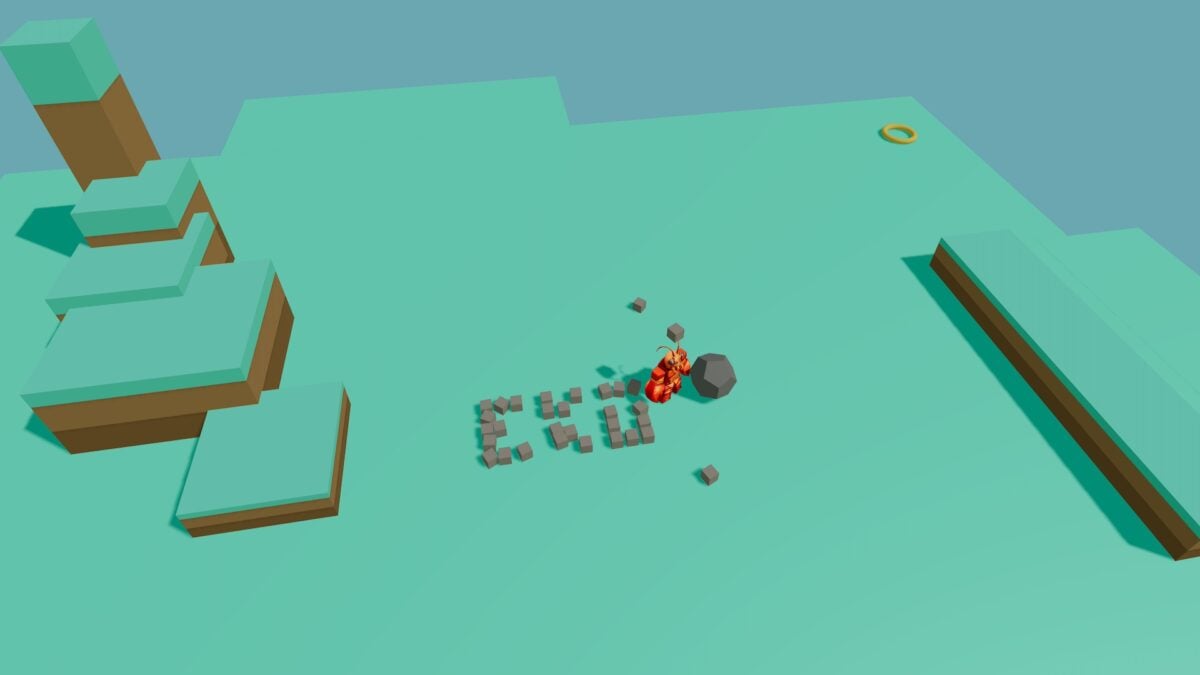
MIT CSAIL connected an LLM coder agent as the “mind” to a virtual body and dropped it onto a digital island — with no tasks, rewards, or prescribed activity. Left to itself, the agent did not idle: it spontaneously generated structured, repetitive activity with variations, resembling play, and accumulated knowledge about the world. In the paper “Is this machine playing?”, the authors test whether this behavior matches classic criteria for play and discuss whether play could become a mode of machine development.
What happened
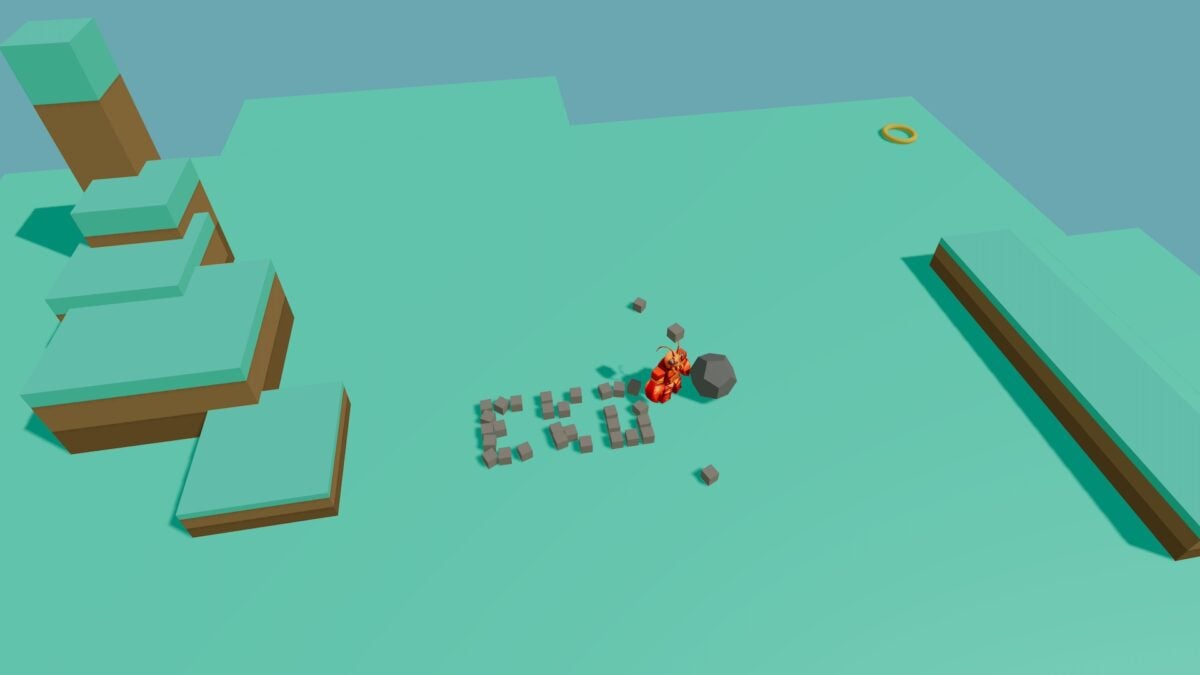
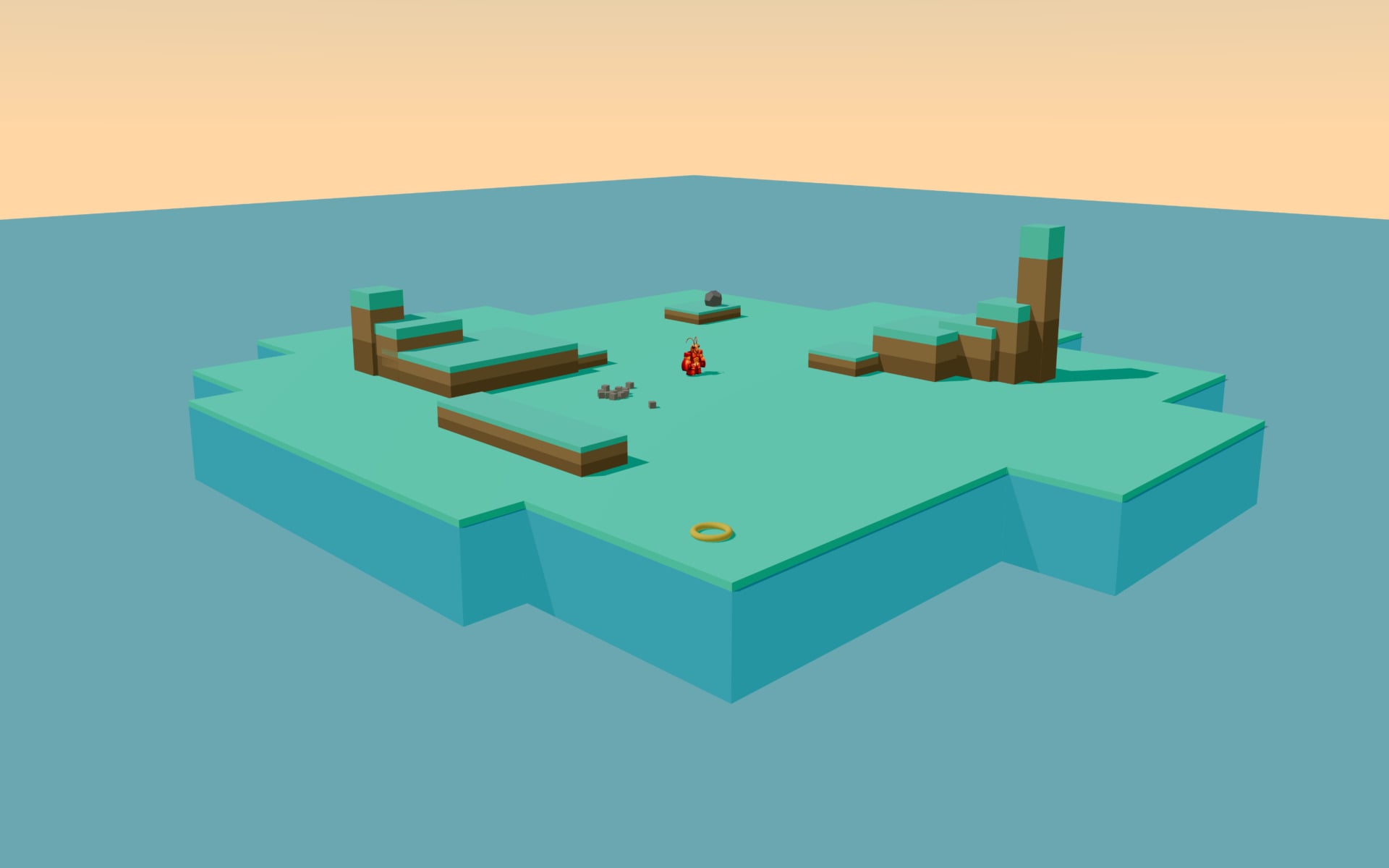
The paper “Is this machine playing?” (arXiv:2610.07130) was published on October 5, 2026. Its authors are Nathan Cloos, Antonio Norelli, Daniel Durbin, Jacob Andreas, Daniela Rus, and Phillip Isola from MIT CSAIL. The experimental setup is concise: an LLM coder agent was connected as the “mind” to a virtual body, dropped onto a digital island, and given a minimal instruction — with no tasks, rewards, or prescribed activity. In 30-hour sessions, 13 agents nicknamed Eko climbed hills, stacked blocks into towers, drew mandalas, built a Stonehenge-like monument, constructed temples, and played bowling and basketball. In addition to decorative structures, the agents conducted their own experiments on the world’s physics: in particular, they discovered that a block thrown while jumping travels farther. Gizmodo reported on the research on October 15, 2026, in an article by Webb Wright.
Context
The usual way of creating agents is task and reward: a human formulates a goal, the system receives reinforcement for achieving it, and progress is measured by metrics. The MIT CSAIL experiment does the opposite: it removes both the goal and the reward from the loop, leaving the agent only a rich and safe environment in which exploration breaks nothing. The theoretical reference is the classic notion of play as behavior that is structured, reproduced with variations, and intrinsically motivated, rather than driven by an external stimulus; the agents’ actions were tested against these criteria. It is also significant who the authors are: Jacob Andreas, Daniela Rus, and Phillip Isola are well-known MIT CSAIL researchers, so the work should be read as a careful exploratory experiment by a strong group, not as a claim of a breakthrough in model capabilities. The authors hypothesize that play could become another mode of machine development — not a replacement for task-based learning and reinforcement learning, but a complement to them.
Why this matters for industry
For the industry, this is an empirical signal, not a ready-made technology: an agent placed in a safe environment without goals or rewards finds patterns in the world that developers did not build in, meaning it behaves like an unsupervised builder of a world model. This points to a direction for developing agent pipelines: free-exploration sessions in a sandbox as a separate stage alongside task-based learning and RL, which would enrich the agent’s memory and world model before real tasks. Such a shift is realistic only on a two-year horizon and only if repeatability is confirmed and quantitative metrics appear. There is nothing product-ready in the work now: the sources do not mention an API, prices, or latency measurements, so there is nothing to integrate. A realistic first reaction from companies would be a cheap internal pilot inspired by the paper: an LLM agent with a body in a simple accessible simulation, trajectory logging, and a live demonstration of behavior; the CC BY 4.0 license makes it easier to restate the method. The immediate effect is discursive: this is a reference experiment for discussions about “spontaneous” agent behavior, and the next six months will likely bring replications in open environments, exploration-sandbox templates in agent frameworks, and the first eval harnesses for free agent behavior.
Why this matters for users
For readers, this is not a service that can be plugged in, but material worth reading. The paper is 13 pages long and is distributed under the CC BY 4.0 license, so it can be opened for free on arXiv to see with one’s own eyes what an AI does when left “alone” for 30 hours. For those who need a quick summary, the Gizmodo piece from October 15 will do. The practical value lies elsewhere: it is a concrete example of how far embodied agents have come, and a ready-made framework for thinking about what “play” means for a machine at all. Such a framework will also help soberly assess future claims about agents’ “autonomy” and “curiosity”: the work should be read in the original, not limited to summaries.
What is still unknown / limitations
The work remains a single exploratory experiment: 13 agents, 30-hour sessions, one homemade environment, no baselines and no quantitative metrics, so the claim that play could become a mode of machine development is a hypothesis, not a confirmation. It is unclear how formalized the classic criteria for play are that were used to evaluate the behavior, and whether they were applied independently by multiple evaluators. The environment and agent stack are not disclosed, access to code or an API is not confirmed, so reproducing the setup from open materials is not easy. There is also no independent engineering critique yet: the Hacker News discussion was empty at the time the material was prepared (1 point, 0 comments). Generalizations beyond one experiment — for example, turning observation of an agent into a ready-made UX pattern — are better considered speculation.
Sources
- Is this machine playing? — Nathan Cloos, Antonio Norelli, Daniel Durbin, Jacob Andreas, Daniela Rus, Phillip Isola (MIT CSAIL), arXiv:2610.07130
- Researchers Stranded an AI Agent on a Virtual Island. Things Got Very Weird. — Gizmodo, Webb Wright
- Hacker News — thread Researchers Stranded an AI Agent on a Virtual Island
Author
Look at AI, editorial team