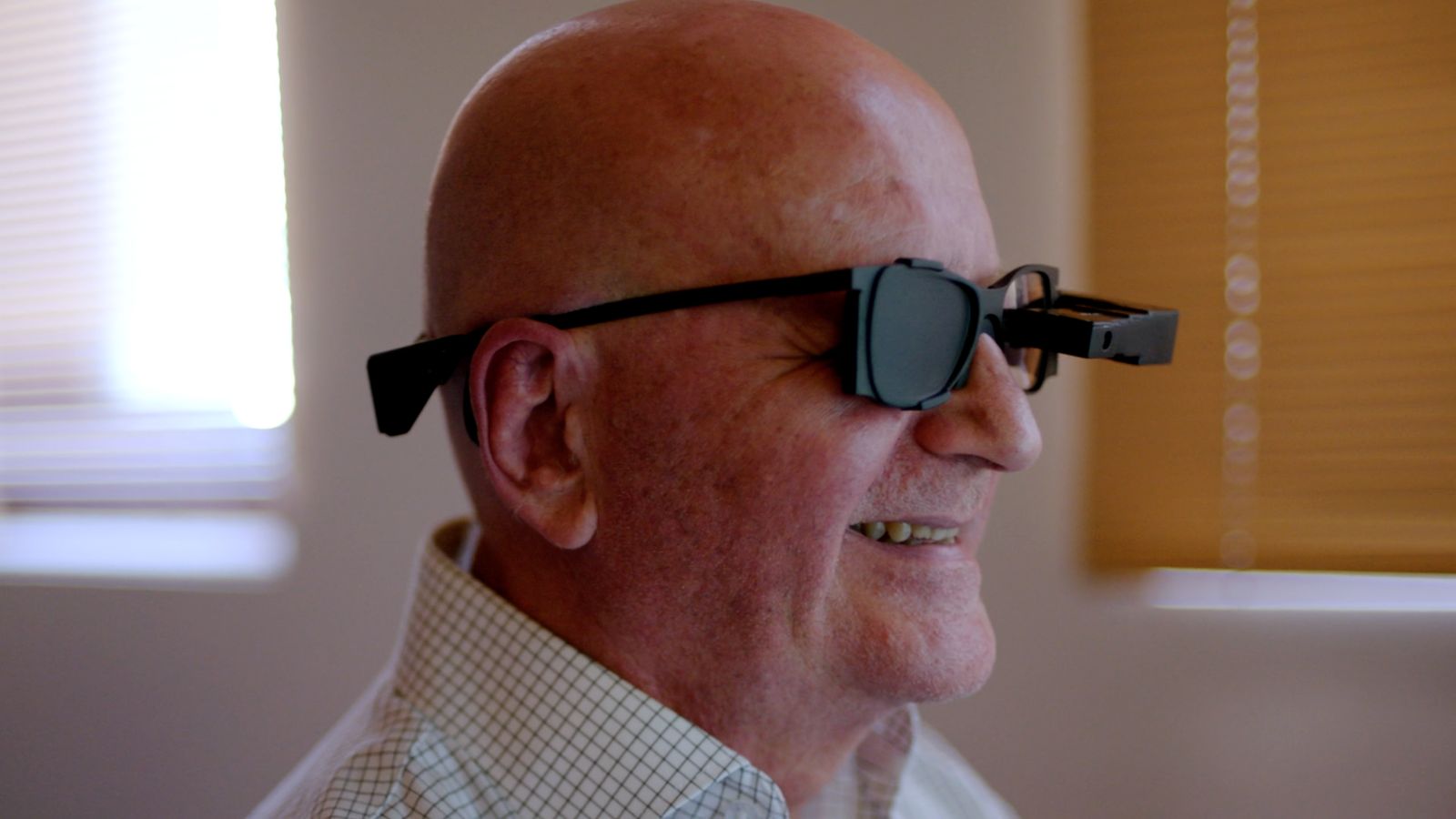
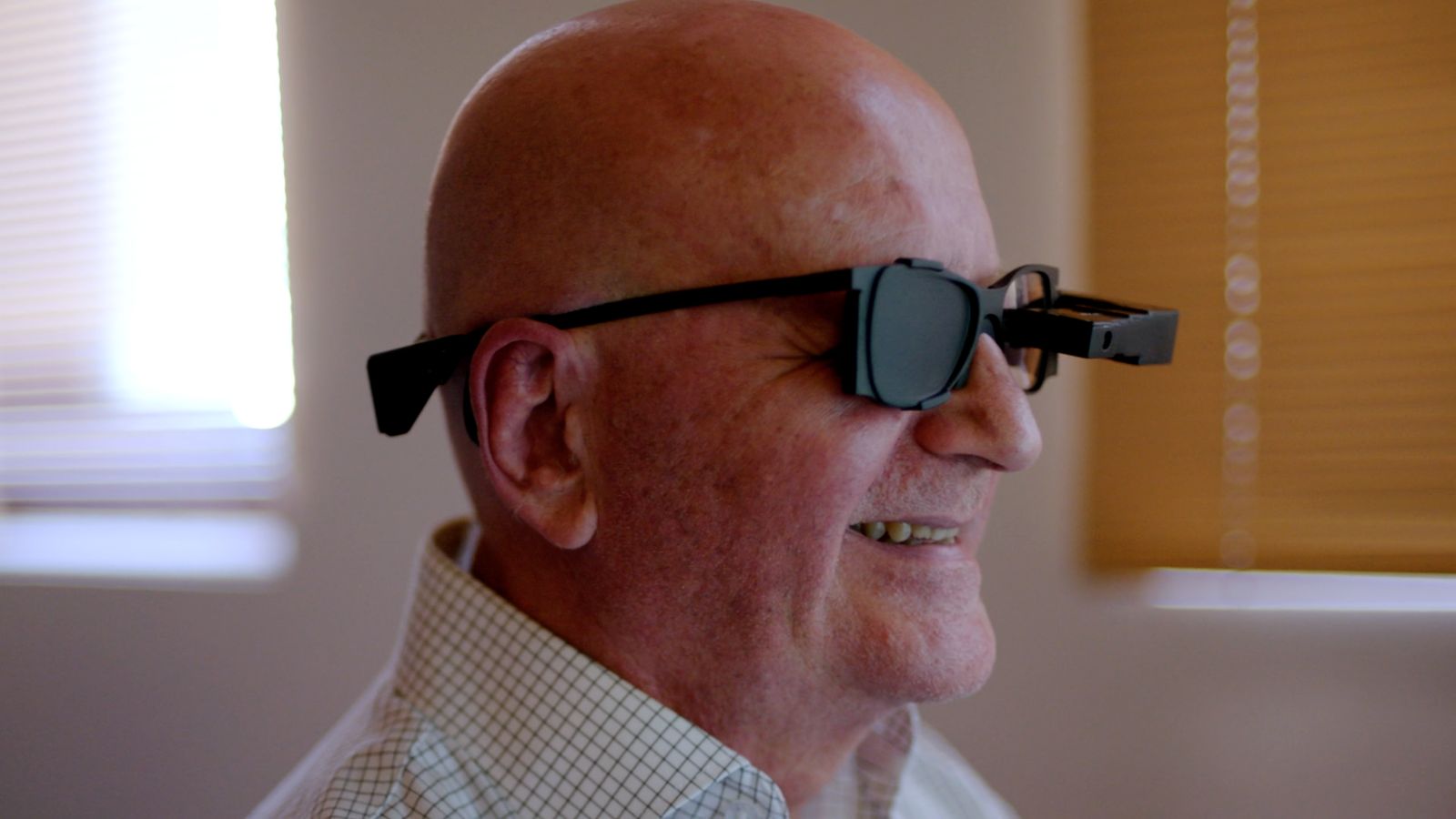
Science Corporation — the company founded in 2021 by former Neuralink co-founder Max Hodak — announced on October 13, 2026, at the TechCrunch Disrupt conference that it had for the first time implanted its PRIMA subretinal chip in a patient with Stargardt disease, a hereditary condition in which retinal photoreceptors die and the central blind spot grows. Already in the first rehabilitation sessions, the patient began to distinguish visual symbols from emptiness. However, the platform is not new: PRIMA is already sold in Europe for geographic atrophy — an age-related neurodegenerative retinal condition — so the news should be read not as the birth of the technology, but as the transfer of a mature clinical product to another, hereditary disease.

What happened
Science Corporation spoke about the new implantation on October 13, 2026, at TechCrunch Disrupt. The operation itself took place back in May 2026 at Sydney Eye Hospital as part of the PRIMAlia clinical trial (NCT07266584), led by Dr. Matthew Simunovic. Rehabilitation has only just begun, but it has already yielded a measurable result: in the first session, the patient saw a single letter, and in the second — read a whole word. Currently, the system provides a monochrome, high-contrast image with a narrow field of view; it does not yet create a full, natural picture of the world.
Context
Technologically, PRIMA is designed as follows: a 2×2 mm chip with photovoltaic pixels is placed under the retina, which converts infrared light from a camera in glasses into electrical signals and stimulates the remaining retinal layers, acting as artificial photoreceptors. The implantable part is minimal, and the entire product layer — camera, processing, and signal rendering — is moved to an external wearable hub and updated as software without repeat surgeries. The platform already has an evidence base: in the New England Journal of Medicine (NEJM), it was described that in geographic atrophy, by the 12th month of observation, 84% of 38 patients could read letters, numbers, and words. The trial is now testing applicability to Stargardt disease, which, according to the estimates provided, affects about 150,000 people worldwide. The key hypothesis of the project: the limiting factor for a subretinal prosthesis is not the cause of photoreceptor death — neurodegenerative or hereditary — but the integrity of the inner retina, so the same chip is potentially suitable for different conditions.
Why this matters for the industry
This is not a breakthrough in machine learning, but a mature stage of neuroprosthetics, and the industry signal here is this: a platform that has undergone peer-reviewed validation and become a commercial product is moving to a second indication, which intensifies competition in the niche of visual neurointerfaces with Neuralink and Second Sight. The company has set a public development benchmark — a new generation of implant in humans within a year and a move toward native visual acuity on a five-year horizon — and competitors are now measuring their roadmaps against this benchmark. Since improvements come through updates to the external layer, competition is expected to shift to the software part — calibration and image updates — and not just to hardware. It makes sense for startups to look at niches around the “chip, glasses, rehabilitation” chain: software, computer vision, and trial service infrastructure; direct integration is not yet available, as the system is closed and does not offer an SDK, API, or partner programs.
Why this matters for users
Unlike age-related macular degeneration, Stargardt disease begins in childhood or youth, so here, for the first time, reading restoration is being tested for a young audience, not just for elderly patients. For now, this is an experiment: implantation is only possible within the PRIMAlia trial and currently concerns one person, not an accessible procedure. The progress of such a patient can be assessed independently — the company has published a video of his rehabilitation on science.xyz. The technology also clearly demonstrates the general principle of neuroprostheses — “vision for the brain is just electrical signals along the optic nerve” — which is applicable to both auditory and motor prostheses, so it is useful for anyone interested in the class of sensory neurointerfaces to follow PRIMA.
What is still unknown / limitations
Evidence in Stargardt disease is currently at the level of one patient in early rehabilitation: this is a proof of concept, not a therapeutic standard, and data comparable to NEJM will only appear as the cohort in PRIMAlia is recruited and observed. It is premature to judge the implant's ultimate resolution based on the dynamics of the first sessions: a significant part of the gain is due to rehabilitation and neuroplasticity, that is, training of the visual system, and not to the hardware. Image quality is determined by the co-design of the external camera, infrared projection, and photovoltaic pixel density, so development will proceed along the path of sensorics and scene encoding. The Humanitarian Use Device status only marks the rarity of the indication and does not in itself confirm the device's effectiveness or set approval timelines, so it is too early to talk about a fast regulatory corridor. In different materials, the size of the NEJM cohort is indicated differently — 38 and approximately 32 patients. The price, system latency, and glasses operating time are not disclosed, and the announced development roadmap is a stated plan, not a confirmed result.
Sources
- Clinical Trial Update: First Patient With Stargardt Disease Using PRIMA (Video) | Science Corporation
- Science Corporation implants its vision-restoring chip in its first Stargardt disease patient | TechCrunch
Author
Look at AI, editorial team