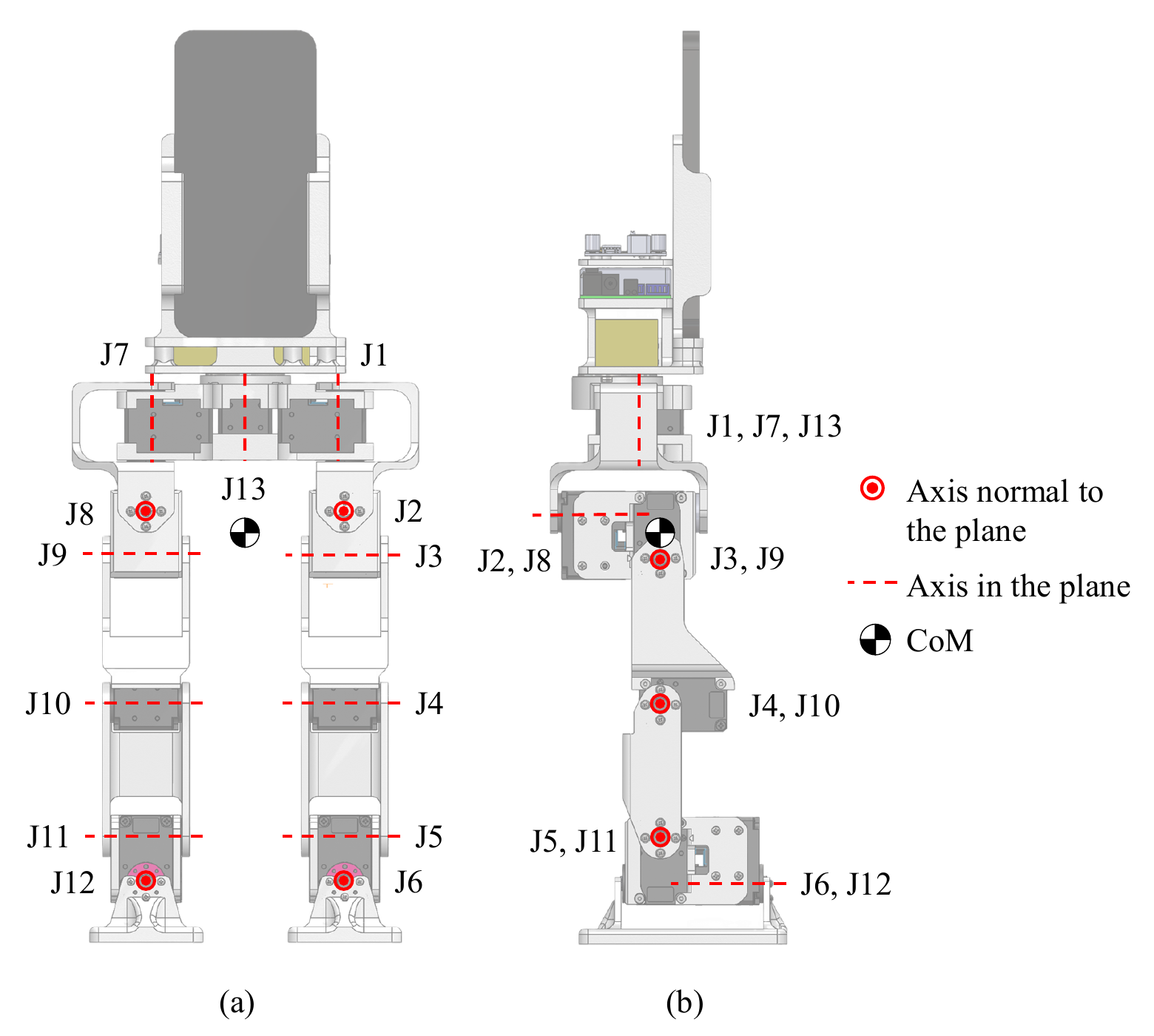
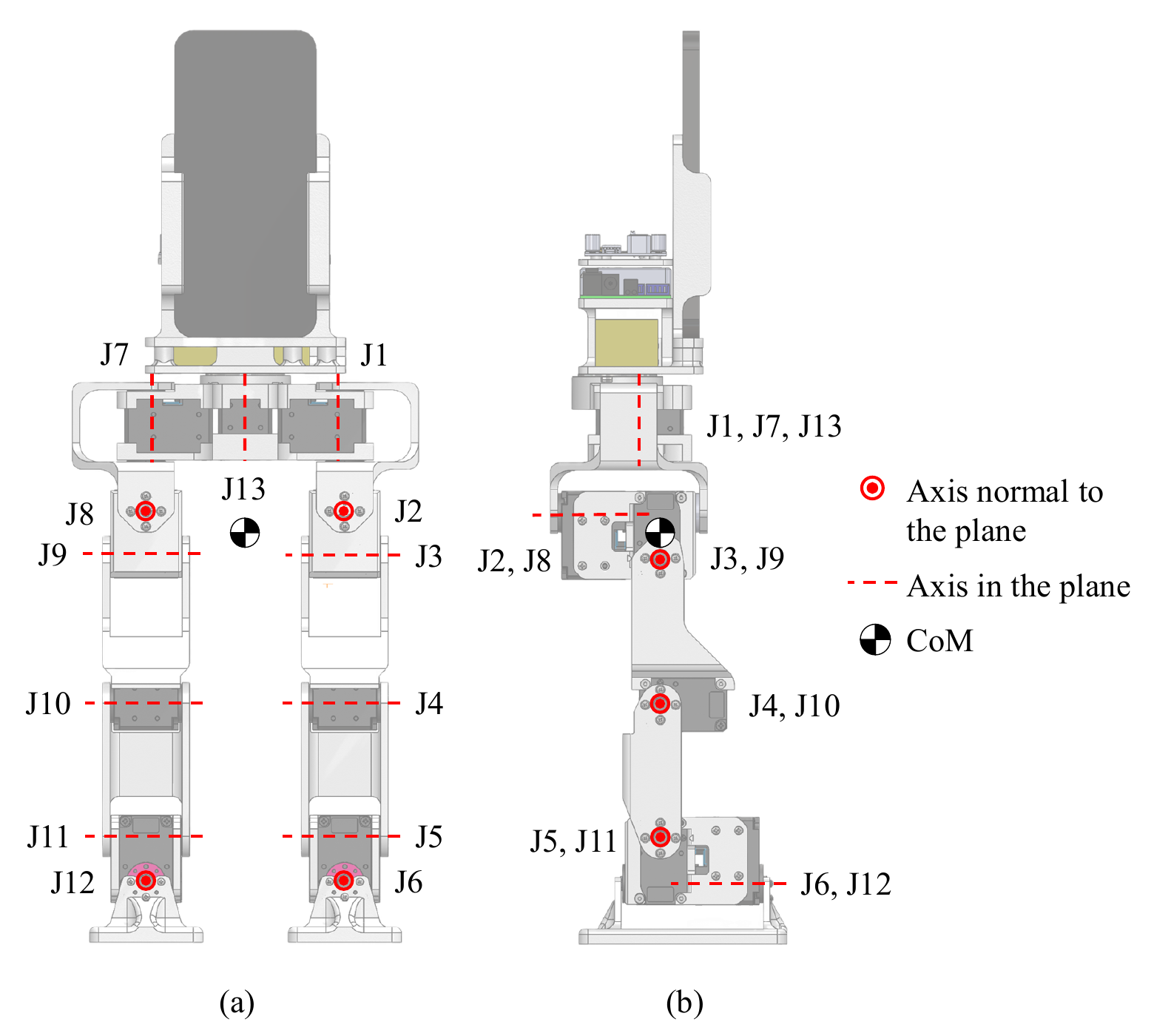
The RoMeLa lab at the University of California, Los Angeles (UCLA) has released PhoneBot, an open bipedal robot where an ordinary Android smartphone serves as the camera, gyroscope with accelerometer, and onboard computer. The body without the phone costs approximately $400, while comparable humanoid platforms cost from $3,500 to $13,800. PhoneBot is 48 centimeters tall, weighs 1.8 kilograms, and the walking app has been tested on a 2017 Honor 9 smartphone and three budget devices costing $50–80: the robot walks, gets up from a lying position, and tracks a person. The drawings, parts list, and code have been published openly along with the article in the arXiv repository.

What happened
On October 6, 2026, the article PhoneBot: A Low-Cost Open Humanoid Robot Platform Reusing Smartphones was published on arXiv under number 2610.08737, in which the RoMeLa team describes the open humanoid PhoneBot, 48 cm tall and weighing 1.8 kg. The mechanical body is driven by 13 Dynamixel XL430-W250-T servos at $23.90 each, and the entire intelligence of the platform is installed in a compartment for a serial Android smartphone, replacing the camera, IMU, and onboard computer. The walking neural network was trained using the PPO method in the MuJoCo/MJX simulator and runs on the phone's processor via TensorFlow Lite; target joint positions are transmitted over Wi-Fi (UDP) to a mini single-board computer controlling the servos. On the same phone, vision via ML Kit and MediaPipe, visually-inertial SLAM based on ARCore, and person tracking work. The app was tested on a 2017 Honor 9 and three budget smartphones costing $50–80 (Moto G 2024, Moto G 2025, and Galaxy A16 5G): on each of them, the robot walks, independently gets up from a lying position, and tracks a person.
Context
Bipedal robotics has traditionally remained an expensive segment: comparable platforms OP3, ToddlerBot, BRUCE, Berkeley Lite, and HighTorque MiniPi cost from $3,500 to $13,800, with a significant share of the price formed by the computing board, cameras, and inertial sensors. The PhoneBot idea turns this order upside down: instead of special equipment, a device that billions of people already carry in their pocket is used. Even a not-so-new Android smartphone combines a camera, gyroscope, and accelerometer, the ARCore SLAM framework, and a processor capable of running a neural network, so the entire "brain" of the robot becomes a commodity component. This implies a fundamental difference of the project from another algorithmic breakthrough: this is primarily a systems engineering template where price reduction is achieved by assembling mass-produced ready-made parts, and the complete openness of drawings, software, and trained policy makes the design reproducible by other teams.
Why this matters for the industry
For the industry, the main effect of PhoneBot is the price collapse of the entry threshold into humanoid robotics: the body without the phone costs approximately $400 compared to $3,500–$13,800 for comparable platforms, meaning the difference is about ten times. A bipedal platform becomes available to universities, student teams, and rapid prototyping, not just labs with expensive equipment. The openness of the project turns it into a reference platform that can be reproduced and forked, and vendors of expensive educational kits risk hearing from customers why pay ten times more when there is an open alternative. The hardware load is also indicative: the walking neural network occupies only 8.5–13.4% of the phone's CPU, and building a room map via ARCore SLAM — up to 34.3%, meaning a budget Android device covers perception, mapping, and walking control on a single onboard device. Heavy models in such an architecture are moved outside the phone: currently, speech recognition (whisper.cpp) and a language model work on a separate machine, setting the pattern of "lightweight edge user plus offloaded computing" for future cheap humanoids.
Why this matters for users
Readers get several entry points to the project. You can study the article on arXiv to understand the mechanics, software, and gait training, and using the open drawings, parts list, and code on the phonebot.dev website, build your own PhoneBot and test the app on any available Android smartphone. The project also serves as a clear demonstration of the capabilities of cheap phones: a $50–80 device is enough to run a walking neural network, SLAM, and person following. Expectations should be kept sober, however: the phone only records speech, while recognition and the language model work on a separate machine, and the response is voiced via Piper, so PhoneBot is a lightweight client, not an autonomous "brain." Today this is a research demonstrator with walking, getting up from a lying position, and following a person, not a finished service that can be set up at home and used on a schedule.
What is still unknown / limitations
The open materials do not contain data on the durability of Dynamixel servos, autonomous operating time, and the stability of delays in the wireless Wi-Fi/UDP loop, through which the phone controls the joints of a balance-critical bipedal mechanism — the reliability of this architecture still needs to be confirmed by independent builds. The total simultaneous load on the phone when the walking policy and SLAM work in parallel is also not disclosed: the numbers are known separately (8.5–13.4% and up to 34.3% CPU), but not for joint operation, so it is premature to talk about a large free margin for additional on-device models. There is no commercial product behind the project: there are no sources on support, user experience, and guaranteed quality of operation, and claims of a "ready cheap base for products" should be considered extrapolations until replications verify the stated characteristics.
Sources
- PhoneBot: A Low-Cost Open Humanoid Robot Platform Reusing Smartphones (arXiv:2610.08737)
- PhoneBot — official project website
Author
Look at AI, editorial team