
The FBI arrested 35-year-old OpenAI engineer Abdulrahman Alfozan, a Saudi Arabian citizen who had been working at the company since July 2025. According to the investigation, he installed a hidden audio recorder in a closed executive meeting room in OpenAI’s San Francisco building, hiding a mass-produced Chinese Seeed XIAO ESP32-S3 Sense board in a TV USB port wrapped in toilet paper. The U.S. Justice Department is treating the case as counterintelligence and for the first time publicly describes insider espionage inside a frontier AI laboratory as a national security threat in the development of “superintelligence” — under National Security Presidential Memorandum NSPM-11. Notably, the evidence was not the content of the board itself, which was encrypted, but digital traces: chat logs of the suspect and his wife, surveillance camera footage, and, allegedly, use of a corporate AI agent through which he learned the schedule of closed meetings.

What happened
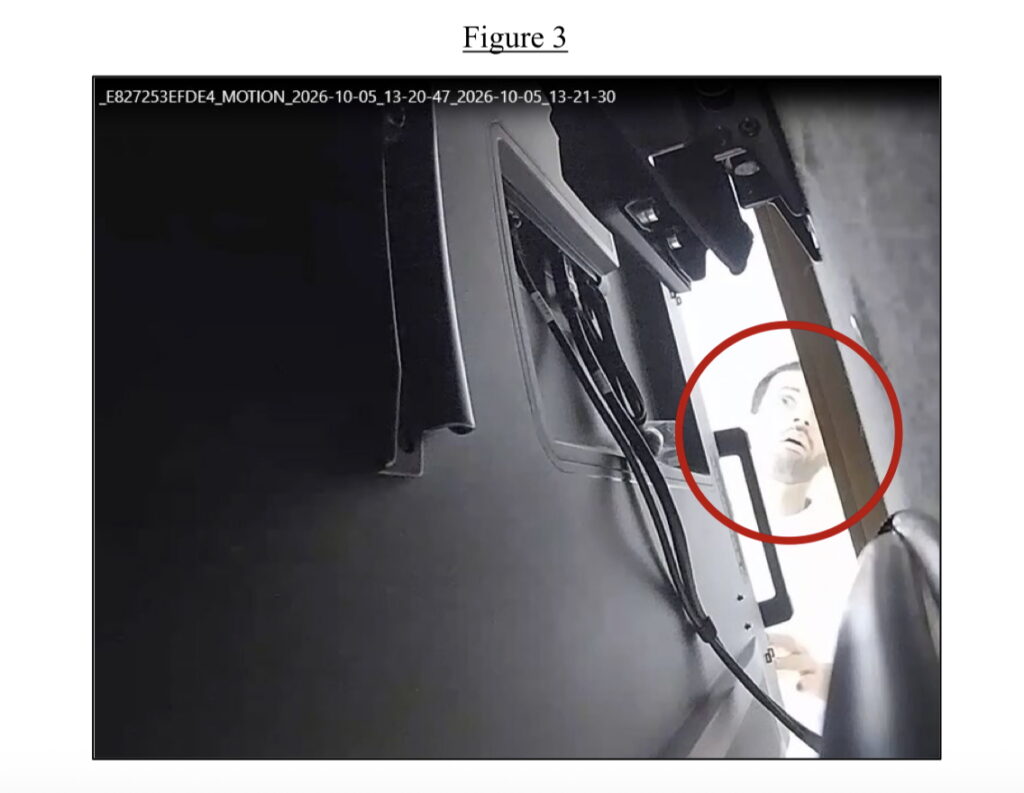
According to the U.S. investigation, around September 28, 2026, Alfozan hid a Seeed XIAO ESP32-S3 Sense board with a microphone and microSD slot in the USB port on the back of a TV in the executive meeting room, wrapped in toilet paper. The device was discovered on September 30, but its content turned out to be encrypted. After the discovery, OpenAI, according to the investigation, installed a surveillance camera in the meeting room, which on October 5 recorded the suspect’s attempt to retrieve the recorder, and an unattended bag left by him revealed a second device. According to the investigation, as early as August 2025, Alfozan used OpenAI’s internal productivity agent to find out where and when closed meetings were held; chat logs from his account and his wife’s account with requests about building, encrypting, and remote access to the recorder were included in the evidence. The FBI arrested Alfozan and brought charges carrying up to 5 years in prison and a $250,000 fine. The Justice Department published press release No. 26-1173, the complaint US-v-Alfozan-Complaint-10-8-26.pdf, and a surveillance camera screenshot from the affidavit, so key episodes of the case are now verifiable from primary sources.
Context
The classification of the case goes beyond ordinary corporate security. NSPM-11 is a national memorandum on protecting advanced American developments, and the U.S. Justice Department for the first time publicly described insider espionage inside a frontier AI laboratory as a counterintelligence threat, placing it in the area of “superintelligence” development. The recorder itself contains no technical novelty: the Seeed XIAO ESP32-S3 Sense is a mass-produced debug board with a microphone and microSD slot, and content encryption is a standard precaution, so the specificity of the case lies in the operational scheme, not the hardware. A second layer of context relates to corporate AI tools: according to the investigation, information about the schedule of closed meetings was obtained through OpenAI’s internal productivity agent, which moves such agents from the category of employee convenience to the category of a surface suitable for organizing intelligence. A third layer is the evidence base: because the board’s content is encrypted, the investigation was given not the device’s own data, but internal chat platforms and camera recordings, while agent and chat logs from two accounts turned out to be verifiable artifacts with legal weight, and the mention of the wife’s account expanded the circle of evidence sources beyond a single employee.
Why this matters for the industry
For the AI industry, the case sets three specific signals. First: corporate AI agents de facto generate a forensic trail, so the governance layer — auditing requests, restricting agent access to calendars on a least-privilege basis, fixing retention and log immutability — is turning from a formal requirement into a separate product, and such a framework is already being assembled on existing Workspace platform audit APIs without building from scratch. Second: cheap consumer hardware has turned closed meeting rooms into an attack surface, making it relevant to check meeting rooms for foreign USB devices and continuously monitor closed zones, as OpenAI’s practice with a camera installed after the discovery has already shown. Third: the Justice Department for the first time described insider espionage in a frontier laboratory as a counterintelligence case under NSPM-11, and in the coming months it is logical to expect formalization of counterintelligence procedures — segregation of calendar data from agent tools, conscious retention, and chat-log auditing as forensic infrastructure; this is an expectation, not a confirmed fact. Budgets and policies are being revised right now: laboratories are checking physical security of closed zones, corporate lawyers are reviewing contracts with AI vendors, and within the next six months the first commercial features in the “agent forensics” category and fine-grained scoping of agent access in enterprise assistants are likely.
Why this matters for users
For readers, the case is illustrative in three respects. Industrial espionage in the most famous AI company turned out to be a technique at the level of a boxed Chinese board with microSD, not an operation of the century: the component base for surveillance is available to almost anyone, and the question is not the rarity of the hardware, but the control of premises and personnel. Every interaction with a corporate chatbot on a work account should now be considered a potential piece of evidence: in this case, chat logs of the suspect and requests from his wife’s account were included in the evidence, and it was precisely the digital traces plus camera recordings in the meeting room that gave the investigation the main picture instead of the encrypted device. Finally, primary sources are open and verifiable: the Justice Department press release and the complaint US-v-Alfozan-Complaint-10-8-26.pdf can be read directly, without relying on retellings, which makes this case a rare example of a fully documented espionage story in an AI company.
What is still unknown / limitations
All described episodes are charges by the investigation, not facts established by a court; five years in prison and $250,000 are maximum sanctions, not a sentence imposed. The recorder’s content is encrypted, and in the published materials it is not visible what exactly the device managed to record and whether the recordings had a recipient. The classification of the case under NSPM-11 is a political-legal framework, not a technical assessment: from the presented documents it does not follow that data about developments actually left the company. In addition, the logs record requests about building, encrypting, and remote access, but from the presented sources it does not follow that the AI agent provided specific recipes used in creating the device, so the conclusion that language models “lowered the threshold” for building such a recorder is not confirmed by these sources. The suspect’s motive and the final court decision will remain unknown until the end of the proceedings.
Sources
- Saudi National Arrested for Installing Surreptitious Audio Recording Device at OpenAI — DOJ Press Release 26-1173
- Recording device hidden in toilet paper found in top-secret OpenAI meeting room — Ars Technica
Author
Look at AI, editorial team