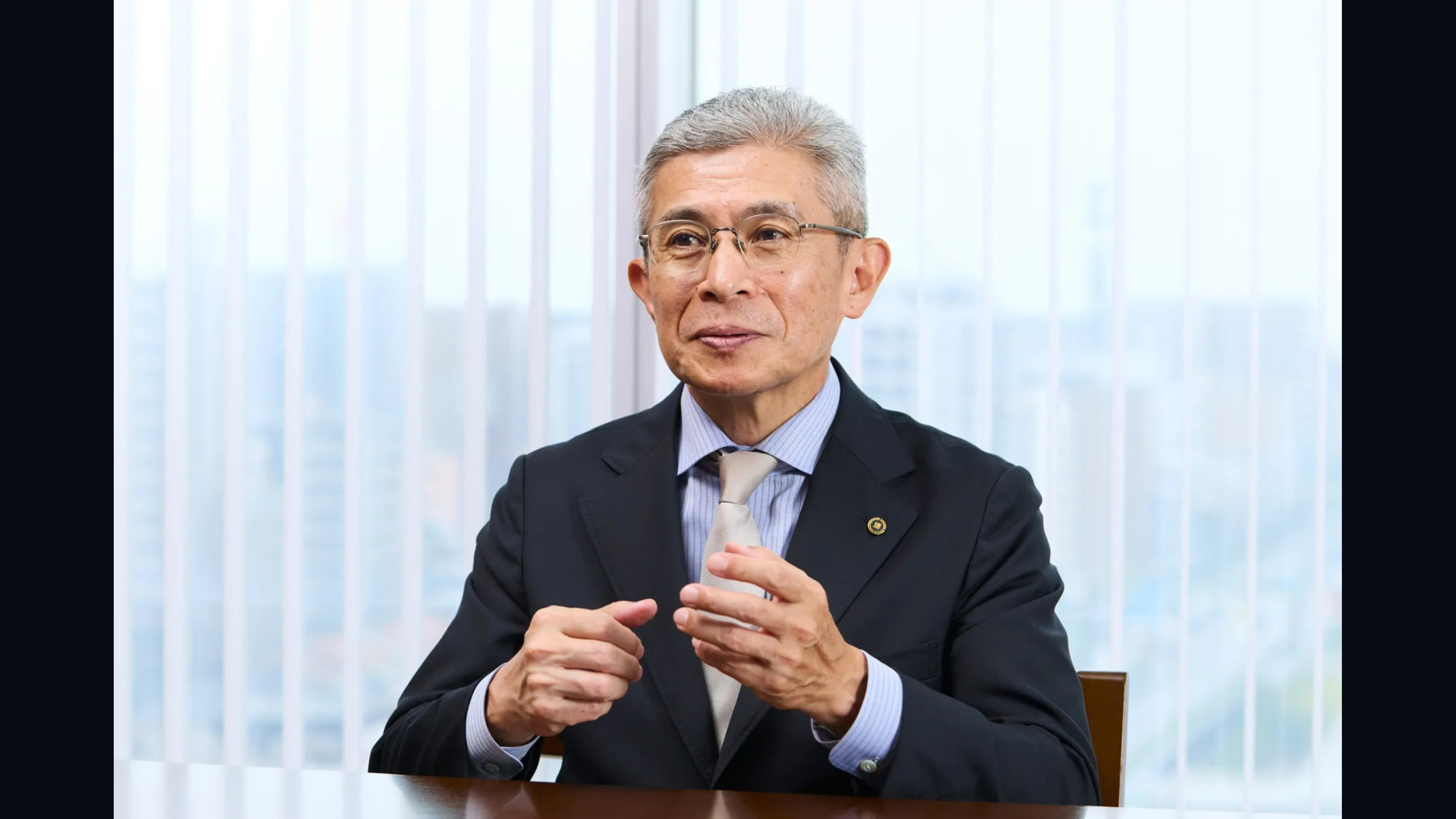
Bloomberg reported on September 27, 2026, how Osaka-based Sakai Chemical Industry, founded in 1918 and known for ultra-fine powders for geisha makeup, has transformed into a key supplier to the AI industry. Its high-purity barium titanate (BaTiO3) is the raw material for the dielectric of multilayer ceramic capacitors (MLCC), which store charge in AI server power nodes. Capacitor material production lines are already operating at near full capacity, and the dielectric powder market is controlled by an oligopoly, so AI infrastructure growth may hit a chemistry bottleneck before a silicon one.

What happened
The trigger was a Bloomberg article from September 27, 2026, about Osaka-based Sakai Chemical Industry. The company produces high-purity barium titanate (BaTiO3) using a proprietary hydrothermal technology; this powder goes into the dielectric of MLCCs—multilayer ceramic capacitors that store charge in compact AI server power nodes. According to the article, which is summarized in open access by aiunderstanding.org, capacitor material production lines are nearly fully loaded due to demand from AI server manufacturers. According to industry estimates, a high-end AI server contains around 28,000–30,000 MLCCs—more than 10 times more than a standard server. According to independent market analysis, Sakai is the largest “merchant” supplier of dielectric powders.
Context
The market for dielectric powders for MLCCs is concentrated into an oligopoly: according to independent estimates, Sakai accounts for approximately 25–28% of the global merchant BaTiO3 market, Ferro/Vibrantz for about 20%, Nippon Chemical Industrial for about 14%, while capacitor market leader Murata keeps powder production for its own needs. Indirect confirmation of the demand shift is provided by financial reports: according to Sakai’s guidance for FY27/3, published on May 13, 2026, operating profit in the Electronic Materials segment will grow by 32.2% to ¥2.4 billion with revenue remaining almost unchanged at ¥11.5 billion; margin growth amid revenue stagnation indicates a shift in sales toward expensive AI positions. The company has built capacity expansion into its BEYOND2030 capital expenditure plan of ¥5.7 billion. There is no scientific novelty in the chemistry itself: hydrothermal synthesis of high-purity BaTiO3 is a mature industrial technology, and Sakai’s value is determined by stability, purity, and production scale, not a new method.
Why this matters for the industry
For the industry, this is a signal that the AI infrastructure bottleneck is shifting from GPUs to upstream chemistry. MLCC content per unit of hardware is growing rapidly: the GB200/Rubin board alone has more than 1,000 capacitors, and the MLCC content of the VR200 rack is estimated at approximately $4,300 compared to ~$1,525 for GB300. If powder production capacity remains at near capacity, AI server procurement growth may hit barium titanate before silicon, and the concentrated market will gain pricing power. Qualifying a new powder supplier takes years, so a local shortage or disruption at one of the few manufacturers quickly translates into the AI server supply chain. Indicators to watch: actual FY27/3 financial reports, capital expenditure execution under the BEYOND2030 plan, price dynamics, and announcements of expansions in capacitor powders. Over a two-year horizon, both scenarios are possible: recognition of powder and MLCC shortages as an AI infrastructure constraint on par with GPUs and energy, or the reverse scenario: competitor capacity expansion or changes in power node architecture reducing the significance of barium titanate.
Why this matters for users
For readers, this is a chance to understand the real structure of an AI server: inside it are thousands of ceramic capacitors based on barium titanate, not just processors. There is no direct impact on the daily work of ML teams at the moment—existing demand is still being met by powder suppliers. Practical benefits appear in planning: if you are ordering AI servers, it is worth requesting delivery times and BOM details for power nodes, as well as factoring in possible delays and rack price increases. It is also worth cheaply monitoring public supplier signals—Sakai’s financial reports, guidance, capital expenditures, and news on capacitor powders—to see in advance whether powder will become the next bottleneck in AI infrastructure.
What is still unknown / limitations
Key quantitative estimates—around 28,000–30,000 MLCCs in a high-end AI server, more than 1,000 MLCCs on a GB200/Rubin board, and VR200 rack MLCC content of about $4,300 compared to ~$1,525 for GB300—are industry estimates without disclosed methodology and cannot be reproduced from open data. The Bloomberg article is behind a paywall, and the open version is a summary by aiunderstanding.org, so secondary verification of figures against the primary source is not possible. Financial metrics relate to one segment and one year of guidance and do not prove a sustained shift in sales toward AI. The “near full capacity” line loading is a qualitative formulation without published utilization figures. The barium titanate shortage scenario materializes only if AI server demand persists.
Sources
- Bloomberg: From Geisha Face Paint to Servers, Sakai Chemical Emerges as AI Linchpin (article from 2026-09-27)
- aiunderstanding.org: open summary of the Bloomberg article on Sakai Chemical from 2026-09-27
- Sakai Chemical Industry — official Electronic Materials page: barium titanate BT series, hydrothermal synthesis
- Sakai Chemical: The Upstream Play to AI Server MLCCs — independent analysis (market shares, financial dynamics)
Author
Look at AI, editorial team