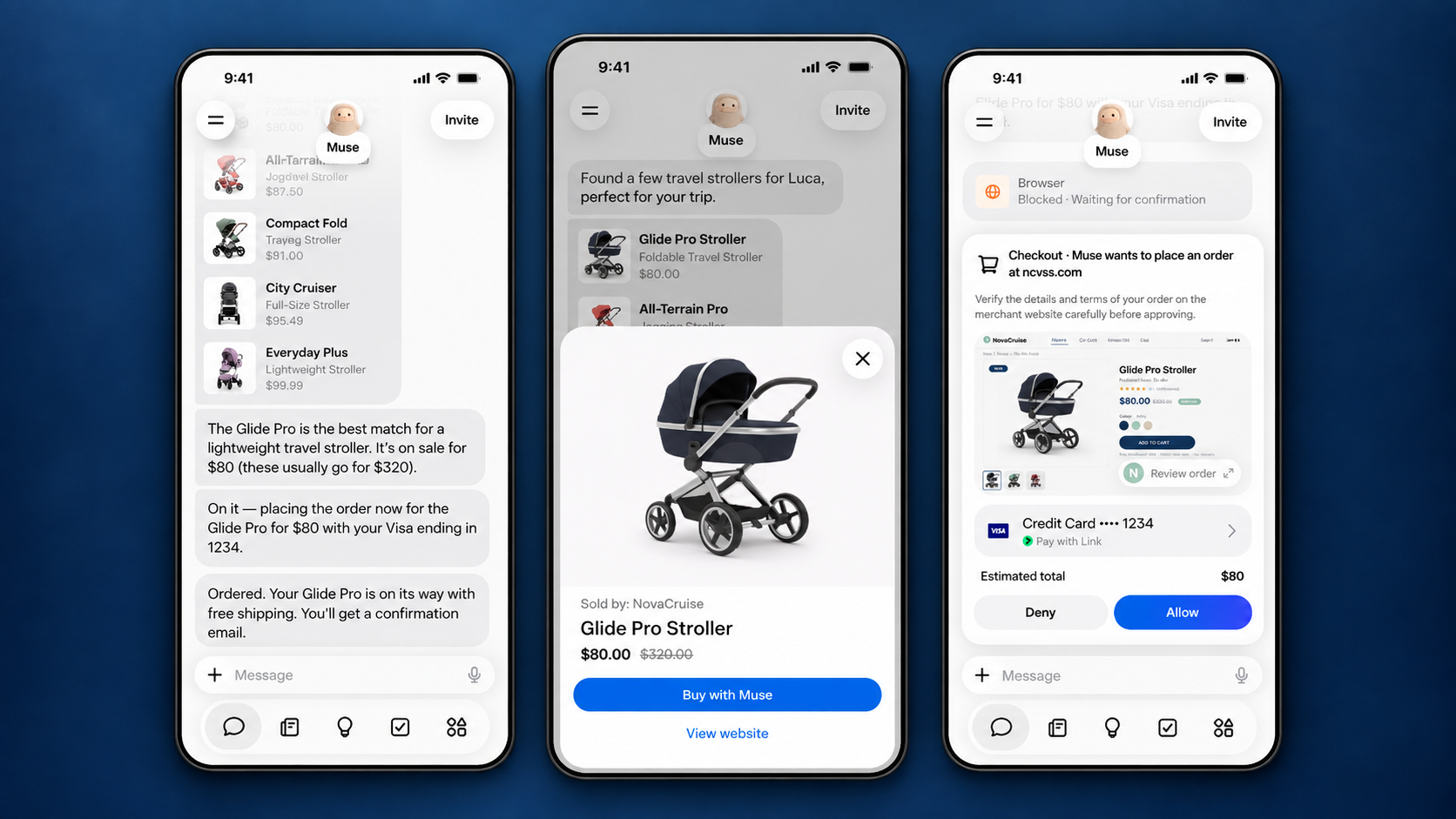
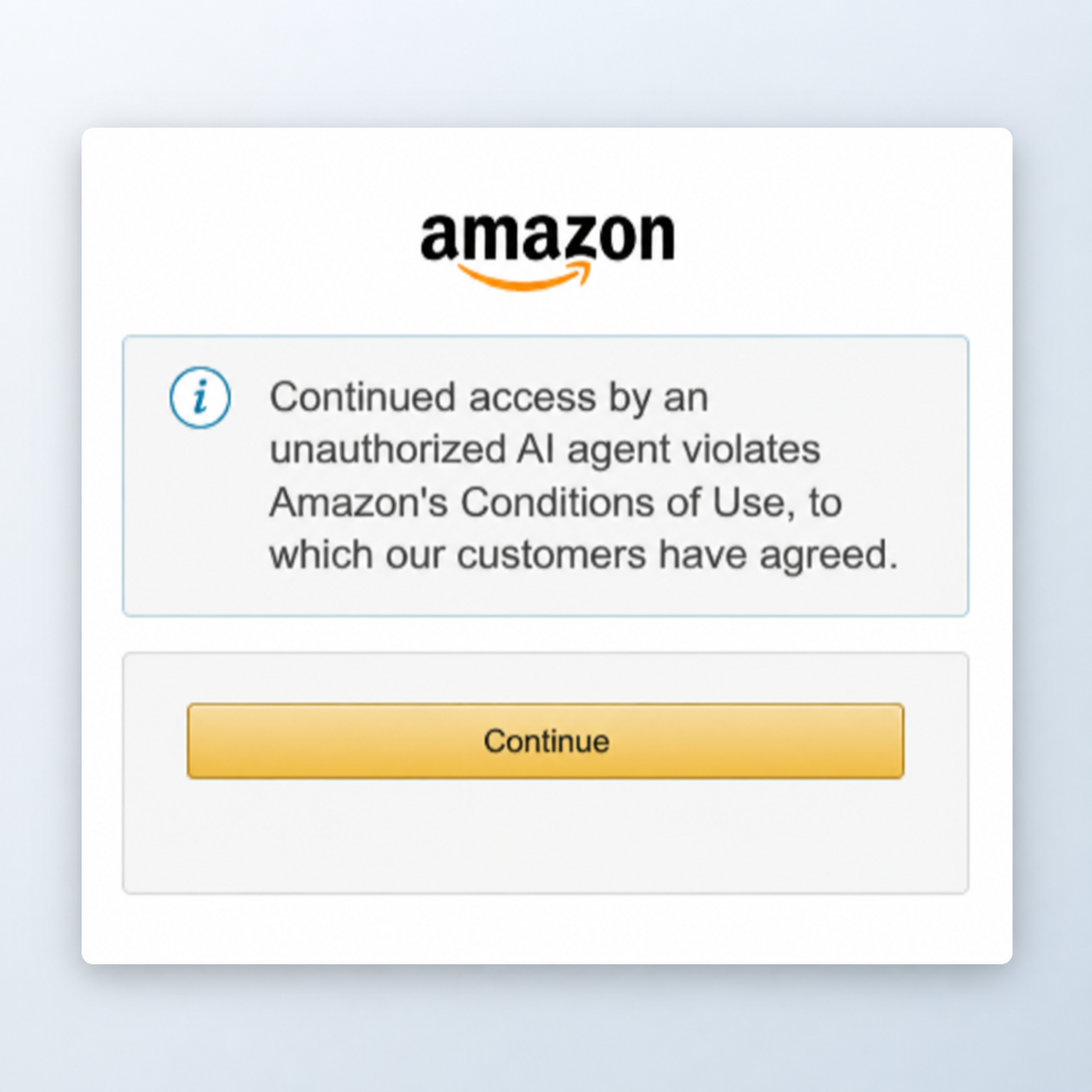
Since September 20, 2026, Amazon has blocked purchases through Muse — Meta's personal AI agent, released on September 8, 2026: when attempting to pay for goods on Amazon.com, a message about a violation of the platform's 'Conditions of Use' appears. Amazon explains the ban by the fact that Meta did not approve access, and the agent does not identify itself when bypassing pages. Notably, the conflict occurred just a month after Amazon lost a lawsuit with Perplexity: now the platform is acting not through hacking lawsuits, but through its own terms of use.
What happened
The block has been in effect since September 20, 2026: when attempting to pay for goods on Amazon.com through Muse, the scenario is interrupted by a warning about a violation of the 'Conditions of Use'. In Amazon's argumentation, there are two pillars: access for Meta's agent was not approved, and Muse does not identify itself as a program when browsing store pages. Muse was released on September 8, 2026 as a personal AI agent for multi-step tasks. The fact that the message appears precisely at the payment stage indicates that Amazon recognizes agentic traffic and interrupts the transaction at the moment of the transaction.
Context
The conflict did not arise out of thin air. Amazon has already sued Perplexity over the Comet browser and previously blocked shopping agents from Google and OpenAI. In August 2026, Amazon lost the dispute with Perplexity: the Ninth Circuit decided that the user themselves 'logs in' to the servers, not the AI company, so the accusation of bypassing protection did not work. After that, the platform changed its support: instead of 'hacking' lawsuits, now contractual arguments, and this is exactly how the ban for Muse is formulated. Complicating the picture is the fact that the companies remain partners: since 2023, Amazon products have been sold within Facebook and Instagram, and in April 2026, Meta signed a multi-billion dollar contract to launch agentic AI workloads on Amazon Graviton chips. For Amazon, the advertising business of 68 billion dollars last year is at stake, which relies on the fact that buyers see pages and sponsored products directly.
Why this is important for the industry
For the industry, this is an escalation of the key dispute of agentic commerce: who controls the purchase when an AI agent acts on behalf of the user. The precedent sets a template — a platform can cut off someone else's agent not through a court, but through the Conditions of Use, and such a mechanism is cheaper and faster to copy by any marketplace. The point of coercion becomes not legal theory, but detection: Amazon interrupts the scenario at the moment of payment, meaning the detection of agentic traffic really works. After the lost Perplexity case, it is no longer the bypass of protection that is being disputed, but the very fact of the agent's undeclared presence, which increases the chances for a standard for agent identification — a kind of user-agent for AI. At the same time, the positions of Amazon's own agentic bets are strengthened: Alexa for Shopping, launched in May 2026, and 'Buy for Me' for purchases on third-party sites of brands. For founders and builders, the conclusion is strict: an agentic product without contractual access to the platform is an asset at risk of disconnection, and any flow based on browser emulation of user actions should be immediately revised.
Why this is important for users
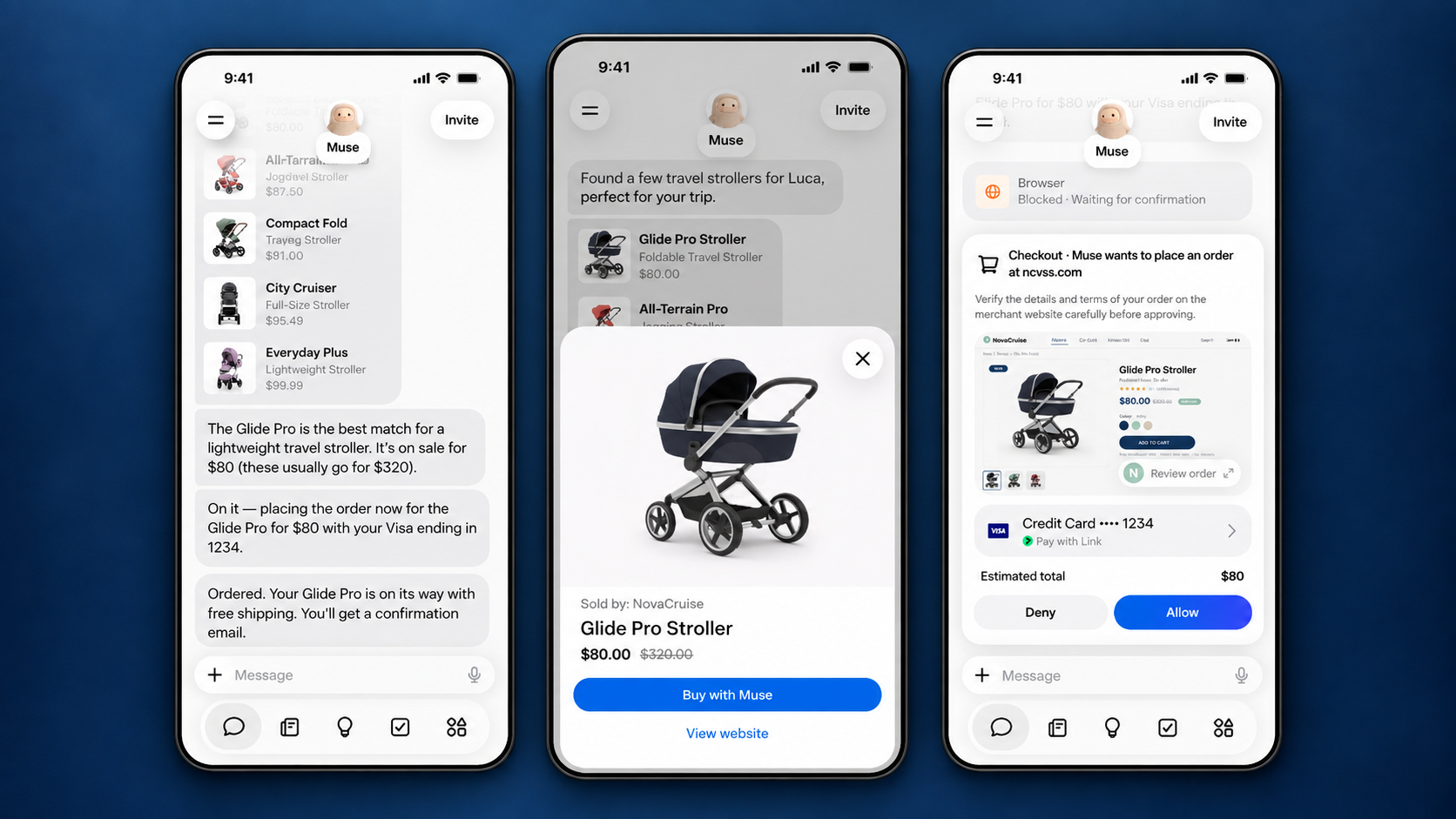
If you use Muse, purchases on Amazon.com will not go through for now: instead of payment, a warning about a violation of the 'Conditions of Use' will appear. Muse is built differently from a chatbot: it performs multi-step tasks — email, calendar, payments, shopping — on a secure virtual machine with its own browser, a separate agent Sentinel approves everything that Muse sends to the internet, and credentials are stored in a storage hidden from the agent itself. Without an API, the service works 'through the browser, as you would do it yourself' — it is precisely this mode that became the target of Amazon. Demand for Muse is high: a week after launch, the app topped the free top of the App Store in the US. Practical conclusion: scenarios tied to Muse and Amazon are not working now, and you should rely on official integrations or purchase directly on the platform.
What is still unknown / limitations
There is no technical documentation and benchmarks for Muse in open sources: neither the share of successfully completed multi-step tasks, nor the frequency of erroneous payments, nor the statistics of Sentinel's approvals and rejections, including false positives and delay at each outgoing action, nor the resilience to incorrect data from email and calendar are known. The declared capabilities are currently supported only by marketing formulations. The mechanism of Amazon's detection is also not disclosed — it is obvious only that the block is triggered at the moment of payment. Finally, Meta's reaction is unclear: will the company add agent identification and transition to an official API or continue working in hidden mode, and whether other major platforms will copy the Conditions of Use template.
Sources
- Amazon blocks Meta's Muse AI assistant in new standoff over agentic shopping — GeekWire
- Amazon Blocks Meta's Muse AI Agent From Shopping Its Store — PCMag
- Hacker News discussion: Amazon blocks Meta's Muse AI assistant
Author
Look at AI, editorial team