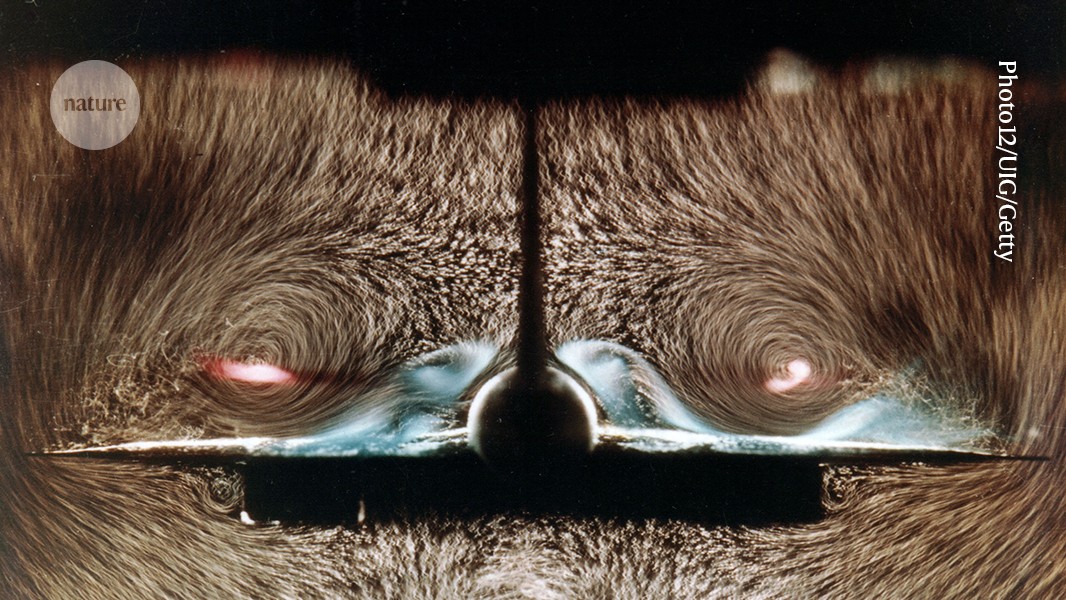
On September 8, 2026, OpenAI announced that its AI system of thousands of agents had solved a Millennium Prize Problem — the question of the existence and smoothness of solutions to the Navier–Stokes equations, for which the Clay Institute offers a million dollars. The claimed proof shows that solutions to these equations can lose smoothness: a singularity arises, which cannot occur in a real fluid. Nature's analysis explains where the boundary of applicability of these equations lies and what such a result means for both physics and how mathematics will be done in the future. The proof has not yet undergone independent verification by mathematicians, and other research groups are already contesting priority.
What happened
On September 8, 2026, OpenAI announced that it had solved a Millennium Prize Problem — the question of the existence and smoothness of solutions to the Navier–Stokes equations — and published a preprint with the proof. The essence of the result is that the equations' solutions can produce a singularity: an initially ordinary fluid reaches infinite speed in finite time, which is physically impossible, meaning the smoothness of the solutions is violated. On September 18, Nature published an analysis of this story by Nicola Jones. It includes an assessment by applied mathematician George Karniadakis of Brown University: for air, a singularity arises when a vortex is stretched to a width of about 70 nanometers, which is on the order of the mean free path of air molecules — a scale at which the continuum model fundamentally ceases to work. The publication also describes the work process of the OpenAI team led by Sébastien Bubeck: on September 1, they switched to the problem, a simplified version was closed by 1,000 AI agents in about 50 hours, and the full version required 10,000 agents with increased compute.
Context
The Navier–Stokes equations, derived in the 19th century, describe the flow of fluids and gases and form the basis of aerodynamics, oceanography, and weather modeling. The question of the existence and smoothness of their solutions is on the Clay Institute's list of Millennium Prize Problems, which offers one million dollars for a solution. According to Nature's analysis, the scientific novelty of the claimed result is limited in scope: for incompressible fluids, such as water, a singularity has been shown for the first time, whereas for compressible gases and rarefied media, the limits of applicability of the continuum model were known earlier. The solution is also accompanied by a dispute over priority: the Alpöge–Buckmaster team and the Anandkumar group are developing their own approaches to the same problem. A separate storyline is authorship: Nature publishes a special piece on who owns a scientific result in the age of AI, since the work was produced by an orchestra of thousands of agents, not an individual researcher.
Why this matters for the industry
For the industry, the main signal is not physical but methodological: for the first time, according to OpenAI's claim, an open problem at the Millennium Prize level has been closed not by a human, but by an agentic system. This legitimizes the category of orchestration of long research tasks, and the documented run in the preprint can be used as a benchmark when designing your own agentic pipelines. If a platform cannot run thousands of long-lived agents with checkpointing, failure isolation, and result aggregation, this loop should be built into the architecture now. It is fundamentally about offline batch compute, not a service: OpenAI did not disclose infrastructure latency metrics or pricing, so it is premature to build product plans on this news. The market did not react in the moment: a thread on Hacker News collected one point with no comments. If independent verification confirms the result, replication attempts by other labs, the emergence of tools at the intersection of agentic orchestration and formal verification, and a shift in publication standards are likely, where a preprint from an AI lab together with community checking will become a new format; computational software vendors in such a scenario will begin to position hybrid computational schemes.
Why this matters for users
For the reader, this is not a story about "AI beat physics," but a clarification of the boundary of applicability of familiar equations. The calculations on which aircraft wing flow, ocean currents, and weather forecasting rely will remain valid in all engineering-significant regimes: they will break down only at extremely small scales, where there is no fluid as a continuum, but rather dozens of individual molecules. There is no need to change anything in familiar products, from engineering calculations to weather apps, because of this news. The practical benefit now is different: OpenAI's preprint is published openly, and anyone can study the proof independently along with Nature's analyses, rather than relying on retellings. Until independent verification, the lab's claim should reasonably be read as a strong assertion, not as an established fact.
What is still unknown / limitations
The main open question is independent verification: the proof still needs to be checked by mathematicians outside OpenAI. The priority of the discovery is being contested by other groups, and the final distribution of credit has not yet been resolved. The quantitative characteristics of the run cited in OpenAI's statement and Nature's analyses, namely the size of the agent swarm and the runtime, are data from the claimant, not an independently measured benchmark: the orchestration methodology is not disclosed, there are no baselines, and it is unknown how much time and how many people the same task would have required for a team of mathematicians, so it is premature to interpret these numbers as a measurable "cost of the task in compute." The result has no product embodiment yet: OpenAI has not published an API or prices.
Sources
- AI cracked the Navier–Stokes challenge. What does that mean for physics? — Nature analysis (Nicola Jones, September 18, 2026)
- OpenAI claims huge maths breakthrough on a famed 'Millennium Problem' — Nature news (Davide Castelvecchi, September 8, 2026)
- OpenAI preprint with the proof of the Navier–Stokes problem solution (PDF, cdn.openai.com)
Author
Look at AI, editorial team