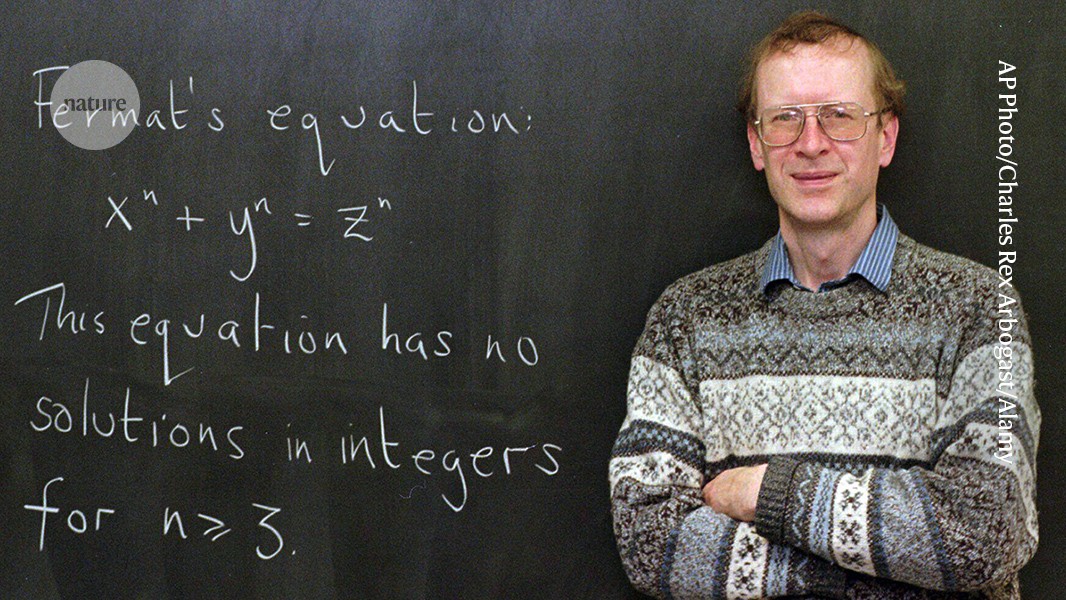
Anthropic, the developer of Claude, announced that its AI, for the first time in history, formalized the proof of Fermat's Last Theorem — translating a completed mathematical proof into computer-checkable code in the Lean language. The run took 11 days, and now the result can be independently verified by a machine, step by step.
What happened
The launch was carried out on August 18 on the Prove2Me platform using a multi-agent framework based on Claude Code, with the participation of Tianyi Peng's team from Columbia University. The completed proof occupies 13 million lines of Lean code and includes 30,300 formulated theorems, of which 29,500 are actually used in the final version. According to Anthropic, the system generated about 6 billion output tokens, and the model used is comparable in class to Claude Fable 5.1. The mathematical content is not new: the simplified proof by Andy Wiles and Richard Taylor in the presentation of Darmon, Diamond, and Taylor was formalized.
Context
Formalizing a proof is translating an argument described in natural language into code in the Lean language, in which each statement is expressed in such a way that a machine can formally verify its correctness; an error in any link makes the entire tree incorrect. Fermat's Last Theorem was proved by Andy Wiles and Richard Taylor in 1994–1995, and the manual formalization of this proof was estimated by experts at about 10 years. The Prove2Me platform, on which the run was performed, builds a DAG graph of theorems and provides fast compilation, search, and reuse of already proved statements, which allows the agent system to gradually build up the proof.
Why this matters for the industry
For the industry, this is the first fully computer-verified result for one of the most famous theorems: in practice, it has been shown that the combination of "multi-agent generation plus independent deterministic verifier" covers formalization tasks that were previously considered to take years. Anthropic's claim is verifiable: the complete proof, build logs, and mechanics of operation are published, and the architecture can be studied and reproduced. A signal of reproducibility is that the same pipeline in 3 days with three personal Claude Max subscriptions formalized Vinogradov's theorem on three prime numbers. In a broader sense, the case opens the way to systematic rechecking of mathematical proof corpora for hidden errors and to using a formal verifier as an automatic "calculator" of rigor for checking the reasoning of other LLMs.
Why this matters for users
For the reader, this is a rare well-documented case: the scale of the artifact — millions of lines of code, tens of thousands of theorems, billions of tokens — shows the real capabilities and mechanics of LLMs in a strict discipline, not marketing promises. The original post, complete proof, and build logs are open, and the BBC documentary film "The Proof in the Code" tells this story in a visual form. Practitioners have access to a reference architecture of "agents plus independent verifiable backend" for tasks with strict machine-checkable output, and interested mathematicians can now study the Lean language and the Mathlib library on a real example.
What is still unknown / limitations
The run was not fully autonomous: it was carried out by a team with the participation of specialists from Tianyi Peng's team at Columbia University. The exact version of the model, parameters, and launch conditions — infrastructure, parallelism, the share of manual intervention — are not disclosed in the materials. The comparison of 11 days with the estimated 10 years is based on a rough expert estimate, not a controlled experiment, and the task was to formalize an already known proof in a specific version, not to solve an open problem.
Sources
- Nature
- Anthropic research post Formalizing Fermat's Last Theorem
- Technical article Formalizing Fermat's Last Theorem in Lean
Author
Look at AI, editorial team