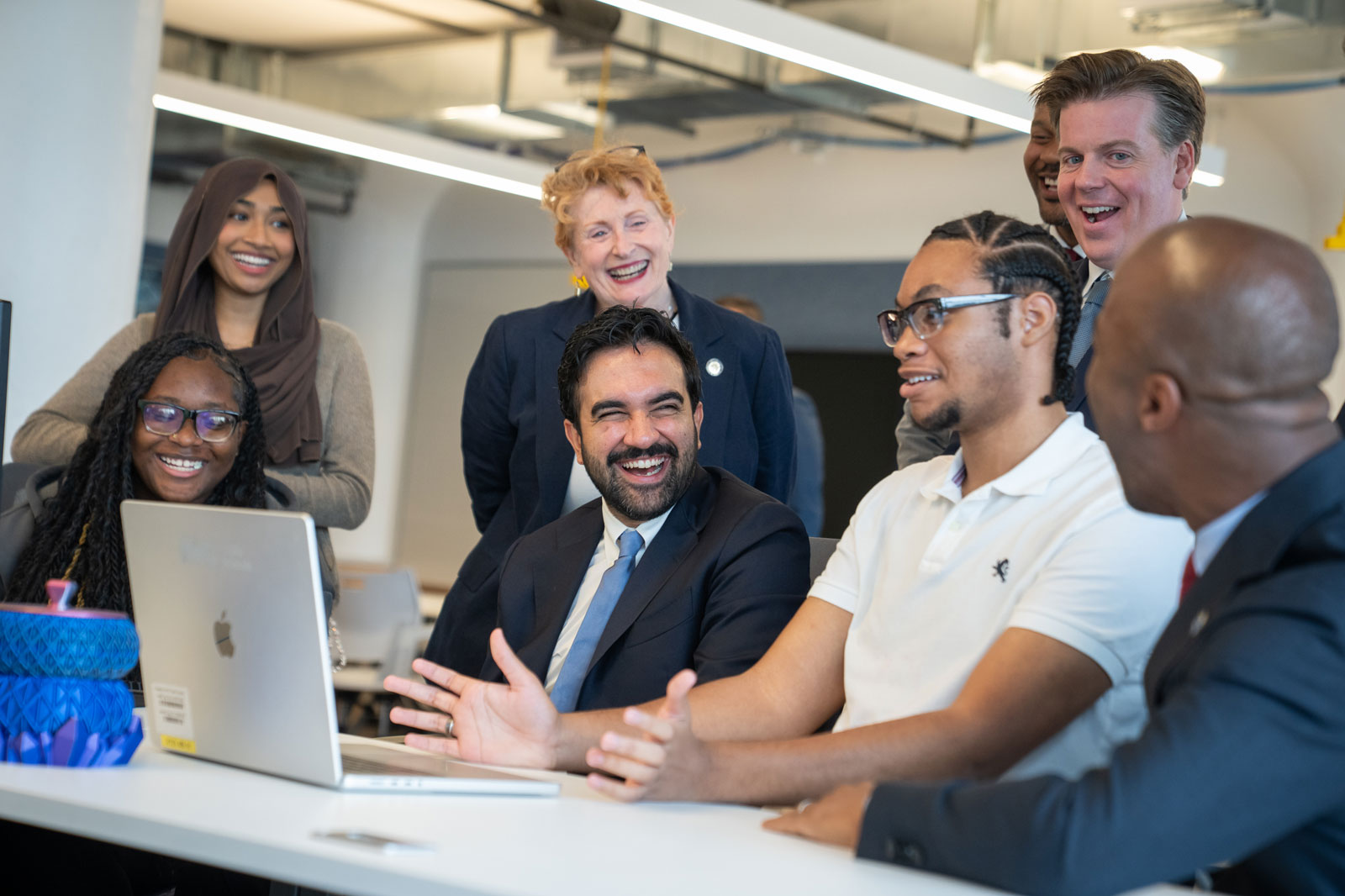
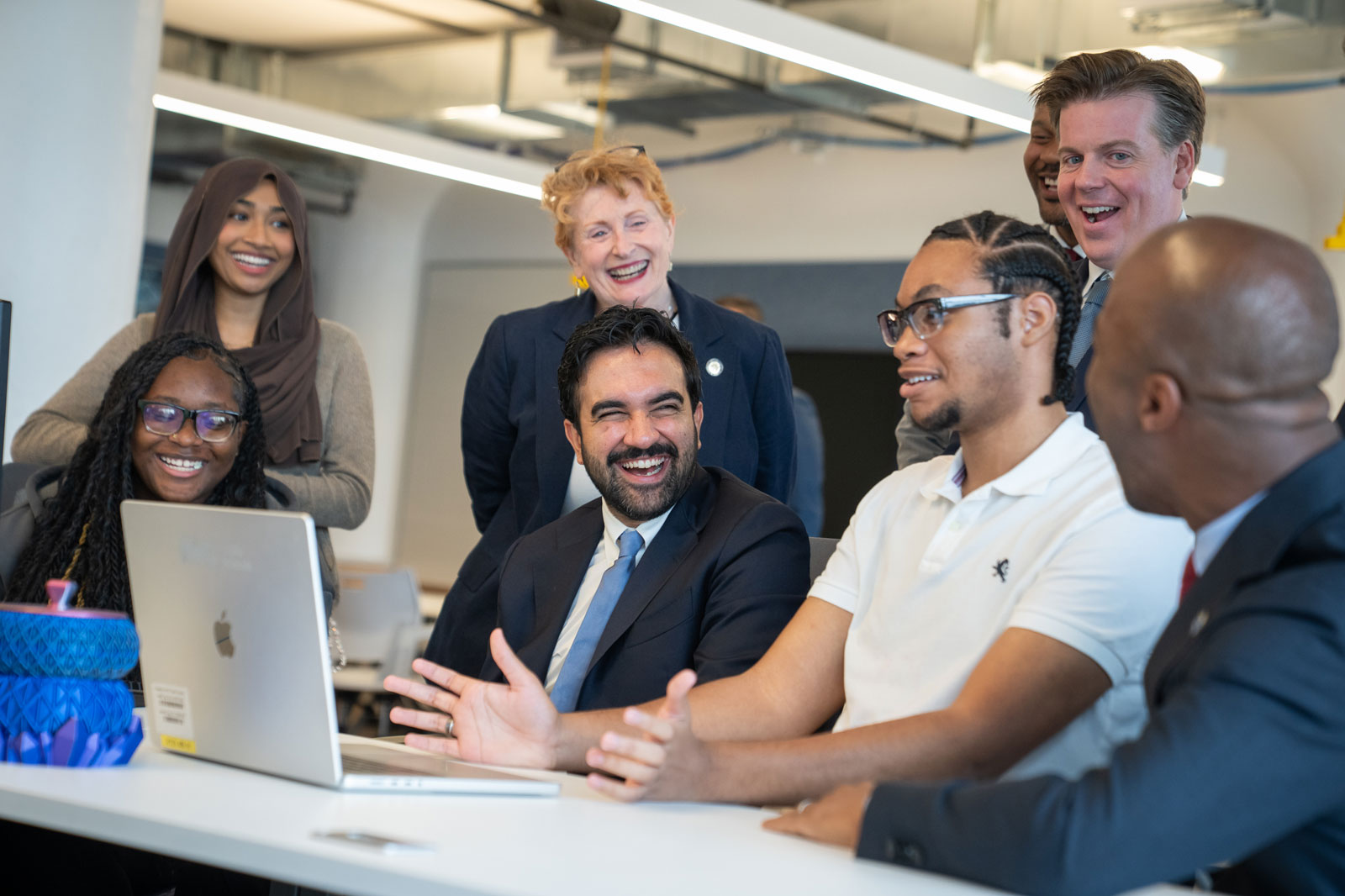
New York City Mayor Zohran Mamdani and Chancellor of the Department of Education Kamar Samuels announced, according to a city statement, the broadest moratorium on generative AI in US schools. For the 2026–2027 school year, student-facing generative AI is banned from 2-K through 8th grade inclusive, affecting nearly 600,000 children, about two-thirds of NYC Public Schools. Companion chatbots are banned in all classes without exception. An exception has been made only for dosed pilots: up to 50,000 students, about 5% of the student body, will have access to five selected tools with strict time limits. The city's goal, as stated in the announcement, is to study the effect of the technology, not to expand its presence in classrooms.
What happened
The ban only applies to tools available to students themselves: teachers are allowed to use AI for lesson planning and administrative tasks. High school students will receive 45-minute AI literacy modules twice a year instead of a ban. The pilot program is limited to five selected tools and strict time limits: Quill for English is allowed up to 15 minutes per week, Edia for math up to 20 minutes per week, Brisk Teaching with the Brisk Boost product for 10–20 minutes one to two times a week, Playlab up to two assignments per school year, Intel AI-Ready Schools one lesson per week. School participation in pilots is limited to five classes per school. A separate decision affects the rest of the market: all tools already used in NYC Public Schools will undergo a re-audit and will be excluded if their features are not deemed critical for learning.
Context
NYC Public Schools is the largest school system in the US, so New York's decision automatically becomes the largest-scale test of such a policy. For the first time, a major city is not implementing student-facing generative AI but systematically rolling it back for a year to study its effect — instead of the usual logic of implementation pilots. The announcement is based on the precautionary principle of "the student as the primary thinker": a tool should not replace a child's own learning work. The results will be evaluated by the Technology in Schools Coalition, which includes students, educators, parents, unions, and experts.
Why this matters for the industry
For EdTech companies, this is a direct blow to existing contracts: all tools in NYC Public Schools are undergoing a re-audit, and suppliers risk losing the largest school system in the US if their features are not deemed critical for learning. Companion chatbots immediately lose the school distribution channel without a transition period. The five selected vendors, on the other hand, receive a protected showcase for up to 50,000 students and reference status that will be visible to the entire market. Admission requirements also outline product design: short dosed sessions instead of open chat, teacher in the loop, transparent pedagogical value, rejection of the "companion" image. Engineers should check their products for readiness for such requirements: technical ability to limit time per student, export of usage logs, and data privacy by default. Product teams' focus will likely shift to teacher workflows and exception niches like assistive technologies and multilingual students, and the New York format will likely become a template for regulatory requirements that other school systems and legislators will reference.
Why this matters for users
For families, this means specific changes in school life: elementary school students will spend a whole year learning without accessible school generative AI. At the same time, the experiment is measurable: by the end of the 2026–27 school year, the Technology in Schools Coalition is required to publish a report with recommendations, and its findings will directly affect the next round of debates about the impact of AI on children. For those following this discussion or looking at the school market, the list of five approved tools and their limits provides a live reference for what regulators consider an acceptable format for AI working with children. Parents and educators in New York should check with their school whether their class is participating in a pilot and which specific tool is being used.
What is still unknown / limitations
The one-year ban itself does not prove either the harm or the benefit of generative AI: the scientific value of the moratorium depends on the evaluation design, which is not disclosed in the announcement — there are no metrics, baselines, or control groups. It is also unknown what exactly the coalition will measure in the mandatory report: academic performance, attention, student well-being, or something else; without pre-registered metrics, the conclusions risk being post-hoc and politicized. The selection criteria for Quill, Edia, Brisk Teaching, Playlab, and Intel AI-Ready Schools are not disclosed in the announcement, and the sample of pilot schools is non-random, so it is premature to read the design of these five tools as a finished technical specification for the entire market. Finally, the copying of the format by other school systems is a forecast, not an established consequence of the decision.
Sources
- Official press release from the New York City Mayor's Office: Mayor Mamdani and Chancellor Samuels Put Students First with Nation's Broadest Generative AI Moratorium in Schools
- Discussion of the moratorium on Hacker News
Author
Look at AI, editorial team