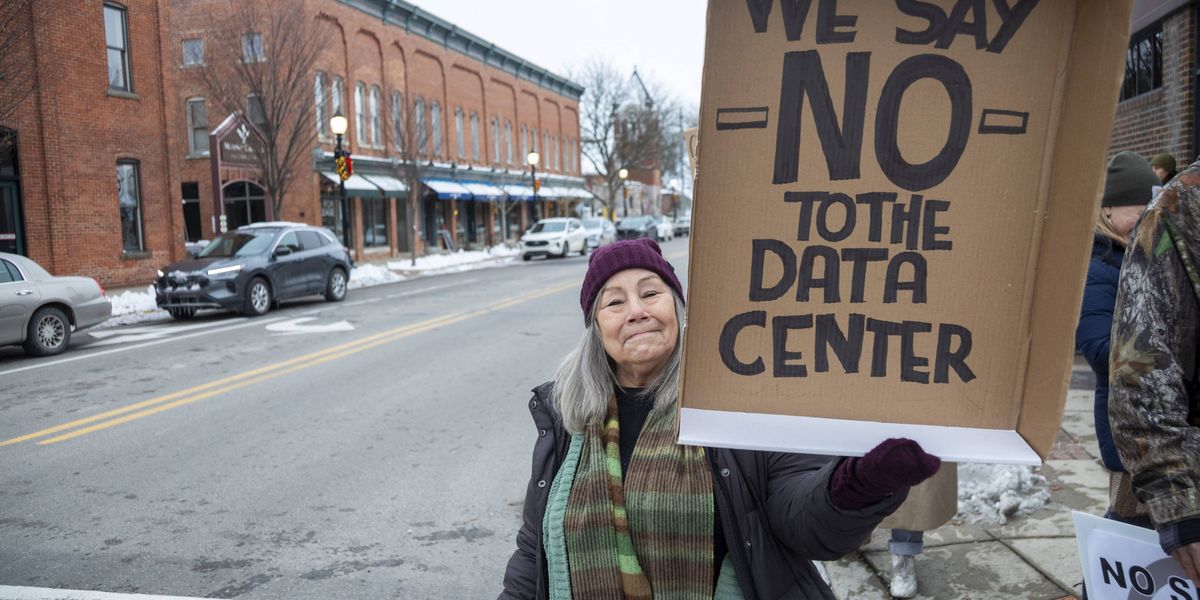
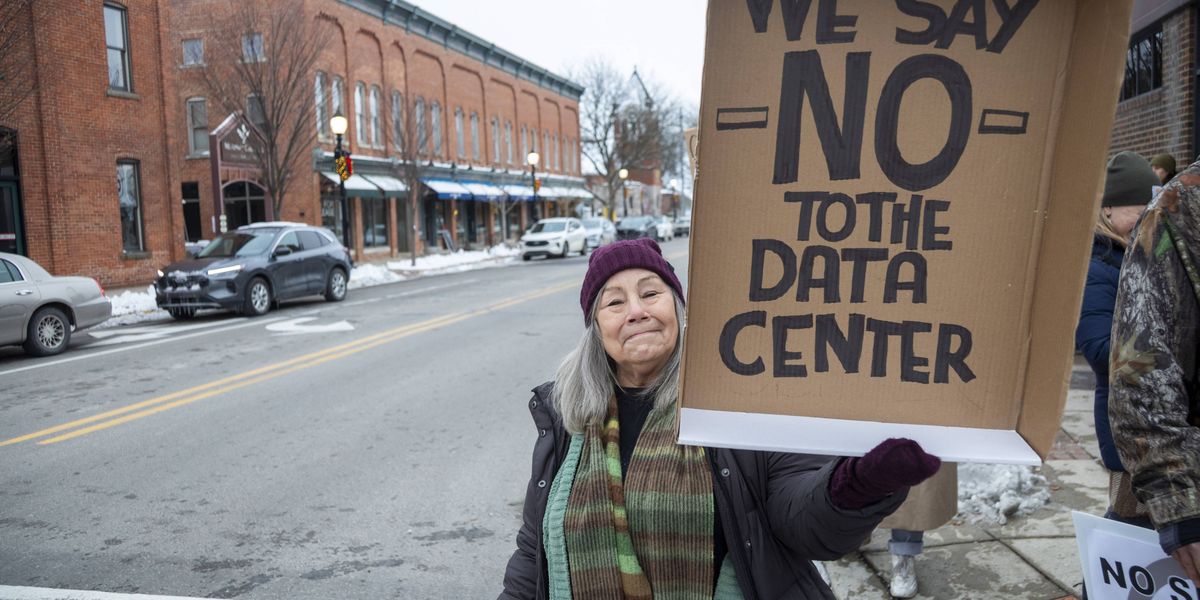
A poll by Embold Research, published on August 19, 2026, in Heatmap Pro — the climate project of Heatmap News — showed that 75% of Americans oppose the construction of AI data centers in their local area, of which 61% are "strongly opposed." A year ago, the situation was roughly equal — 43% in favor and 42% against, meaning that in one year the country moved from parity to overwhelming negativity. The decline in support was recorded simultaneously across all political groups, turning opposition to data centers from a series of local conflicts into a systemic risk for the plans of the American AI industry to expand its computing infrastructure.

What Happened
Embold Research conducted a poll on data center construction, the results of which were published on August 19, 2026, in Heatmap Pro, the closed section of the climate publication Heatmap News, and were then reported by Common Dreams. Respondents were asked about the construction of AI data centers in their local area: 75% answered that they are opposed, and 61% chose the most stringent formulation "strongly opposed." There is no split along party lines: among Republicans, data centers "lag" by 43 points, among Independents — by 65, and among Democrats — by 75. Heatmap Executive Editor Robinson Meyer characterized the shift as "rapid and massive on a scale I previously considered impossible," while Adam Carlson of Zenith Polls and Justin Slaughter of Paradigm noted that public opinion has never changed at such a speed before.
Context
Understanding why one poll became a notable signal is helped by the structure of American AI infrastructure. Each major site requires land, megawatts of electricity, and building permits, and all three conditions go through municipalities and public hearings, meaning that residents of neighboring blocks have a formal voice on projects that determine the scaling of models. Data center construction takes years, so today's moods determine not already launched sites, but projects that will be considered in the coming years: already allocated capacities do not disappear, but each next entry into a new city now starts in an atmosphere of protest. At the same time, the traditional argument of developers about new jobs works weakly: according to the material, completed data centers create few jobs relative to their size, and the main concern of neighbors is electricity bills and taxes.
Why This Matters for the Industry
For the AI industry, the poll is a direct political risk superimposed on the plan to build infrastructure in the US. With almost unanimous negativity, the rejection of projects at local hearings, lawsuits, and moratoriums become the norm, and opposition to data centers becomes a theme of the 2026 midterm elections, so companies will have to factor into CAPEX and launch schedules the costs of community engagement and account for pressure on electricity tariffs. This does not directly affect current training launches — construction takes years, and the reaction is reasonable, primarily planning: to revise assumptions about the timing of access to new capacities, add observability of inference costs, and check which regions and providers form points of failure. If the trend is confirmed by independent data, the introduction of capacities in the US will slow down structurally, access to large compute will be concentrated among players who already own infrastructure, and in the research agenda the weight of directions that reduce the need for scale will grow: efficiency per watt, distillation, compact models. For builders, the shift in moods is a map of a new niche: the main pain of the industry shifts from "building megawatts" to "approving megawatts," and transparency tools win — monitoring of local hearings and impact on tariffs for residents, scoring of sites by the risk of public opposition, archives of hearing decisions, while demand from residents is already set by the facts of the poll, and demand from developers remains an assumption for now.
Why This Matters for Users
For the reader, the news becomes tangible at the moment when a new data center project appears near their home: public hearings will take place in an atmosphere where the majority of neighbors would prefer not to see construction at all. The practical conclusion is to track local decisions in advance: municipal agendas, hearing outcomes, and, most importantly, how the project will affect electricity tariffs and taxes, because it is these expense items that the household directly feels. Relying on promises of new jobs should be done with caution: according to the article, completed data centers create few jobs relative to their size, and the construction period is finite. It makes sense to record from the very beginning what volumes of consumption and payments are involved in a specific project, not on average for the industry, and to monitor decisions throughout the entire approval cycle, not just on the day of a noisy session.
What Is Not Yet Known / Limitations
The methodology of the poll is not disclosed in the available materials: there is no sample size, method of respondent recruitment, exact wording of questions, weighting scheme, or margin of error, so the quality of the measurement cannot yet be verified. According to available data, this is the first public poll by Embold Research on this topic in the sources, and not a trend series of different organizations: one measurement is compared with one historical value, and it is too early to talk about a sustained trend without independent repetitions. There is also a risk of extrapolation: the question is built around the construction of data centers "in their local area," this is a classic NIMBY frame, which systematically gives more negative answers than questions about attitudes toward AI in general, so it cannot be concluded from these data that public opinion on AI has reversed. Finally, forecasts about moratoriums, lawsuits, and compute concentration are interpretations of commentators and reviewers, not recorded events: specific examples of rejected projects or lawsuits are not provided in the material.
Sources
- Heatmap News — Exclusive: 75% of Americans Now Oppose Local Data Center Development (Embold Research poll)
- Common Dreams — 'I've Never Seen This': Massive Collapse in Support for AI Data Centers Captured in New Poll
Author
Look at AI, editorial team