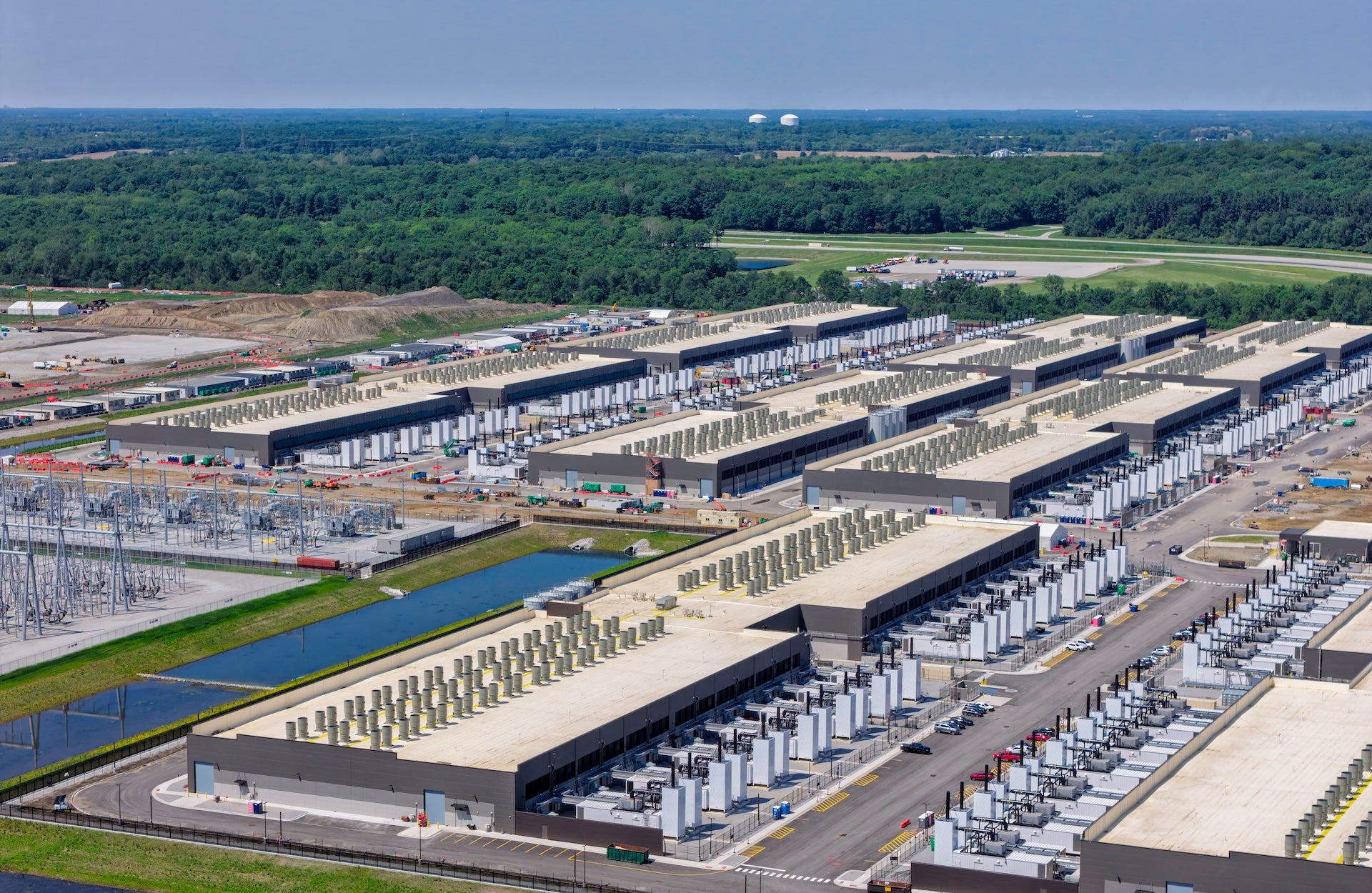
This week in the US, a wave of 'Dump Big Tech' protests was held against the offices of major technology companies, data center construction sites, and local politicians, and in parallel, a University of Pennsylvania poll recorded a sharp rise in opposition to new data centers. For the industry, this is a signal that pressure on AI is shifting from the digital sphere to the physical one: permits, reputation, and the electoral agenda.



What happened
Tech Brew on August 13, 2026, described a week of 'Dump Big Tech' protests in the US, organized by the groups Make the Road, United Ratepayers, Food & Water Watch, and People's Action Institute. Demonstrations were held at the offices of Palantir and Google in New York and were directed against Palantir — for its cooperation with the Immigration and Customs Enforcement (ICE) and the use of facial recognition — as well as against OpenAI and Google. Protesters went to data center construction sites in Oregon and West Virginia and to local elected officials in New York, New Jersey, California, Nevada, and Pennsylvania — more than 20 actions in one week. According to the publication, at the Palantir office, most participants wore masks out of fear of facial recognition systems. On August 12, 2026, the Annenberg Public Policy Center (APPC) of the University of Pennsylvania published a poll: 61% of American adults are against the construction of new data centers in their neighborhood, while in February-March 2026 it was 49% — a rise of 12 percentage points in four months.
Context
The wave is not a general rejection of AI: attitudes toward the technology as a whole are stable — 39% of Americans expect a negative impact from AI in the next 10 years, compared to 42% in spring — the target was not the models, but their deployment: physical infrastructure near homes and personal data. In the poll, the worst score among 13 areas was 'personal privacy and data' with a score of minus 63. Opposition to data centers is bipartisan: 69% among Democrats, 54% among Republicans, 53% among independents. The poll covered 1,320 American adults, with a margin of error of plus or minus 3.5 percentage points, and fieldwork was conducted from June 16 to July 19, 2026. As NPR notes, data centers have become one of the key issues of the 2026 midterm elections: candidates from both parties, including Abdul El-Sayed, Vivek Ramaswamy, and Francesca Hong, are demanding federal restrictions and moratoriums on construction.
Why this matters for the industry
For the AI industry, this means increased costs and extended timelines for expanding computing power in the US. Pauses in permitting for large data centers are already in effect in New York and Texas, and site selection is now evaluated not only by energy and land, but also by the level of local opposition. The market has already reacted to the protests: Palantir shares fell by 2.78%, Alphabet shares — by 0.12%. Vendors with government contracts, primarily Palantir, are paying a reputational tax. After the 2026 midterm elections, the likelihood of federal and state rules around data centers — permitting, power grids, water, noise — increases, which will extend construction timelines and may shift some investments to jurisdictions with less local resistance, increasing the cost of compute in the US.
Why this matters for users
For the reader, AI ceases to be just a technological topic and becomes political. The functionality of AI services does not change directly, but the conditions under which the infrastructure grows are changing. Those living near a data center construction site should expect a slowdown in the permitting process: pauses in permitting after the midterm elections may spread to other states. For users of services that use facial recognition and aggressive data processing, this is a signal of growing reputational risk for their vendors — it is precisely the fear of facial recognition that lies behind the masks of protesters at the Palantir office.
What is still unknown / limitations
The minus 63 score in the 'personal privacy and data' area is a measure of attitude, not proof of a specific technical failure. The figure of 61% characterizes opposition to construction in one's own neighborhood, not a rejection of AI or data centers in general. The protests described by Tech Brew cover only one week of events, and the moratoriums demanded by candidates — including in Ohio, Wisconsin, and Michigan — have not yet become law. The reaction of Palantir and Alphabet stock prices is a short-term market effect, not a forecast.
Sources
- Tech Brew: 'Dump Big Tech' protests target NYC offices of Palantir, Google (Tricia Crimmins, 13 Aug 2026)
- Annenberg Public Policy Center, University of Pennsylvania: Opposition to Local Data Centers Rises Sharply, Annenberg Survey Finds (12 Aug 2026)
- NPR: Data centers are a top issue in midterms for voters, candidates (Tamara Keith, 8 Aug 2026)
Author
Look at AI, editorial team