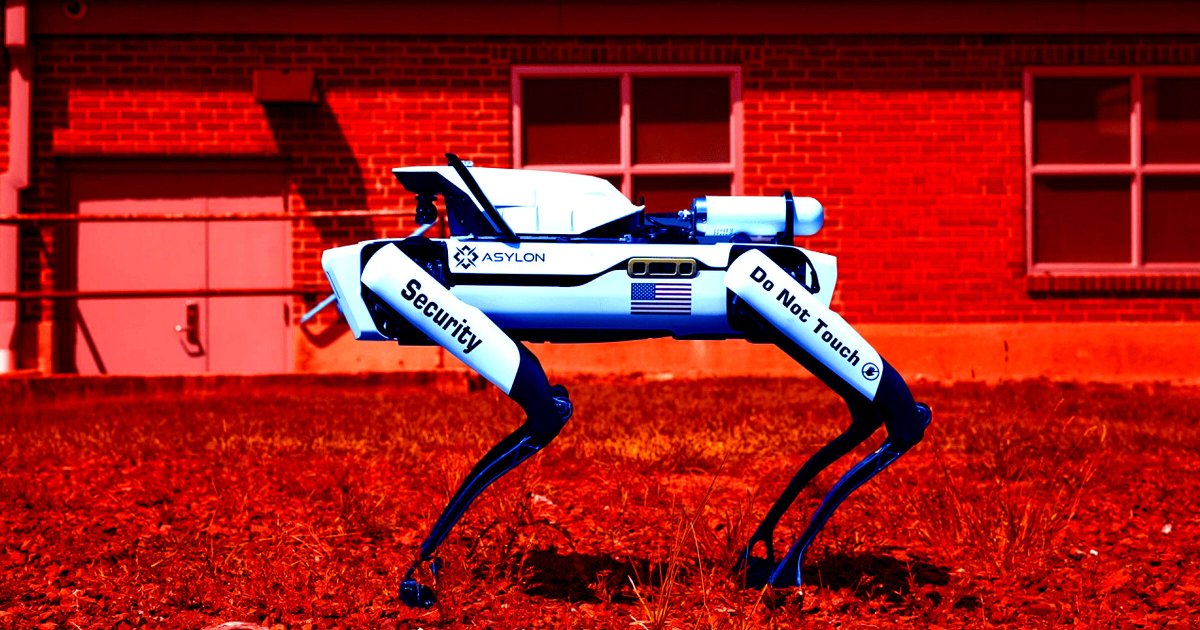
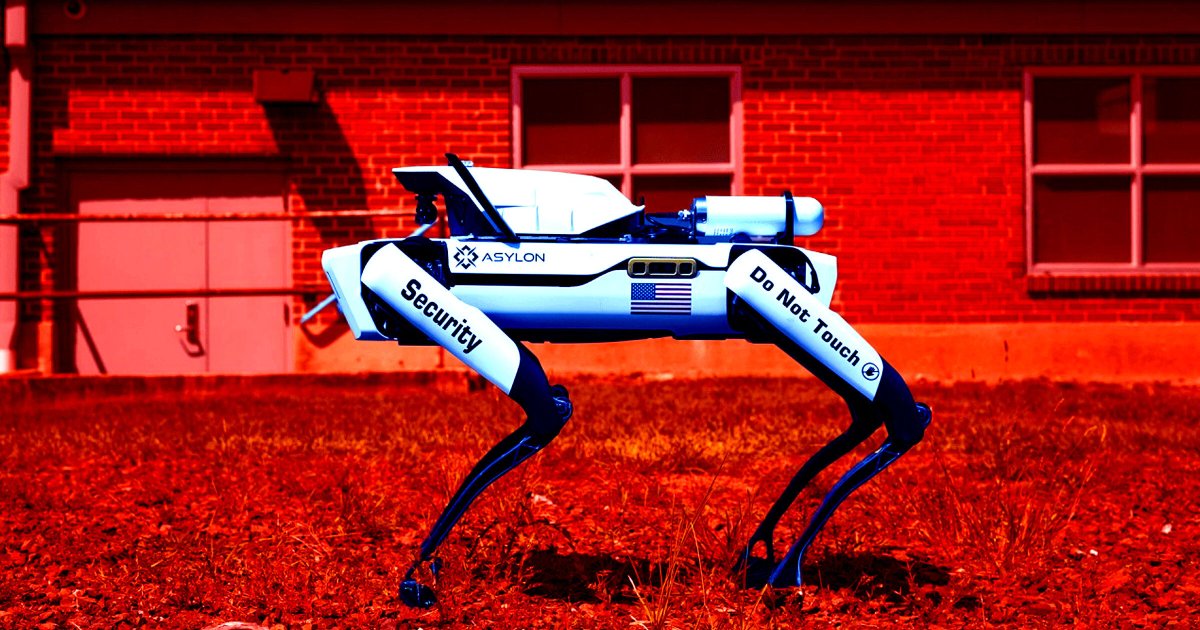
American companies are increasingly replacing round-the-clock security guard shifts with autonomous patrol robots. According to Business Insider, Asylon's annual contract for a robodog, along with drones, software, and remote operators, costs $120,000–$170,000, while a fully staffed human shift costs approximately $250,000. This results in savings of $80,000–$130,000 per shift per year.
What happened
Asylon has deployed approximately 50 robots for 25 clients across the United States. One notable case is a Boston Dynamics quadruped robot named Benzie at the 2 million square foot Mercedes-Benz Stadium in Atlanta: according to Asylon CEO Damon Henry, theft and vandalism at the facility dropped to zero within the first months of operation. The scale of deployments is also shown by a competitor: the company Knightscope serves 434 clients in the US and has cumulatively logged more than 4.4 million hours of autonomous operation.
Context
The replacement of security guards is happening against the backdrop of a staffing crisis in the industry: turnover in the US security services sector in 2024 reached approximately 89%, compared to 66% across the private sector as a whole, and the median annual salary for a security guard was $38,390. For labor market data, Business Insider cites the UC Berkeley Labor Center. Technologically, a patrol on robodogs is not a new class of models, but the deployment of a mature autonomous stack of perception, navigation, drones, and remote operators, packaged in a B2B subscription: one remote operator manages 6–8 robots at different facilities.
Why this matters for the industry
For physical AI, this is the first case where the economics of physical robotics have consistently become cheaper than human labor in a mass low-revenue market: security robotization has ceased to be a demonstration and has become a working business. The case sets a reproducible product pattern — about 90% of a typical route is traversed autonomously by the robot, and the remaining 10%, intersections, doors, and non-standard situations, are handled by a human, in a model close to autonomous driving. If Asylon, Boston Dynamics, and Knightscope continue to scale according to this scheme, the subscription-instead-of-shift scenario will spread to warehouses, manufacturing, and energy.
Why this matters for users
For facility owners and specialists in real estate, manufacturing, and logistics, a robot patrol has become a real alternative to a night shift: a robot subscription costs 32–52% less than maintaining a fully staffed human shift, and blind spots on facilities where it is not profitable to keep a human are covered autonomously. For employees in the security industry, this is a signal that mass replacement in the low-revenue segment is becoming the first niche where robotization is already paying off. For robotics enthusiasts, the case is useful as a reference: an architecture with an autonomous majority of the route and an operator for non-standard situations is already being sold as a ready-made product.
What is still unknown / limitations
The statement that about 90% of a typical patrol is traversed autonomously, and the claim of zero theft and vandalism at Mercedes-Benz Stadium, are given on the word of Asylon CEO Damon Henry and are not yet supported by a benchmark, baseline, observation window, or independent verification. Fleet operating hours and the number of clients prove deployment, but not the system's capabilities: there is no data on the percentage of successful route traversals, comparison with a human shift, or incident logs. Asylon and Knightscope are reference cases and a price benchmark, not open platforms to which third-party developers could connect.
Sources
Author
Look at AI, editorial team