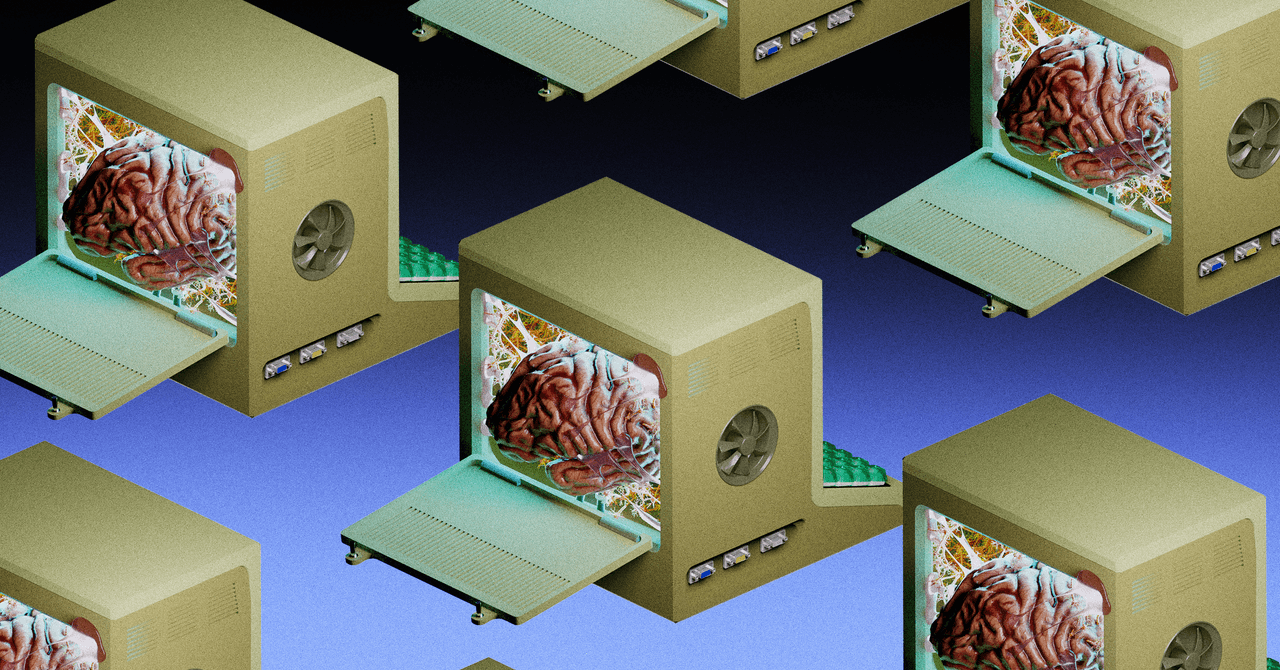
Wired published a review of the organoid intelligence (OI) field, in which lab-grown mini-brains from stem cells, about 5 mm in size, are placed on microchips and trained via electrical impulses. Companies Cortical Labs and FinalSpark have already demonstrated training such systems on simple tasks, and the NIH has allocated $87 million to support the standardization of the technology.


What happened
Wired published a detailed article, “AI Is Dead. Organoids Are Alive,” analyzing the current state of organoid intelligence. The article describes key results: Cortical Labs trained neuron cultures to play Pong and Doom, Swiss company FinalSpark, via its Neuroplatform, got organoids to read text in Braille, and Brainoware from Indiana University achieved 78% accuracy in voice recognition. Johns Hopkins researchers, who coined the term OI, published a paper in Nature Reviews Bioengineering and adopted the 2023 Baltimore Declaration — an ethical framework for working with nervous tissue for computational purposes.
Context
Organoids are lab cultures from stem cells, containing up to 5 million neurons, placed on microchips with electrodes. The term OI was proposed by Johns Hopkins researchers, who view them as a new computing substrate at the intersection of biology and technology. The 2023 Baltimore Declaration established ethical boundaries for working with nervous tissue in computational tasks. In July 2025, the NIH changed its funding policy: it no longer supports projects relying solely on animal testing and directed $87 million to the creation of a Standardized Organoid Modeling Center.
Why this matters for the industry
OI is forming a parallel computing track that does not compete with LLMs in the near term but could change the energy economics in the long run. Johns Hopkins theoretically estimates a 1–10 billion-fold reduction in the energy consumption of bio-computing compared to silicon GPUs, although independent benchmarks have not yet confirmed these figures. Cortical Labs and FinalSpark are already commercializing access to bio-computers as a research service. The $87 million NIH investment is a signal of institutional support, accelerating standardization. For the ML industry in the next six months, the practical effect is zero: there are no APIs, SDKs, open tools, or reproducible results.
Why this matters for users
Organoids do not possess consciousness — they demonstrate short-term memory and the ability to learn through feedback. It is important for readers to understand: this is not “living AI that thinks,” but biological tissue responding to electrical stimuli. The topic touches on the ethical dimension — where is the line between tissue and a computer — and this discussion is becoming increasingly acute as the technology develops. There is currently no direct practical benefit for end users: there are no products, services, or interfaces to interact with.
What is still unknown / limitations
The claim of a 1–10 billion-fold reduction in energy consumption compared to GPUs is a theoretical extrapolation, not a measured result. The available benchmarks are narrow and not comparable to modern ML systems. The pioneers of the field themselves warn of the risk of inflated expectations. There are no open tools, reproducible results, or evaluation standards. The field is at the proof-of-concept stage, and prospects for production deployment in the coming years are absent.
Sources
- AI Is Dead. Organoids Are Alive — WIRED
- Biocomputing with organoid intelligence — Nature Reviews Bioengineering
- Brain Organoids Emerge as Rival to Silicon Neural Networks — AI Weekly
Author
Look at AI, editorial team