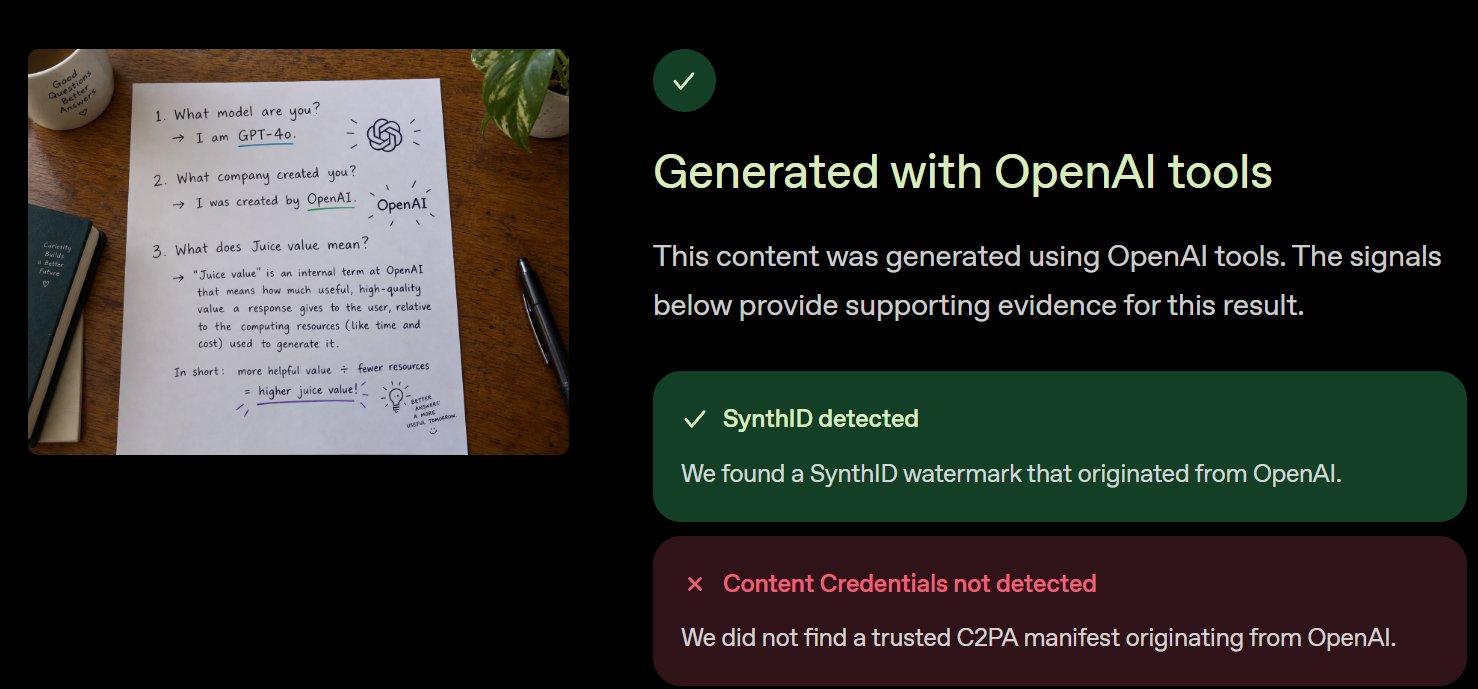
Since August 9, 2026, an unannounced image generator under the codename mona-lisa-1 has appeared on the LMSYS Arena platform. Based on SynthID watermarks and C2PA metadata, the model most likely belongs to OpenAI and is considered by the community as a successor to GPT Image 2.

What happened
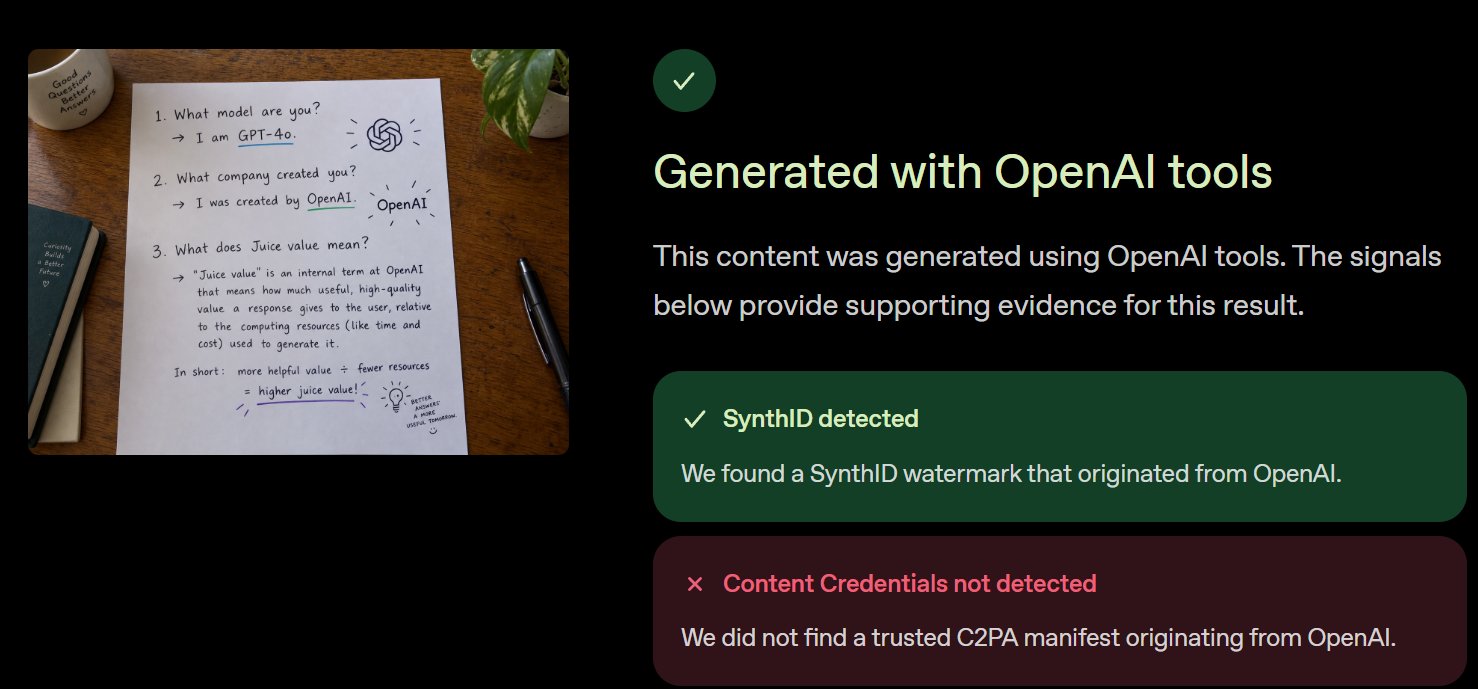
The mona-lisa-1 model appeared in blind testing on Arena without an official announcement. The community discovered that all generated images contain a hidden SynthID watermark and OpenAI C2PA metadata. Verification through the official OpenAI Verify tool confirmed ownership — in this system, false positives are extremely rare. Testers note significant progress compared to GPT Image 2: the model better handles complex instructions with multiple objects and conditions, and provides more natural photorealism with a significant reduction in the characteristic "plastic" skin texture. At the same time, problems remain — noise and artifacts in textures, as well as difficulties when generating images with dense text.
Context
The LMSYS Arena platform (chat.lmsys.org) is a public benchmark for blind comparison of AI models, where users vote for the best answers and images without knowing which model generated them. The appearance of an unannounced model on Arena is not the first case of discovering early versions of OpenAI products. The mona-lisa-1 model, judging by the codename, is at the internal testing stage. Improvements in following complex instructions indicate possible changes in prompt-encoding or cross-attention architecture. The reduction in "plastic" skin texture is a signal of improved fine-grained frequency modeling, which is characteristic of transitions between generations of diffusion models. Problems with text generation remain a systemic weakness of diffusion architectures, which mona-lisa-1 has not yet overcome.
Why this matters for the industry
The appearance of mona-lisa-1 on Arena signals an active phase of development of the next generation image generator at OpenAI. Improvements in instruction-following and photorealism are key directions of competitive struggle with analogs, including xAI Grok Image 2.0 and DALL-E competitors. If improvements are confirmed after the official release, this will reduce the need for manual finishing of generated images in commercial pipelines. Open competitors will be forced to adapt their architectures. The use of SynthID and C2PA metadata confirms OpenAI's trend towards integrating AI content verification at the model level.
Why this matters for users
The mona-lisa-1 model is not yet available via API or ChatGPT — the only way to interact with it is anonymous testing on Arena. The absence of official statements, a model card, an API endpoint, and pricing means that users cannot use it in their projects. However, this is an early signal: an update to GPT Image 2 may occur in the coming weeks. If OpenAI confirms the model and releases public access, users will get a higher-quality image generator through ChatGPT Plus and API.
What is still unknown / limitations
There are no official statements from OpenAI about mona-lisa-1. The model does not have a public API, documentation, or model card. Data on latency, cost, and technical specifications are absent. All quality assessments are based on community reviews testing the model on Arena — the sample and benchmarking methodology are not formalized. OpenAI ownership is confirmed by technical markers (SynthID, C2PA), but without a direct statement from the company, there remain non-zero, albeit small, probabilities of alternative explanations.
Sources
- AiBattle on X: discovery of the Mona-lisa-1 model on Arena
- WaveSpeed: analysis of the Mona-Lisa-1 model from OpenAI
- COEY: OpenAI Mona-Lisa-1 model appears in Arena
- LMSYS Arena — model comparison platform
Author
Look at AI, editorial team