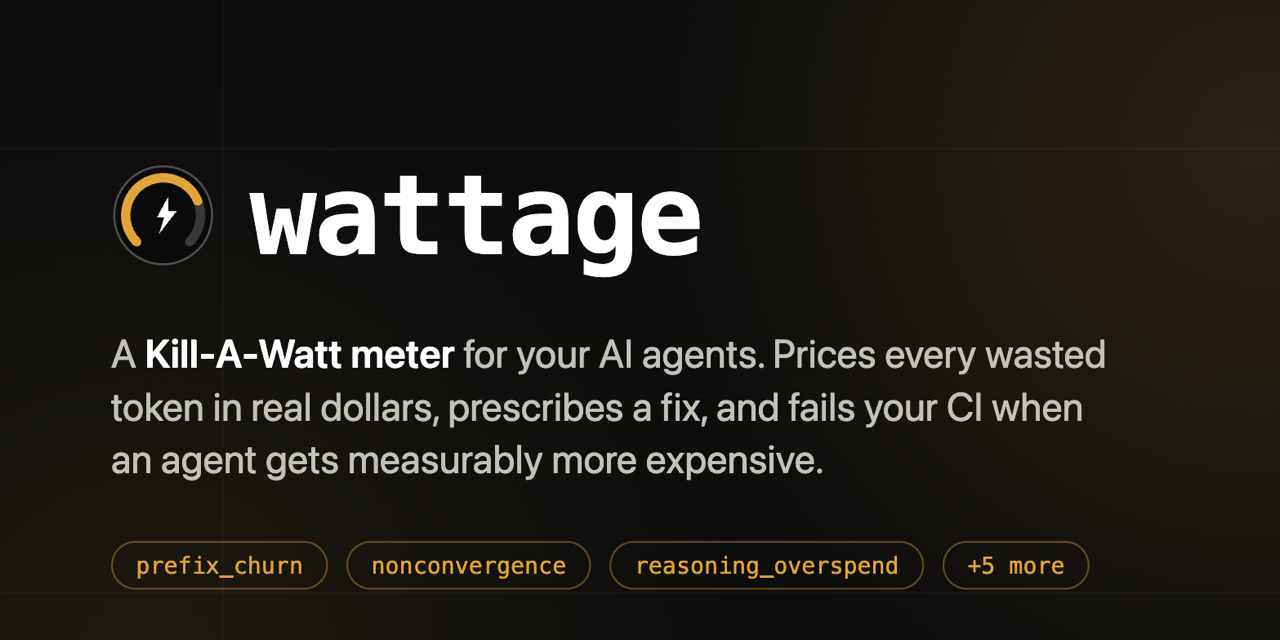
Wattage has been introduced—a specialized tool designed for deep analysis of token expenses and preventing uncontrolled cost growth during AI agent development.
What Happened
Wattage has been developed, which utilizes OpenTelemetry (OTLP) traces to analyze token consumption patterns. The tool allows for the identification of inefficient practices, such as resending context instead of using caching, and translates this data into real monetary figures. A key feature is the ability to integrate a "cost-regression gate" directly into CI/CD pipelines, allowing for the automatic blocking of changes that lead to increased operational expenses.
Context
As AI agents scale, developers often face uncontrolled growth in API costs. Current approaches to LLM cost management are often intuitive, which creates budgetary risks when updating prompts or switching models.
Why It Matters for the Industry
For the industry, Wattage offers a transition from empirical budget management to strict engineering discipline. The tool facilitates the implementation of FinOps standards in the AI sphere, where token cost metrics become as vital as latency or model accuracy, integrating into standard SLO/SLI frameworks.
Why It Matters for Users
AI system developers gain the ability to not just track overall LLM bills, but to localize specific budget "leaks" within the code. This allows projects to be protected from accidental cost regressions when deploying new versions of agents and helps optimize context usage.
Sources
Author
Look at AI, Editorial Team