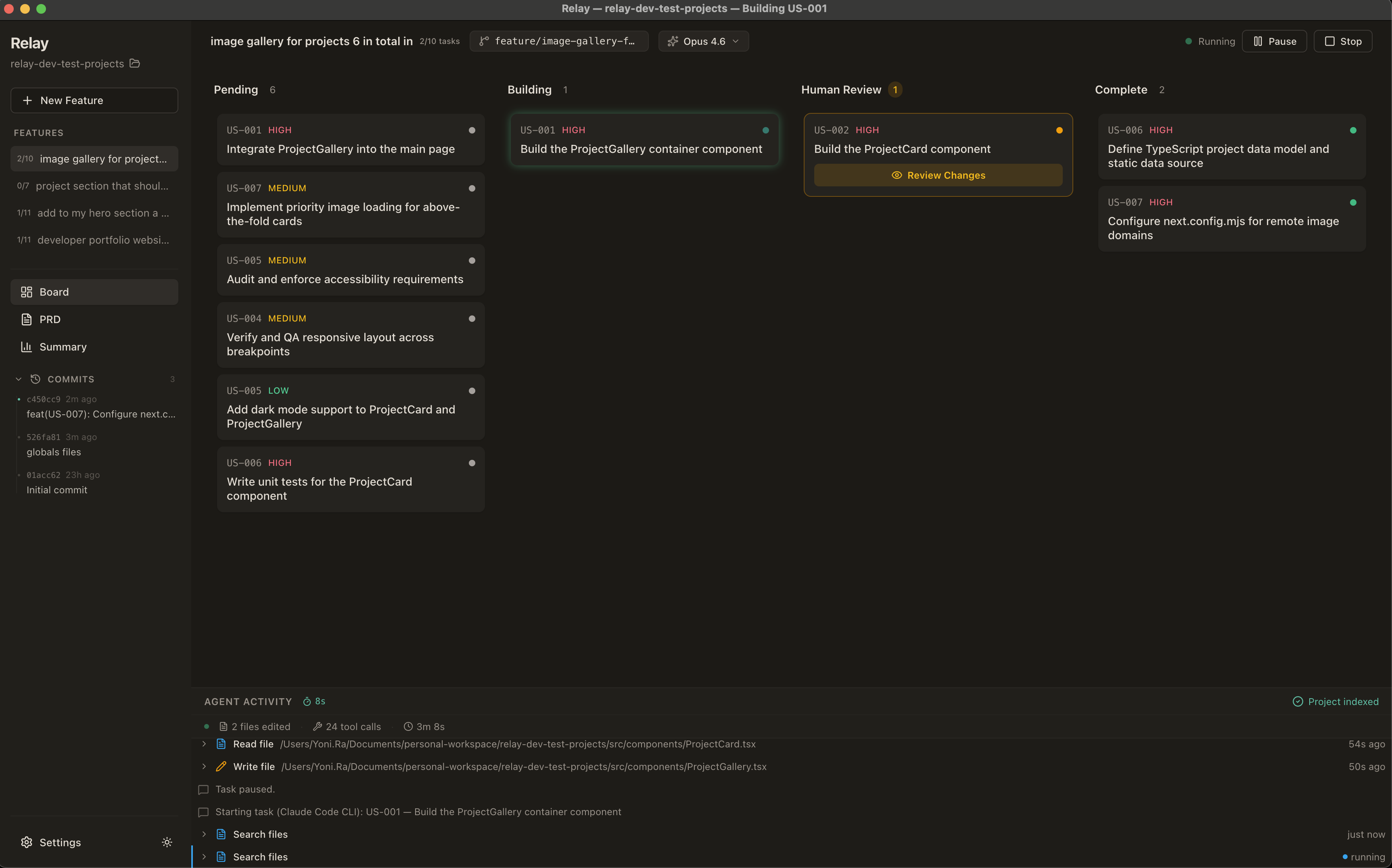
Relay has been released—an Electron-based desktop application that moves interaction with AI agents from chaotic text chats into a structured visual workflow (Visual AI Workflows) via a Kanban interface.


What Happened
The Relay application allows for the automation of the development cycle: from feature description and specification generation (PRD) to automatic decomposition into tasks and their step-by-step implementation by an agent. The tool supports Claude Code CLI, OpenAI Codex, and direct access via the Anthropic API, and includes a built-in agent for conducting code reviews and fixing errors. The user maintains control over the process by using a diff mechanism for manual approval or rejection of changes.
Context
Relay acts as a vital infrastructure layer that transforms unstructured CLI interaction with models into a controlled engineering process. Instead of scattered chat queries, development is built around clear stages: PRD, decomposition, implementation, and review.
Why It Matters for the Industry
The tool marks the industry's transition toward Visual AI Workflows, increasing the transparency and manageability of autonomous development. Integrating Kanban logic into the AI agent cycle allows for the effective management of complex projects requiring human oversight at every stage of code generation, potentially leading to the standardization of such workflows in the developer stack.
Why It Matters for Users
For individual developers and small teams, Relay reduces the cognitive load of managing complex tasks and debugging long agent sessions. Instead of simply asking to "write this," users can plan architecture and observe task execution within a controlled pipeline with veto power over every commit.
What Is Not Yet Known / Limitations
While product specialists see Relay as a ready-to-use tool, enterprise architects and security experts point to the need for solutions regarding auditing, access management, and compliance requirements when integrating into corporate environments.
Sources
Author
Look at AI, Editorial Team