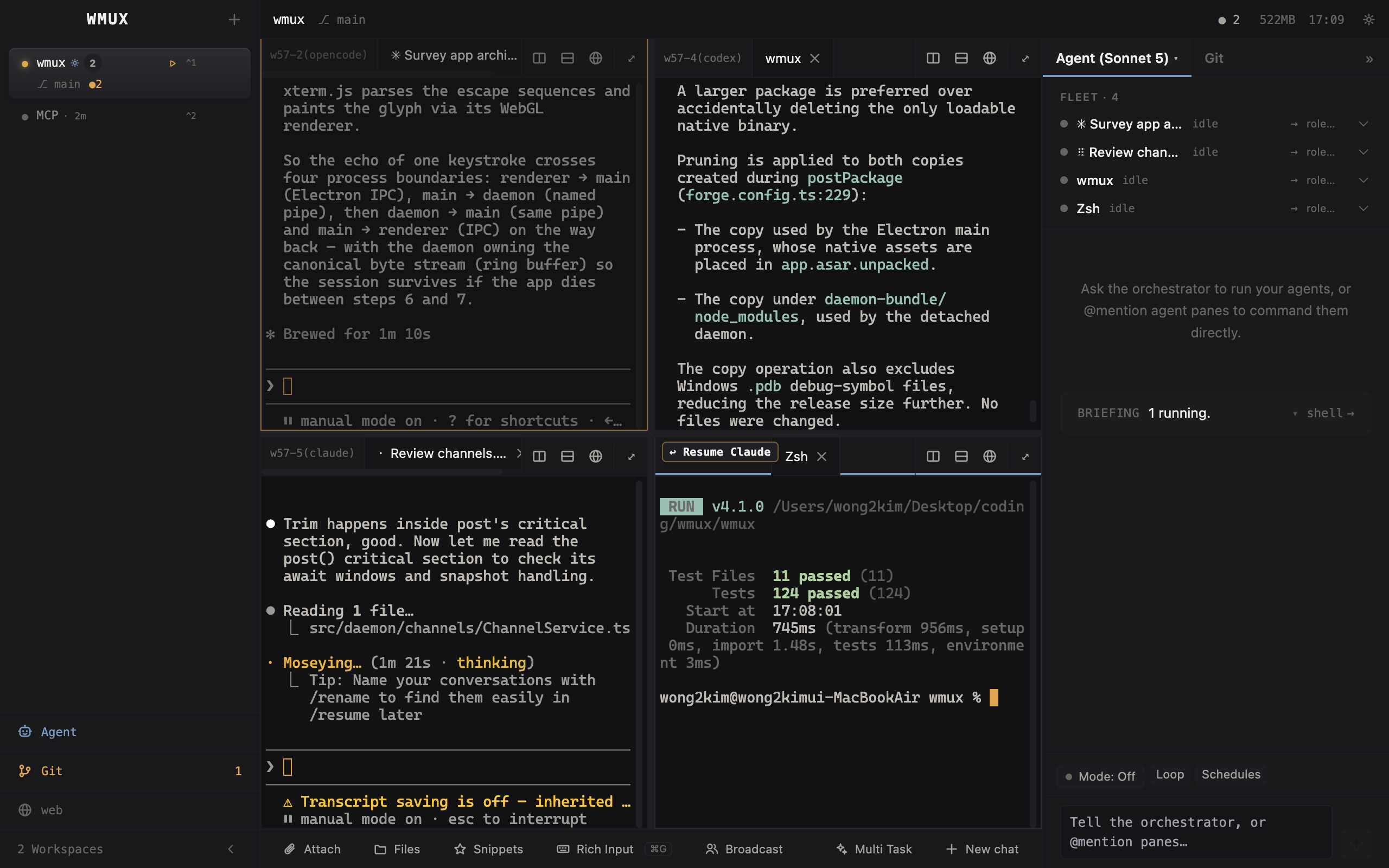
Wmux has been introduced—a new tool for Windows and macOS designed to organize workspaces for multi-agent systems. The project allows running groups of AI agents, such as Claude Code, Codex, and Gemini, in isolated environments under unified management.


What Happened
Developers have released wmux, a multiplexer that allows for the management of entire "fleets" of AI development agents. The tool uses git-worktrees to create parallel isolated environments, provides a dock panel for Git integration, and implements A2A (Agent-to-Agent) mechanisms for coordination between agents. It also includes support for the CDP (Chrome DevTools Protocol) to automate tasks via a built-in browser.
Context
With the development of autonomous development tools, the problem of chaos from scattered terminal sessions arises. Moving from single AI agents to complex multi-agent systems (MAS) requires the creation of an infrastructure layer (middleware) that ensures task isolation, action coordination, and session persistence even after a system reboot.
Why It Matters for the Industry
Wmux offers an attempt to standardize the habitat for multi-agent systems. Creating such an infrastructure layer allows the industry to move toward a mature orchestration ecosystem, where isolation and communication between agents will become basic architectural requirements, including in future agentic cloud runtimes.
Why It Matters for Users
For developers, this means a transition from managing scattered windows to an ordered system. The tool reduces cognitive load, allowing for the efficient testing and running of multiple agents simultaneously in isolated environments while providing the ability for them to collaborate and exchange messages.
What Is Not Yet Known / Limitations
The project is in an early stage of development; engineers and architects point to the need for additional verification of the system's scalability and access management mechanisms for full-scale use in production environments.
Sources
Author
Look at AI, Editorial Team