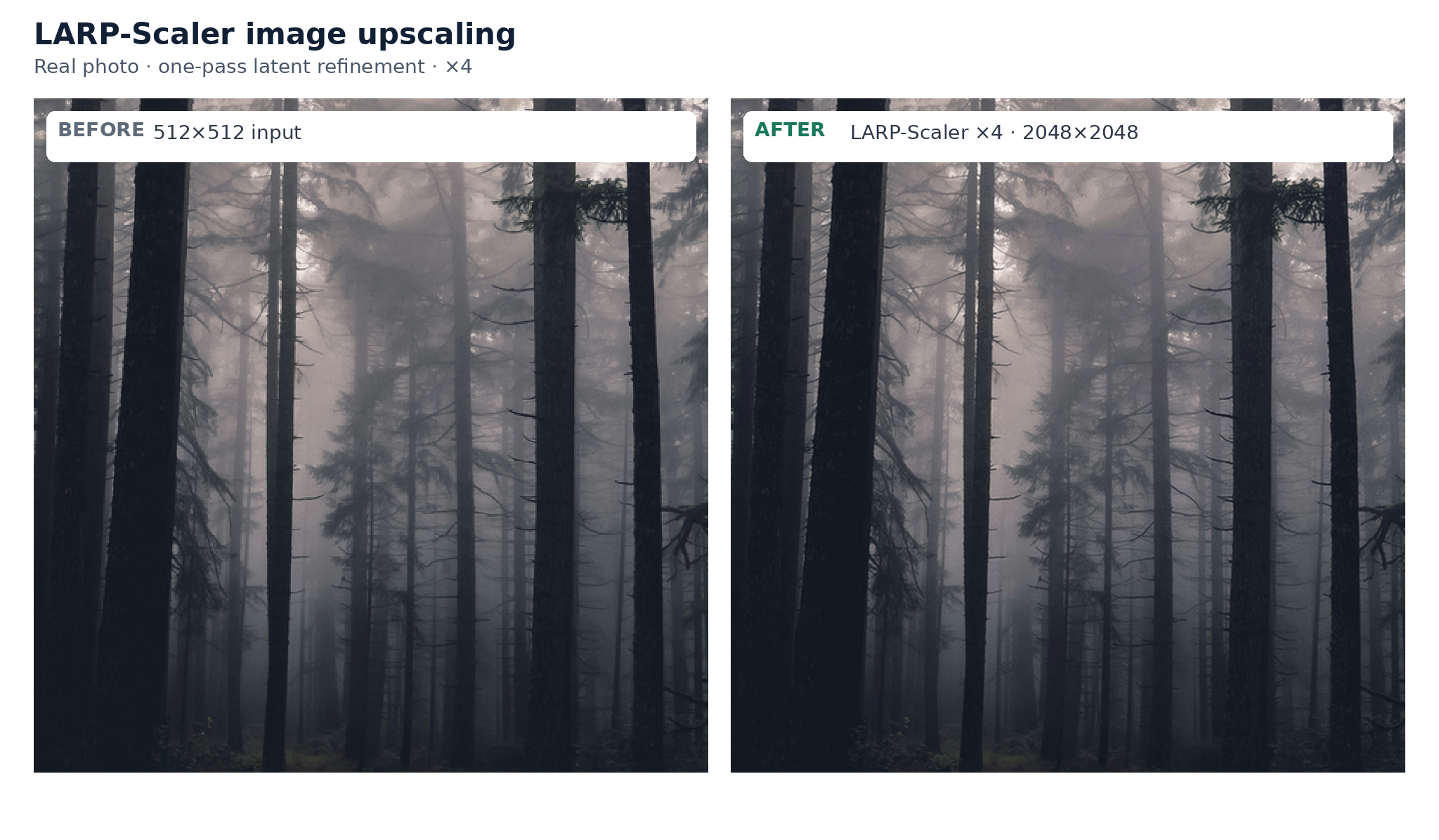
LARP-Scaler has been introduced—a high-performance image upscaling tool based on the SANA architecture. By operating in a 32-channel latent space, the model provides a significant quality boost compared to traditional solutions, supporting resolution increases of up to 8x.
What Happened
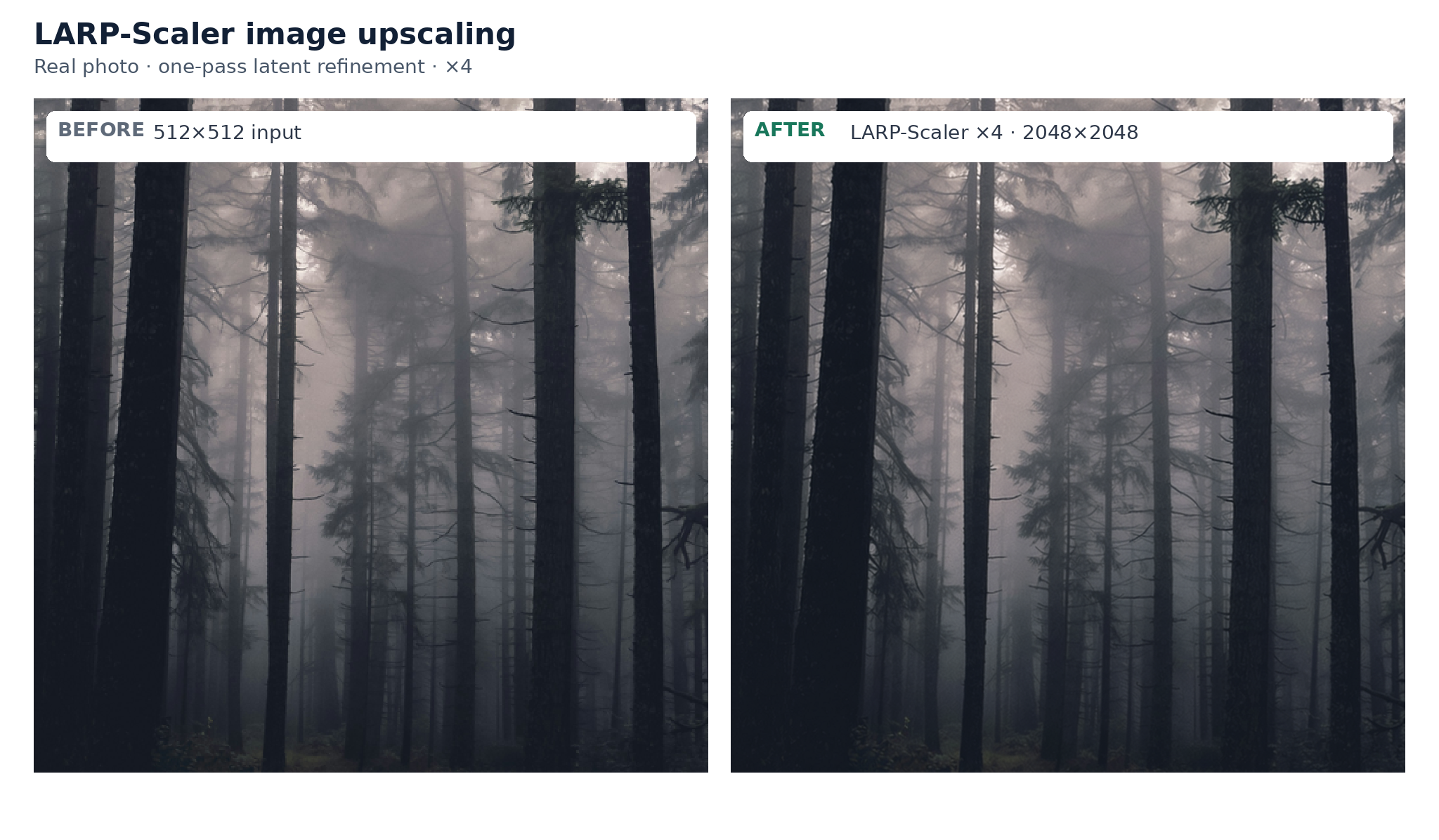
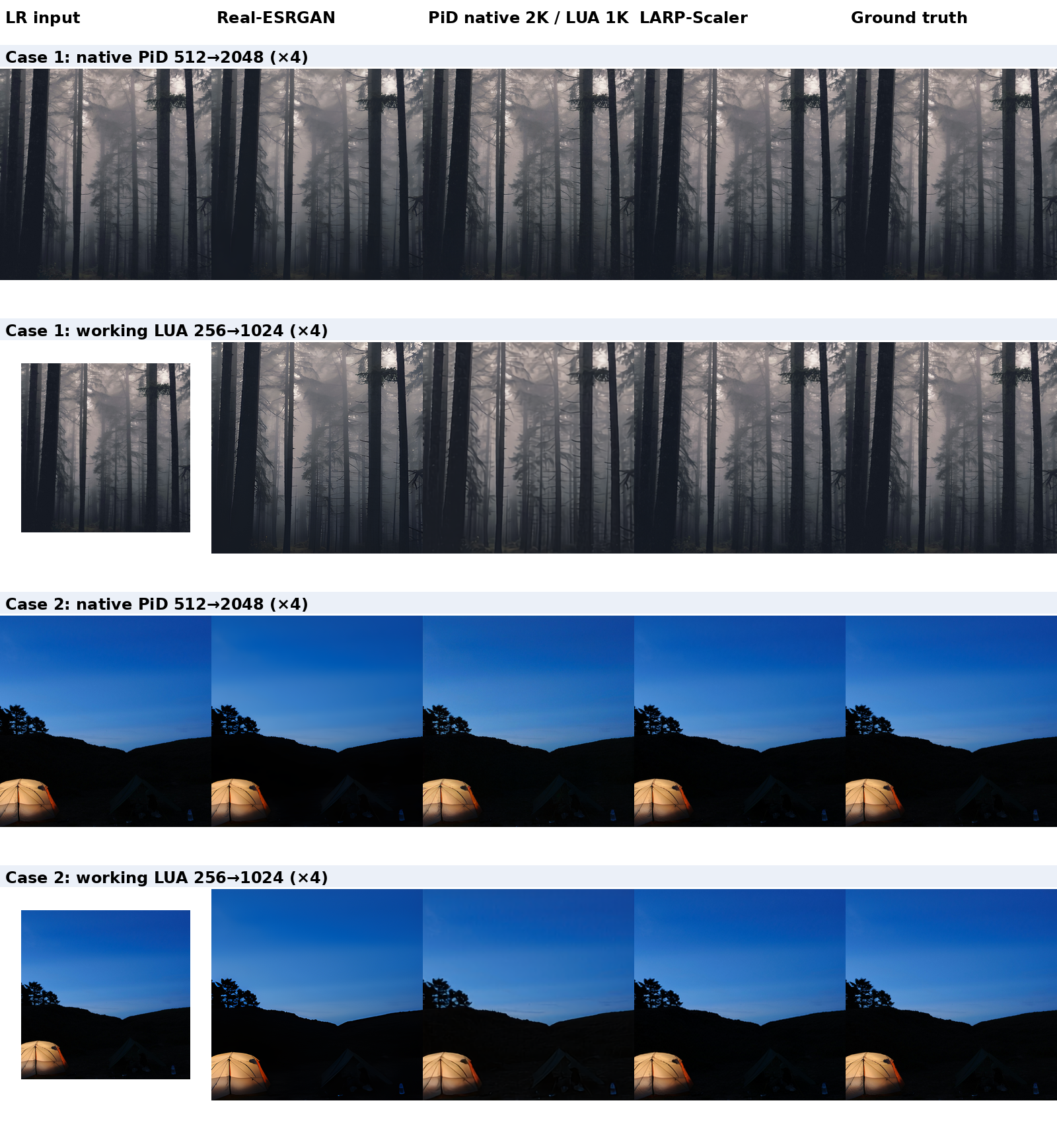
Developers have released LARP-Scaler, which utilizes a diffusion approach for upscaling (x2, x4, x8). In comparative tests on real photographs when transitioning from 512 to 2048 pixels, the model achieved a PSNR of 31.817 dB, surpassing the results of Real-ESRGAN (29.641 dB) and LUA-Flux (19.554 dB). The project is implemented as a Python library and a CLI tool; demos are also available on Colab and Hugging Face.
Context
Traditionally, GAN-based models (Generative Adversarial Networks), such as Real-ESRGAN, have been widely used for image resolution enhancement. However, diffusion methods that use direct latent refinement allow for avoiding the visual artifacts and "hallucinations" characteristic of GANs, ensuring a more natural texture reproduction.
Why It Matters for the Industry
This technology marks a shift from GAN-oriented methods toward high-performance diffusion models. This opens possibilities for creating new standards in media production automation and allows developers to implement an effective alternative to current open-source standards in their visual content processing pipelines.
Why It Matters for Users
Users gain the ability to quickly and high-quality upscale image resolutions up to 8x without losing the naturalness of details. The tool is highly accessible: it can be used via the command line, integrated into projects through a Python API, or tested in cloud environments without complex setup.
What Is Not Yet Known / Limitations
Additional evaluation of the tool's operational readiness for large-scale industrial implementation (Enterprise AI) is required.
Sources
Author
Look at AI, Editorial Staff