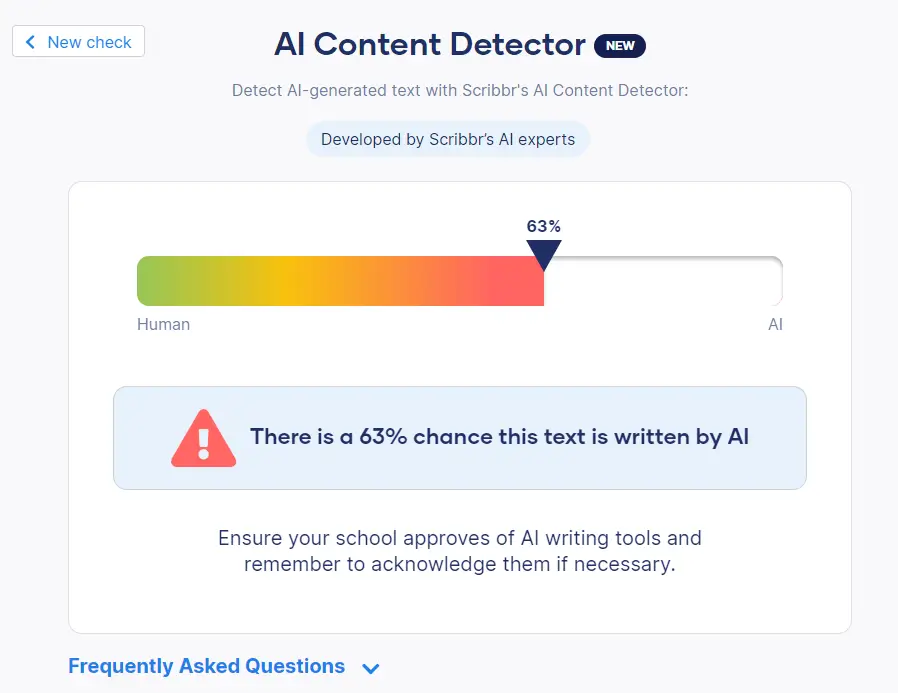
The Hacker News community is discussing the capabilities and limits of modern tools for detecting texts created by artificial intelligence. Against the backdrop of the development of next-generation models, such as GPT-4, the accuracy of existing solutions faces serious challenges, transforming them from tools of definitive verification into auxiliary indicators.
What Happened
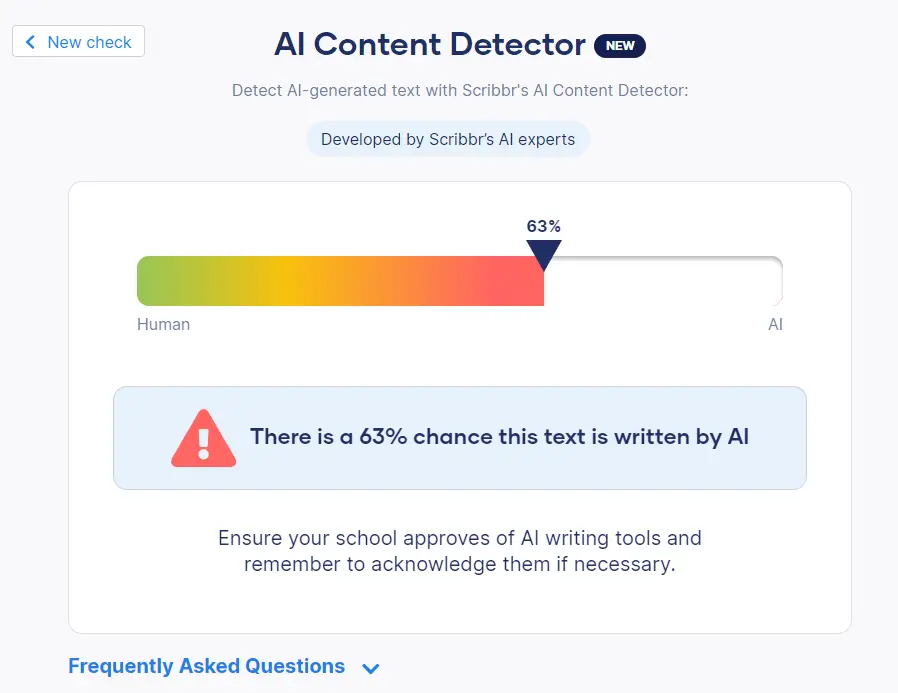
During discussions on Hacker News, current 2026 tests were analyzed. The most accurate paid solution was identified as Scribbr with 84% accuracy, while QuillBot and the free version of Scribbr show results at the 78% level. Research confirms that modern models, including GPT-4, are significantly harder to identify automatically compared to predecessors like GPT-3.5.
Context
There is a direct correlation between the complexity of a model's architecture and the difficulty of its detection. Texts created in a hybrid mode (human + AI), as well as content that has undergone paraphrasing, prove to be the most resistant to checks. This creates a constant arms race between generative technologies and their verification methods.
Why It Matters for the Industry
For industry developers, there is a growing need to move from simple binary classifiers to complex methods of analyzing stylistic nuances and semantic coherence. Current detectors cannot serve as a reliable foundation for automated production systems without significant human oversight, which stimulates demand for specialized APIs and comprehensive evaluation tools (evals).
Why It Matters for Users
It is important for readers and professionals to understand that no detection tool provides a 100% guarantee. They should be used exclusively as an auxiliary signal rather than definitive proof, especially when analyzing complex or professional text where the risk of false positives remains high.
What Remains Unknown / Limitations
No existing detector provides absolute accuracy, and using them as the sole source of truth in automated systems leads to a high error rate.
Sources
Author
Look at AI, Editorial Staff