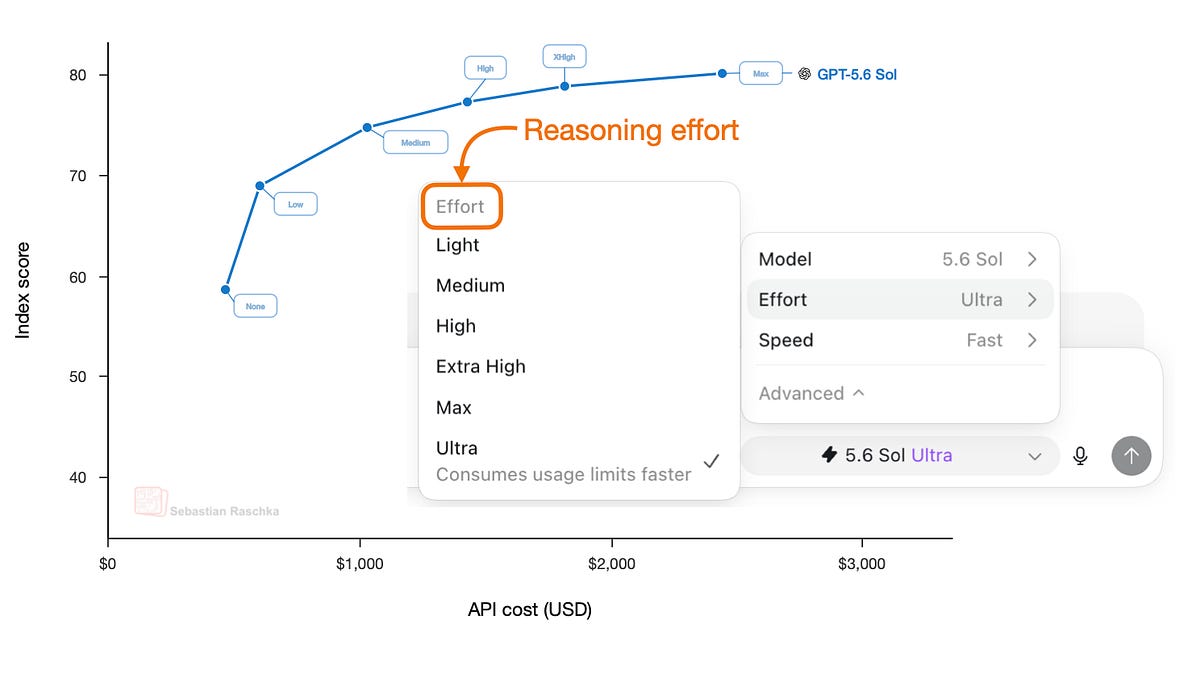
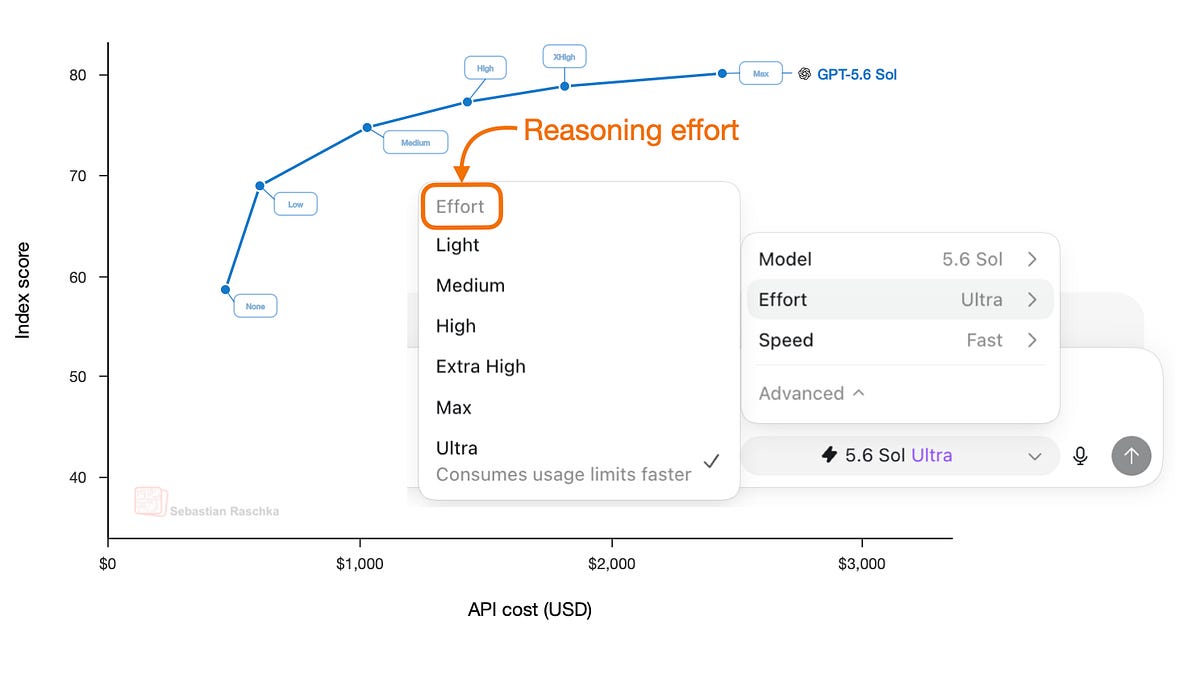
Modern Large Language Models (LLMs) are shifting from static architectures to systems with adjustable computational budgets. Instead of a fixed generation process, new approaches allow for the management of "reasoning effort," optimizing the balance between accuracy, cost, and latency.
What Happened
Developers are exploring various methods to control the model's reasoning process. For example, DeepSeek V4 employs distillation from specialized experts, while Inkling uses mathematical reward adjustments based on the length of generated tokens. The key concept is that the reasoning process is the generation of an intermediate reasoning trace, the volume of which can be controlled.
Context
Traditional LLMs operate with fixed parameters, which prevents them from flexibly adapting to task complexity. The concept of Inference Scaling proposes shifting the focus from scaling parameters during training (training scaling) to scaling computation directly during inference (inference scaling). This transforms "reasoning" from an intrinsic model characteristic into a tunable parameter.
Why It Matters for the Industry
For the industry, this signifies a transition toward cost-effective AI agents. The ability to dynamically choose the depth of thought allows for the optimization of inference costs and the creation of systems that automatically adapt to the complexity of the incoming query. In the long term, the standardization of Inference Scaling protocols will become a fundamental pattern for interacting with AI.
Why It Matters for Users
For users, this means the emergence of more flexible tools: a choice between a "fast and cheap" mode for simple questions and a "slow and smart" mode for complex coding or planning. Understanding that a high-effort mode is a management of computational budget, rather than just a change in the system prompt, will help users more effectively leverage AI capabilities in their workflows.
Sources
Author
Look at AI, Editorial Team