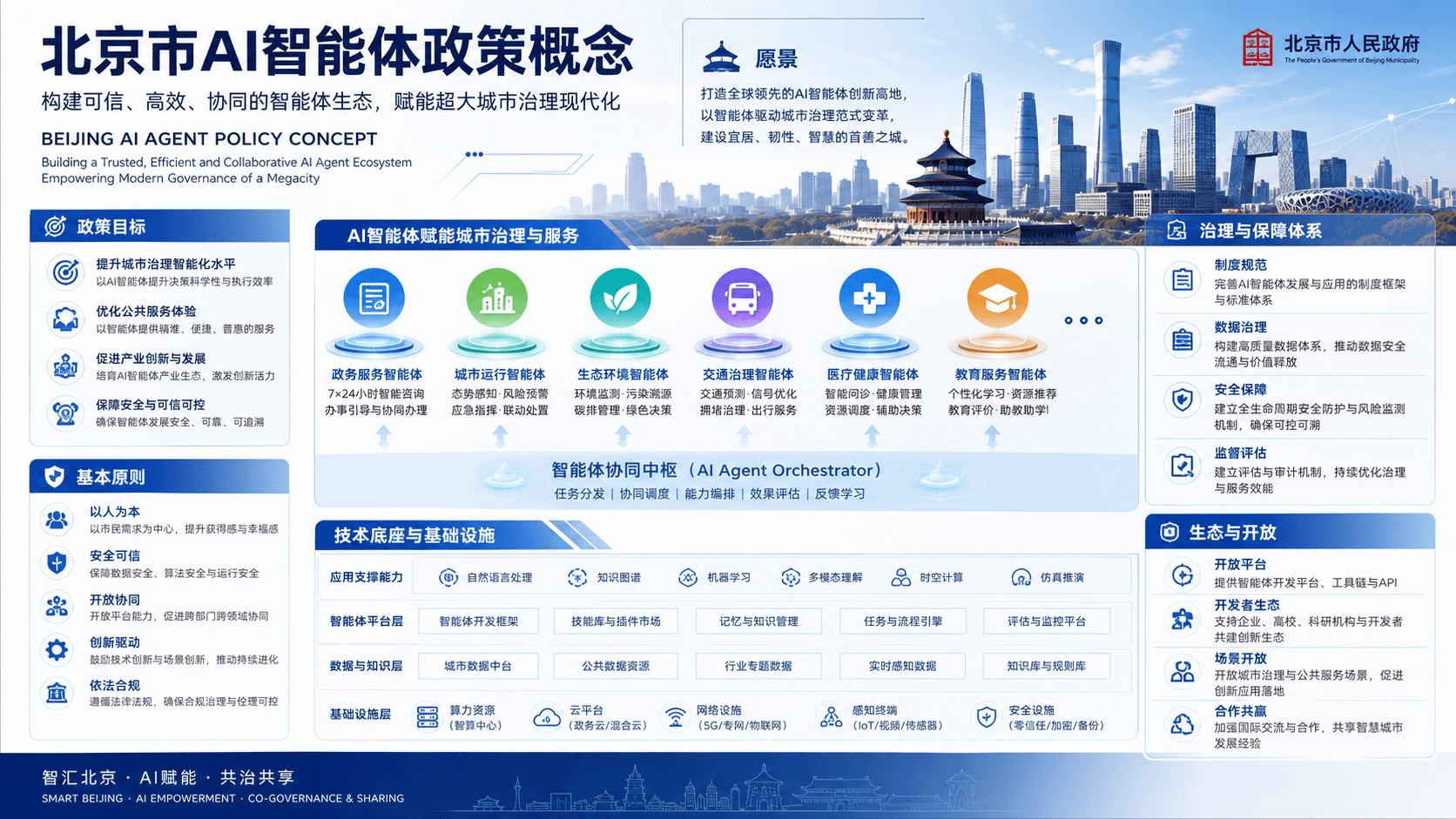
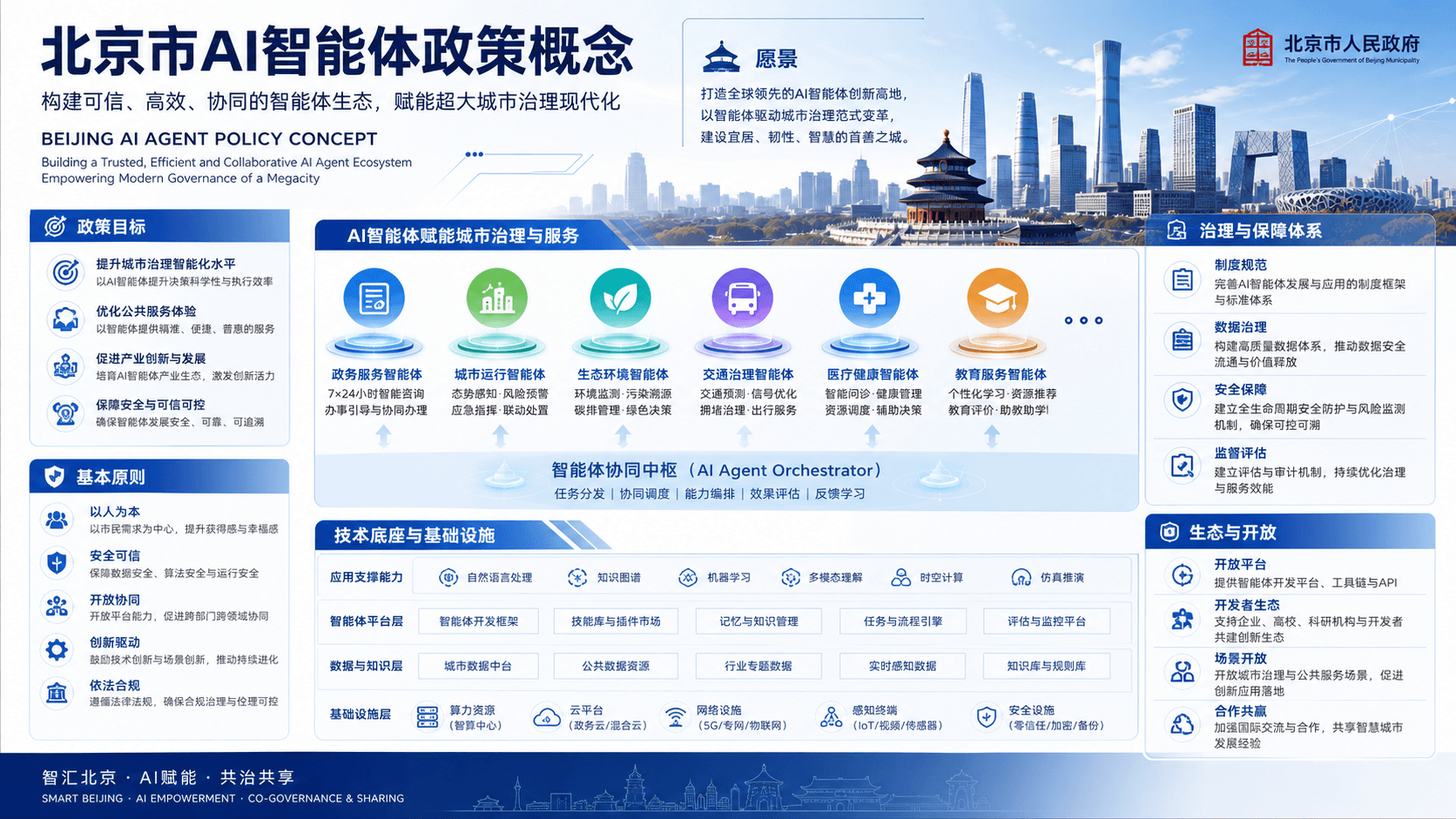
Beijing authorities have introduced a development strategy for Agentic AI, marking a shift from training foundational models to creating applied infrastructure for autonomous agents. The document lays the groundwork for a new economic model where the focus shifts from content generation to task execution and payment for achieved results.
What Happened
The Beijing government has approved a comprehensive set of measures to support Agentic AI, including the development of new business models: Token-as-a-Service (TaaS), Agent-as-a-Service (AaaS), and Results-as-a-Service (RaaS). To stimulate the industry, the plan includes the implementation of a "token voucher" system, the development of the Galaxy Computing Corridor infrastructure, and support for the "One-Person Company" model for independent developers.
Context
This initiative formalizes a shift in the technological paradigm: from the use of Large Language Models (LLMs) to the deployment of specialized AI OS and the implementation of Harness Engineering standards, which include context optimization, memory management, and multi-agent system coordination.
Why It Matters for the Industry
For the industry, this means creating the foundation for a full-fledged agent economy, where software will be consumed not by humans, but by other algorithms. The emergence of Harness Engineering standards and the transition to the RaaS model create new markets for agent lifecycle management tools and specialized vertical solutions.
Why It Matters for Users
For users and developers, this opens opportunities to create one-person micro-businesses (One-Person Company) due to lower entry barriers and access to state computing resources. The value of AI products will be determined by their ability to successfully complete tasks, rather than the volume of generated text.
What Is Not Yet Known / Limitations
Despite the optimistic forecasts, there are serious legal risks regarding the liability of autonomous agents and intellectual property protection, which are not sufficiently addressed in the current strategy.
Sources
- 北京市关于加快智能体引领发展的若干措施 (Notice on Several Measures for Accelerating Agent-Led Development in Beijing)
- Pandaily
Author
Look at AI, Editorial Staff