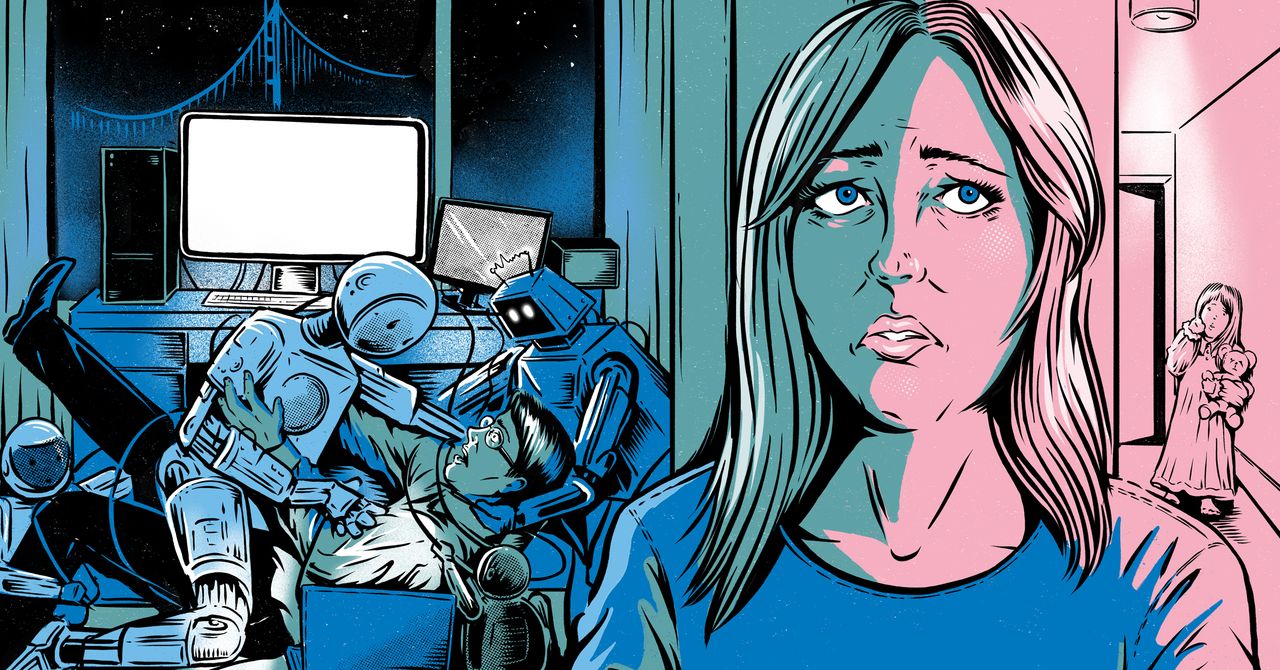
A WIRED article explores the profound social consequences of the rapid AI industry expansion, describing the emergence of the "sad wives of AI" phenomenon. Amid extreme competition and a 24/7 work regime, gender imbalance and the emotional burden on developers' families are becoming critical risk factors.

What Happened
WIRED published a study dedicated to the social consequences of the AI boom. The focus is on the shifting of emotional and domestic labor from developers—immersed in a continuous cycle of technology creation—onto their partners. This is altering family dynamics, creating a "triad" effect where technology or AI assistants become full, yet alienated, participants in relationships.
Context
The rapid growth of the artificial intelligence industry is characterized by high market volatility and an "always-on" culture. The predominantly male composition of the industry's engineering core, combined with the need for constant presence in the workflow, creates a specific socio-technical imbalance.
Why It Matters for the Industry
For the tech sector, this creates a serious risk of talent shortages. Large-scale burnout among key specialists and the breakdown of social structures within professional communities could slow the pace of innovation if the social cost of participating in the AI race becomes unacceptably high for new talent.
Why It Matters for Users
Readers should understand that technological progress does not exist in a vacuum and directly impacts mental health and the quality of human relationships. This allows for a look at the pursuit of singularity through the lens of everyday life and the culture of the attention economy.
What Is Not Yet Known / Limitations
There are differing assessments regarding the scale of the consequences: while some experts see this primarily as a burnout risk, product designers emphasize the need to change approaches to creating attention management tools at the level of life balance.
Sources
Author
Look at AI, Editorial Team