AI Assist has been introduced—a tool for automatically creating notes during Google Meet and Zoom meetings, operating on a Bring Your Own Keys (BYOK) model. The program ensures a high degree of confidentiality by processing data locally on macOS and Linux.
What Happened
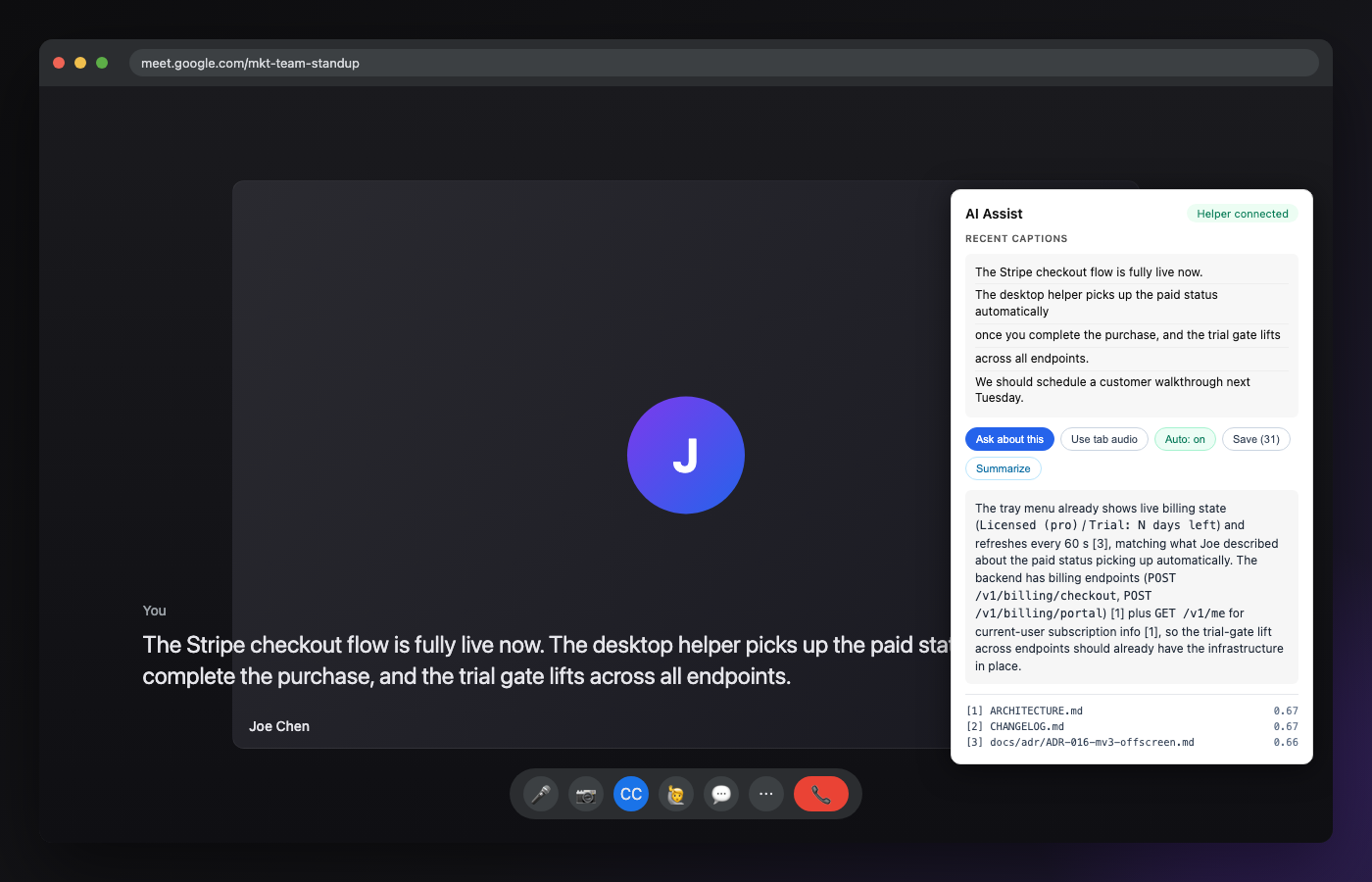
Developers have released AI Assist, which allows users to use their own API keys (e.g., Anthropic for LLMs and OpenAI Whisper for transcription) to process meetings. The system runs locally and supports file indexing to provide insights and answers based on accumulated context, effectively implementing a Retrieval-Augmented Generation (RAG) mechanism.
Context
Unlike traditional AI bots that join calls and upload audio to their own servers, the BYOK approach and local-first infrastructure prevent the transfer of sensitive information to third-party providers. This addresses the security concerns that often act as a barrier to implementing AI in corporate environments.
Why It Matters for the Industry
The emergence of tools with a BYOK model and local processing lowers the barriers to corporate adoption of AI assistants. This creates demand for 'local-first' applications and wrappers that provide a user-friendly interface over raw APIs, and in the long term, could lead to the standardization of this approach in professional software.
Why It Matters for Users
Users gain full control over their data and cost transparency: payments to API providers are made directly based on usage, without subscription markups. This also allows users to bypass corporate bans on using cloud-based AI bots in Zoom or Google Meet.
What Is Not Yet Known / Limitations
There is a lack of deep technical analysis regarding the architectural complexities of maintaining local indexing and performance on edge devices.
Sources
Author
Look at AI, Editorial Team