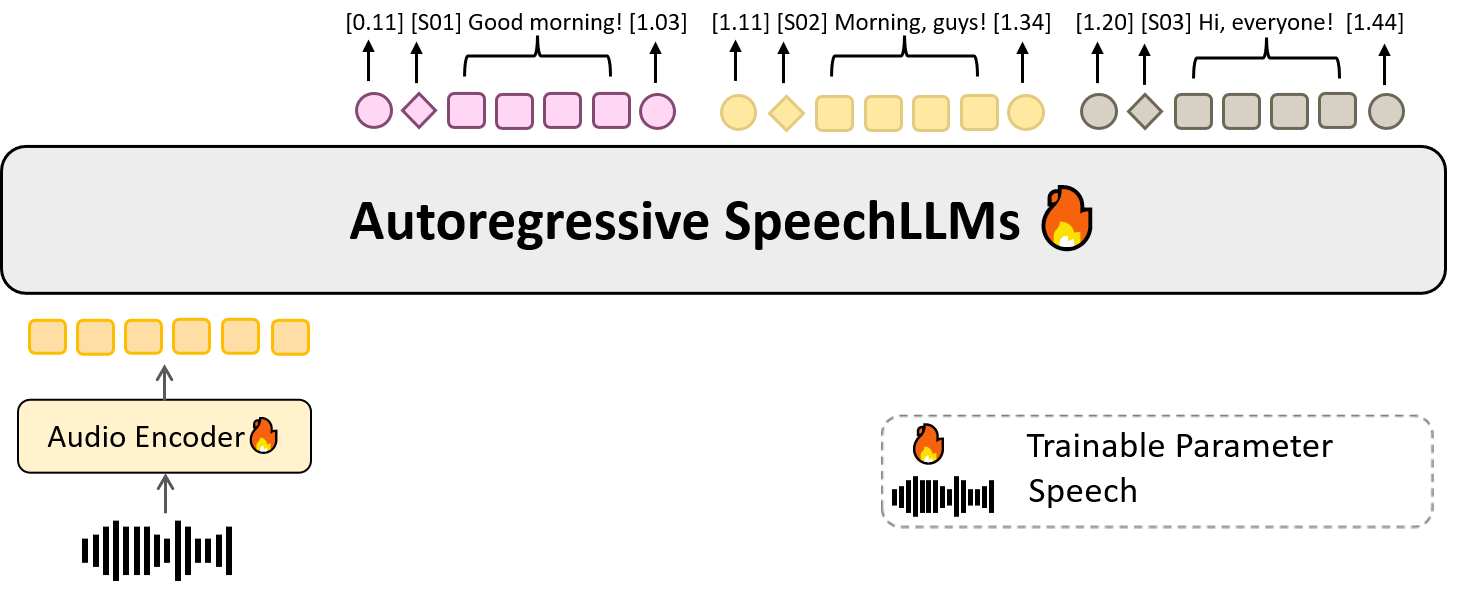
A new compact open-source model, MOSS-Transcribe-Diarize 0.9B, has been introduced, capable of performing both audio transcription and diarization within a single pass.


What Happened
The MOSS-Transcribe-Diarize model with 0.9B parameters has been developed, combining speech-to-text (STT) and speaker diarization tasks into a single architectural stage. The solution supports over 50 languages, can process recordings up to 90 minutes long, and can account for acoustic events, outputting structured text with timestamps and speaker labels such as [S01, S02].
Context
Traditional audio processing systems are often built on cascaded pipelines, where one model converts speech to text and a second model determines who is speaking. Moving to an end-to-end (single-pass) architecture helps avoid error accumulation between different systems and significantly reduces data processing latency.
Why It Matters for the Industry
For the industry, this is an important step toward creating efficient, small-scale multimodal architectures. The model's compact size makes it ideal for deployment on edge devices and consumer hardware, reducing developer dependence on expensive and resource-intensive cloud APIs and simplifying the creation of fast, private audio analysis systems.
Why It Matters for Users
Users gain the ability to create high-quality subtitles and automated meeting minutes locally on their own devices. This ensures high data privacy and allows for savings on cloud transcription service subscriptions while maintaining accurate speaker separation.
Sources
- GitHub - OpenMOSS/MOSS-Transcribe-Diarize
- Hugging Face - MOSS-Transcribe-Diarize 0.9B Summary
- arXiv - MOSS Transcribe Diarize Technical Report
Author
Look at AI, Editorial Team