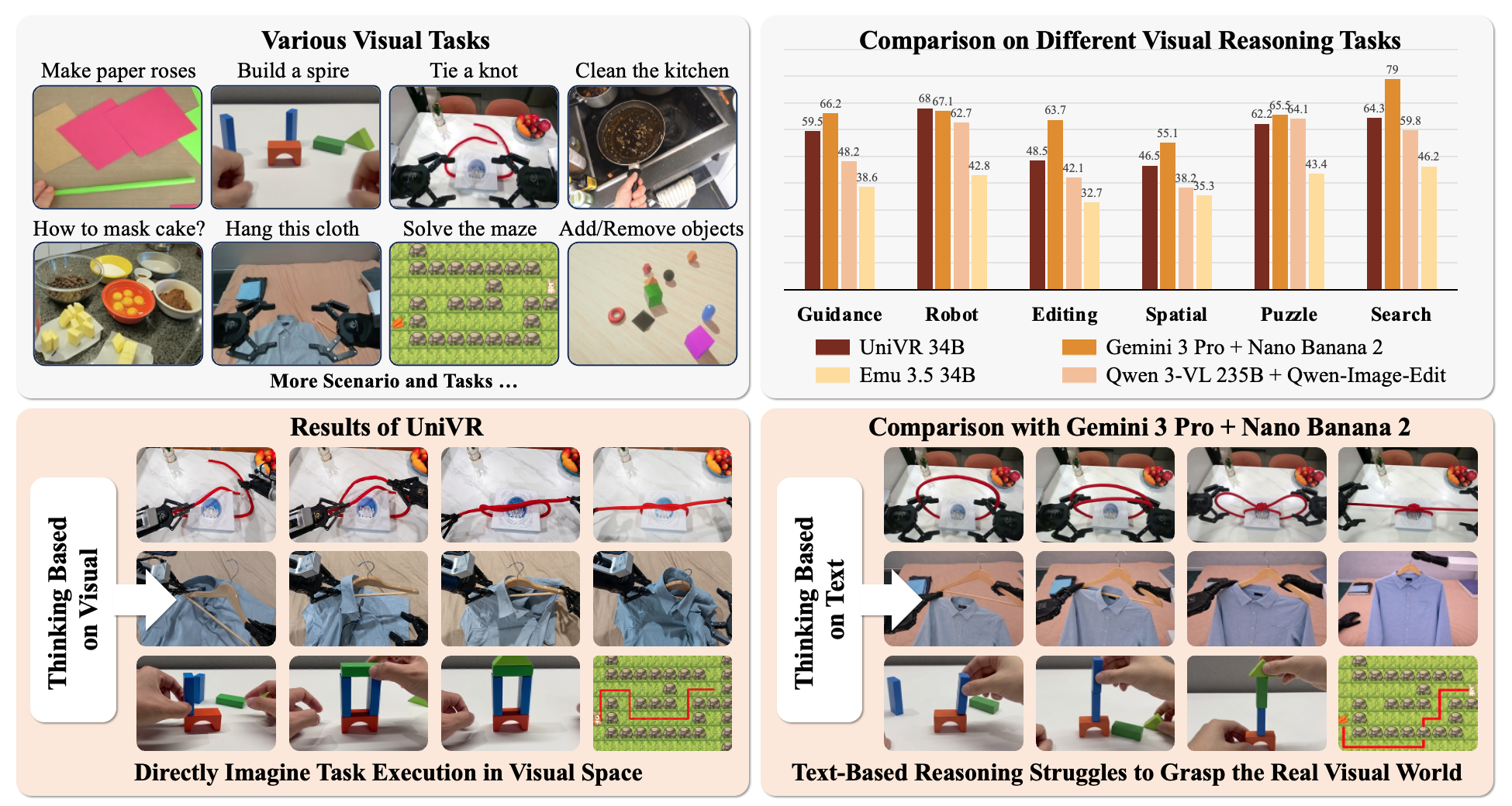
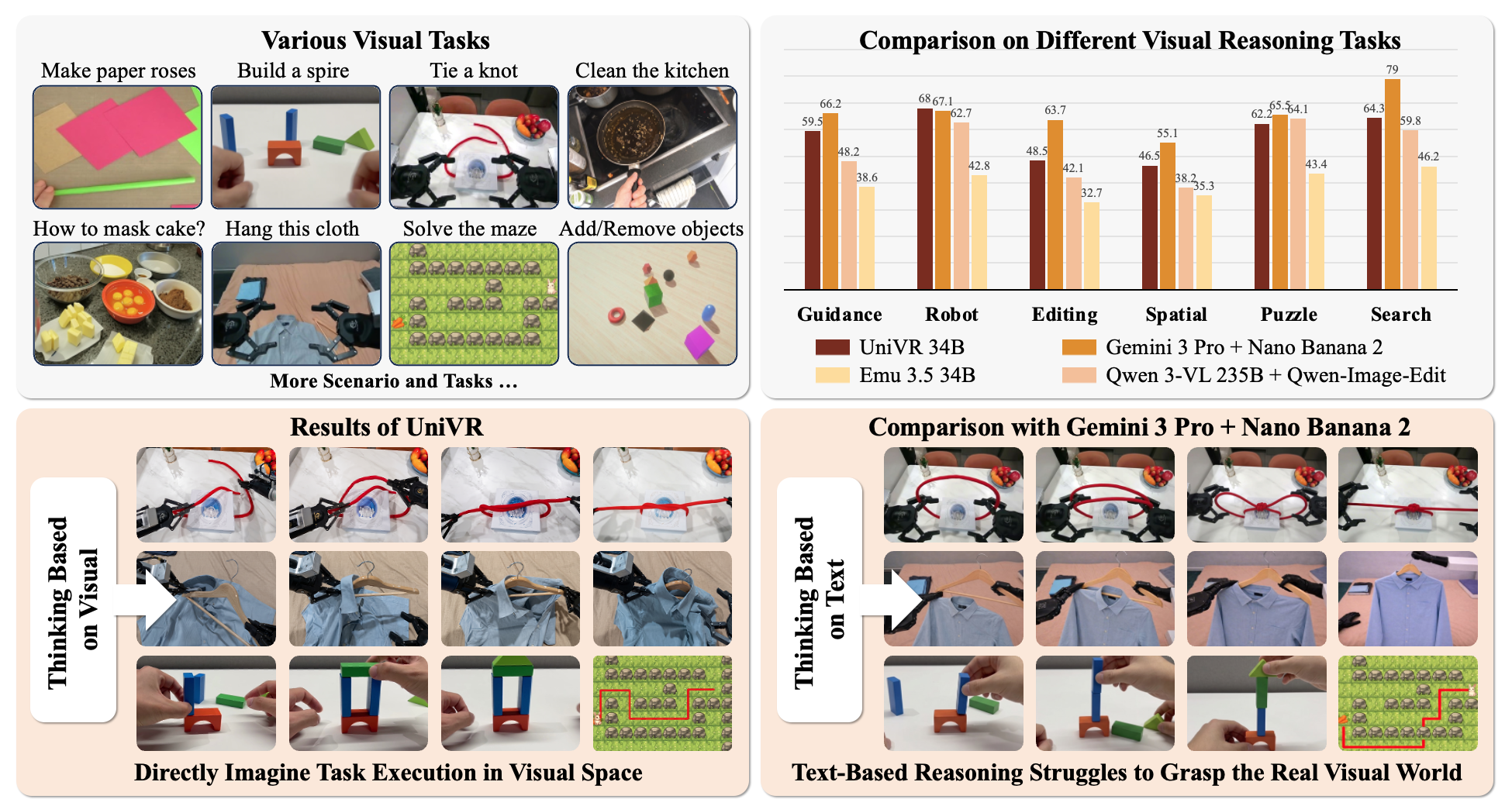
UniVR has been introduced—an innovative framework that enables artificial intelligence models to perform complex reasoning and planning directly within the visual space, bypassing the stage of textual abstractions.
What Happened
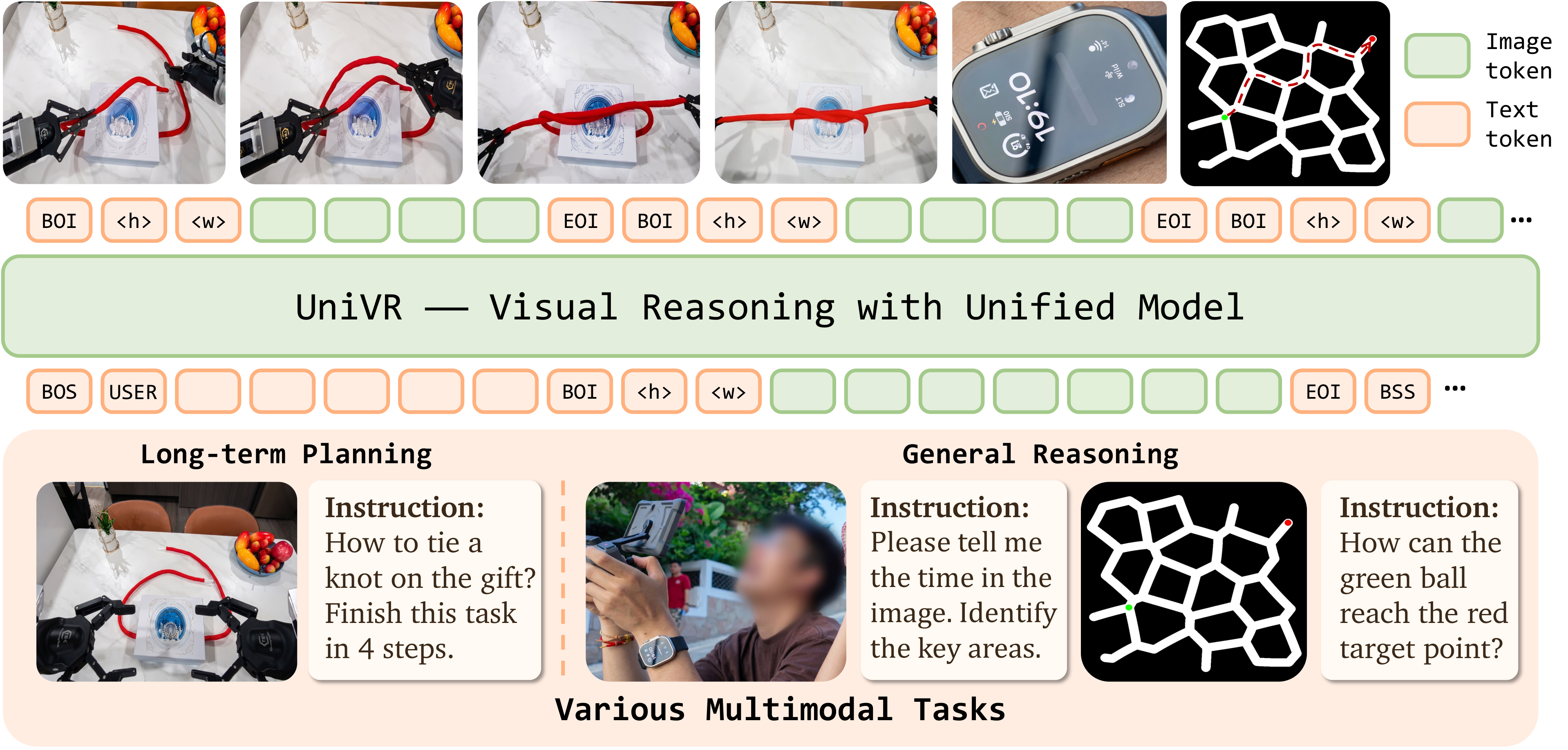
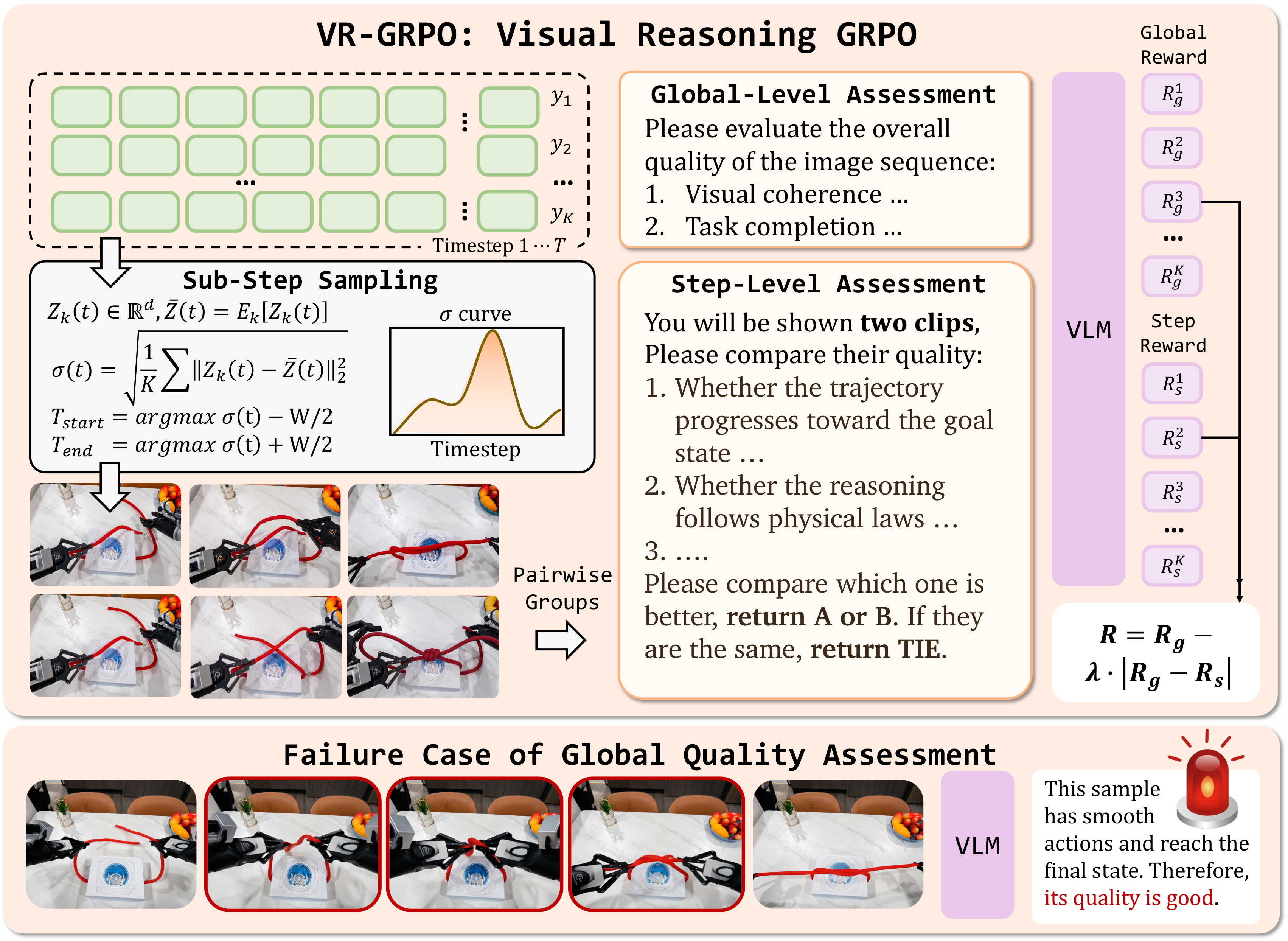
Researchers presented UniVR, which is based on the Emu3.5 architecture. The model utilizes the VR-GRPO training method with a "Step-Focal Reward" to ensure logical and physical consistency of actions. When tested on the new VR-X benchmark, which contains 1.5 million samples, the 34B parameter model showed an 18.4% advantage over the baseline version and successfully competes with Gemini 3 in long-term object manipulation tasks.
Context
Traditional Vision-Language Models (VLM) often rely on textual Chain-of-Thought reasoning, which creates a gap between semantic understanding and real physical interaction. UniVR introduces the concept of Visual Reasoning Traces, shifting the reasoning process into the feature space, which allows for more accurate consideration of spatial relationships and the laws of physics.
Why It Matters for the Industry
For the industry, this represents a fundamental shift from text-oriented agents to physically-oriented systems. The use of the VR-GRPO architectural pattern and the specialized VR-X benchmark sets new standards for evaluating AI's ability for visual planning, which is critical for the development of autonomous robots and high-precision real-time control systems.
Why It Matters for Users
For end users and developers, this is a step toward creating AI that "sees" and understands the physics of movement and objects much like a human does. This makes interaction with autonomous agents faster and more accurate, as the system does not need to expend resources on intermediate verbal descriptions of every frame.
What Is Not Yet Known / Limitations
Engineers and architects point to the need for additional verification of latency and inference costs for a 34B parameter model, as well as questions regarding integration into existing technology stacks and ensuring data security.
Sources
Author
Look at AI, Editorial Staff