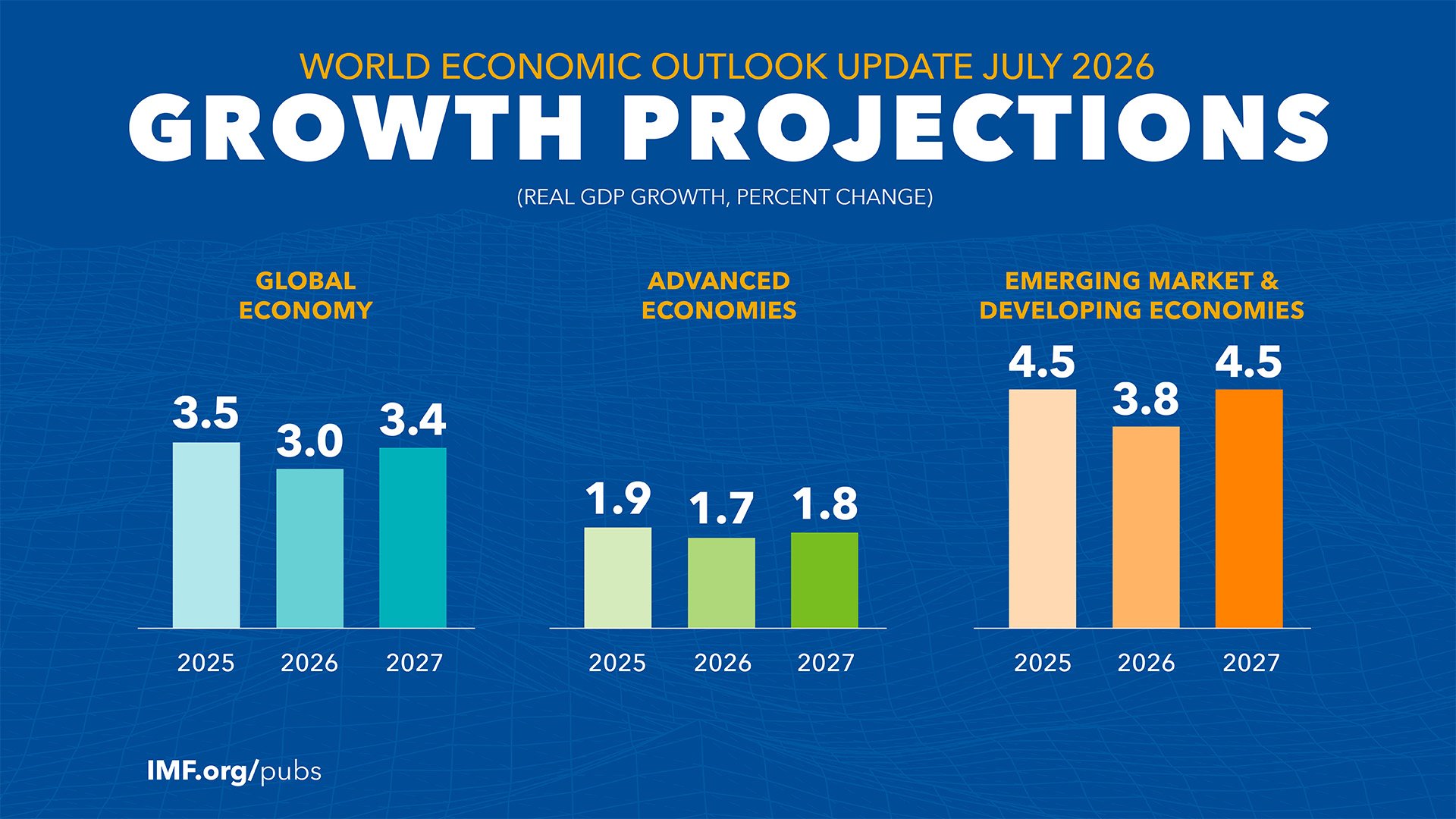
According to the IMF forecast update from July 2026, global economic growth will be 3.0%, with artificial intelligence becoming a key factor in divergence between countries.


What Happened
In its July 2026 World Economic Outlook update, the IMF forecasts global economic growth at 3.0%. The main driver of structural changes is AI, which creates an advantage for countries integrated into global technology value chains.
Context
Economic success in the AI era is shifting from purely algorithmic achievements to the ownership of physical infrastructure. Countries that control chip production, server equipment, and energy grids gain capabilities that partially offset the negative consequences of geopolitical conflicts and energy shocks.
Why It Matters for the Industry
For the industry, AI infrastructure is ceasing to be just a technological trend and is becoming a critical factor in national economic resilience. This creates new market niches for companies controlling the supply of semiconductors, specialized equipment (GPU/ASIC), and power supply channels, forcing players to move from an AI-first strategy to an Infrastructure-first strategy.
Why It Matters for Users
For investors and users, success in the AI sphere is now directly linked to the physical stack. This defines long-term trends: growth in capital expenditures (CAPEX) on hardware, increased vertical integration of companies (controlling not only the model but also the compute resources), and increased attention to system energy efficiency.
What Is Not Yet Known / Limitations
There is a noticeable difference in focus between the IMF's purely economic forecasts and the operational niches identified by AI product developers.
Sources
Author
Look at AI, Editorial Team