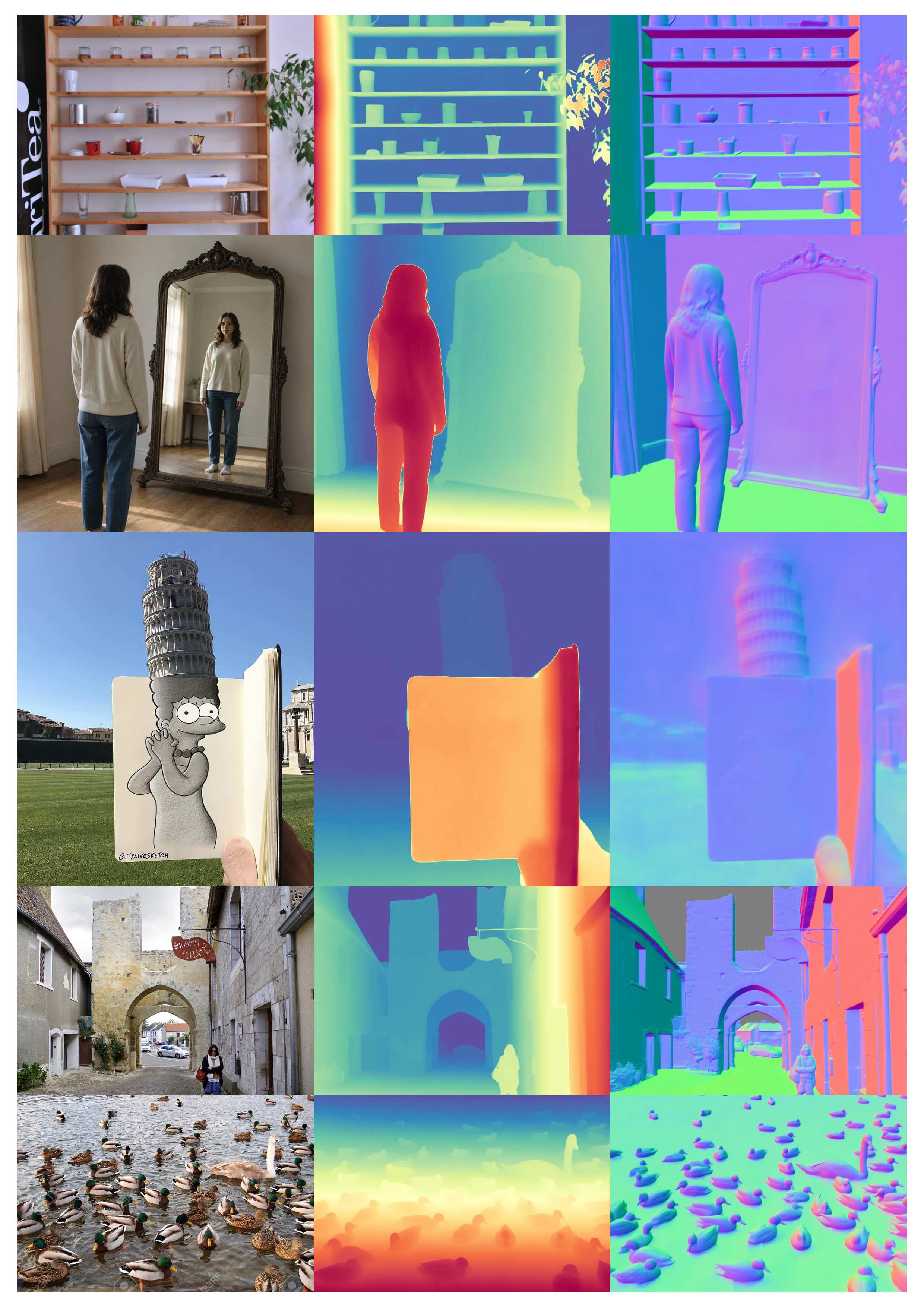
SenseNova-Vision has been introduced—a 7B parameter multimodal generative model utilizing a Mixture-of-Tasks (MoT) approach. Instead of a set of separate models for different tasks, it integrates detection, OCR, segmentation, depth estimation, and camera pose estimation into a single architecture that operates via natural language instructions.


What Happened
Developers have presented SenseNova-Vision, which shifts from the classical 'backbone + heads' paradigm to a generative approach. The model is capable of generating both structured text (coordinates, objects) and dense visual maps, including segmentation masks, depth maps, and normals, based on text queries.
Context
Modern computer vision systems often rely on a pipeline of several specialized models (for example, an object detector followed by a segmentation model and a separate depth estimation model). SenseNova-Vision offers architectural unification, replacing this set of disparate components with a single 7B parameter pass through the MoT mechanism.
Why It Matters for the Industry
For the industry, this means simplifying Computer Vision pipelines and reducing the computational and infrastructural costs of integrating multiple models. The transition to unified multimodal generators allows for solving complex compositional tasks within a single pass and paves the way for creating universal Vision-Language-Action (VLA) models.
Why It Matters for Users
For developers and researchers, this is an important step toward creating universal AI agents and robotic systems. It is now possible to design complex multimodal systems with fewer components and simpler orchestration, managing world perception through simple text commands.
What Is Not Yet Known / Limitations
There is moderate skepticism regarding operational aspects, such as latency, the complexity of inference when generating dense maps, and overall operational reliability in enterprise environments.
Sources
- SenseNova-Vision: Vision as Unified Multimodal Generation (arXiv)
- SenseNova-Vision GitHub Repository
- SenseNova-Vision-7B-MoT on Hugging Face
Author
Look at AI, Editorial Staff