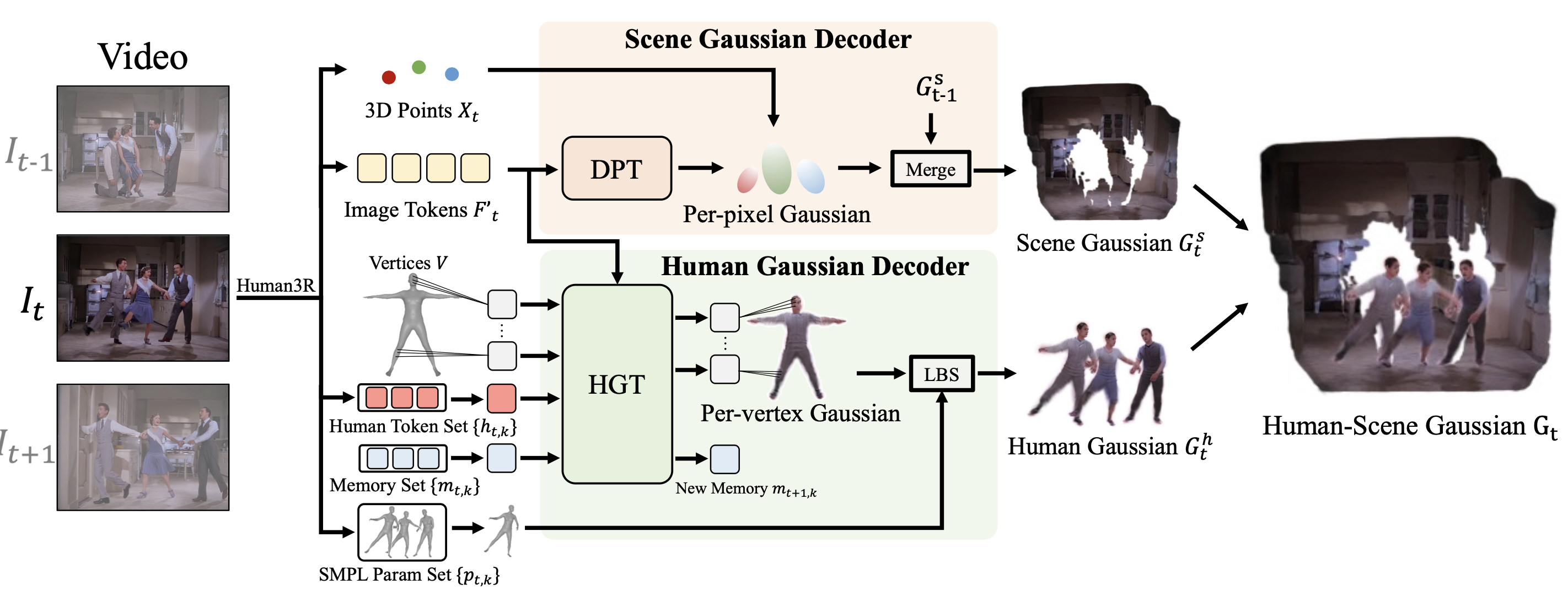
Researchers from the University of Tokyo have introduced GUSH3R—an innovative framework capable of simultaneously reconstructing dynamic humans and static scenes in 3D Gaussian Splatting (3DGS) format using only a single monocular video.
What Happened
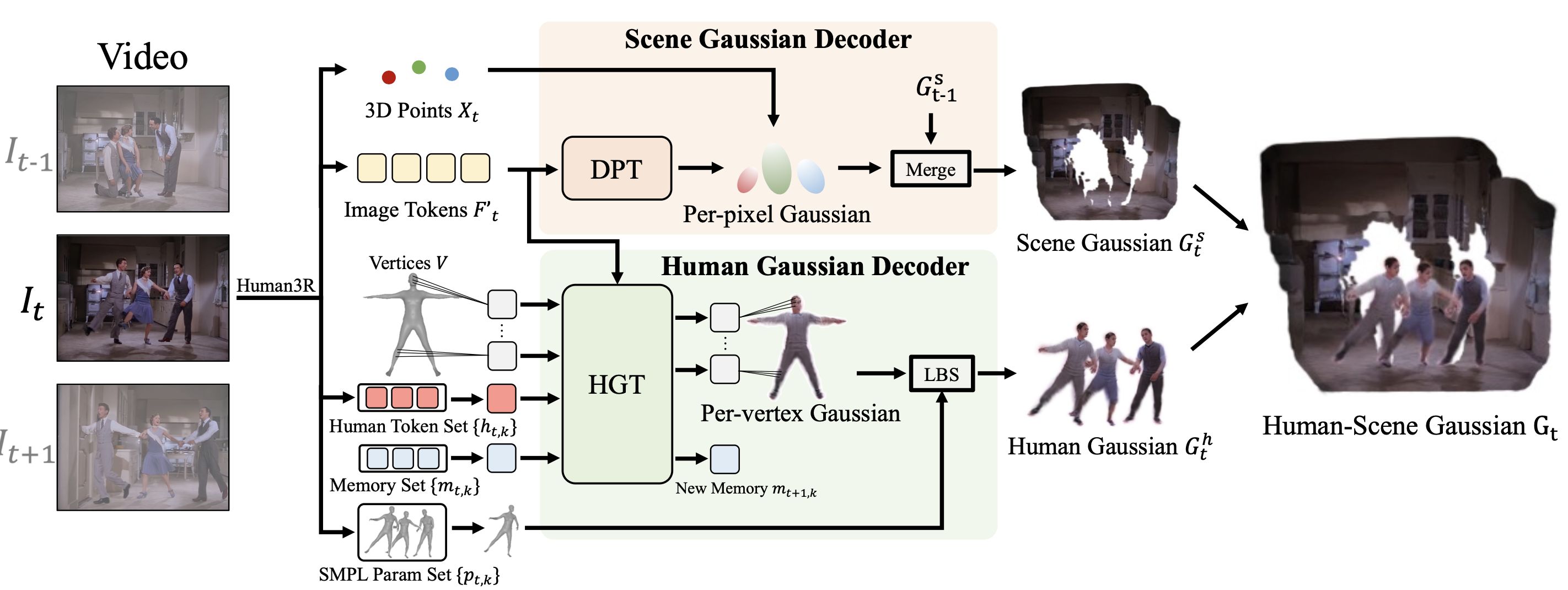
Developed at the University of Tokyo, the GUSH3R system utilizes a feed-forward architecture, eliminating the need for lengthy optimization for every new video. The process is divided into two specialized components: a Scene Gaussian Decoder for environment reconstruction and a Human Gaussian Decoder for modeling people, relying on geometric priors such as point clouds and SMPL-X meshes.
Context
Traditional 3D Gaussian Splatting methods typically require resource-intensive iterative optimization to create high-quality scene models. GUSH3R changes this approach, turning the process from a long computational task into fast neural network inference working with data from a single camera.
Why It Matters for the Industry
The shift from slow optimization methods to fast feed-forward models paves the way for creating interactive 3D worlds and real-time digital twins. Combining dynamic objects and static elements into a single representation solves the problem of geometric inconsistency when rendering complex scenes, which is critical for the media industry and game content development.
Why It Matters for Users
Ordinary users can now create high-quality, photorealistic 3D scenes with moving people simply by uploading a standard video shot on a single camera. This significantly lowers the barrier to entry for creating digital avatars and prototyping 3D content without the need for complex multi-camera setups or powerful GPU farms.
What Is Not Yet Known / Limitations
Additional verification of geometric accuracy and assessment of the computational costs of inference for complex decoders are required for full-scale industrial implementation.
Sources
- GUSH3R: Everyone Everywhere All at Once as Gaussians (Project Page)
- [arXiv:2607.05243 [cs.CV] GUSH3R: Everyone Everywhere All at Once as Gaussians](https://arxiv.org/abs/2607.05243)
- GUSH3R GitHub Repository
Author
Look at AI, Editorial Staff