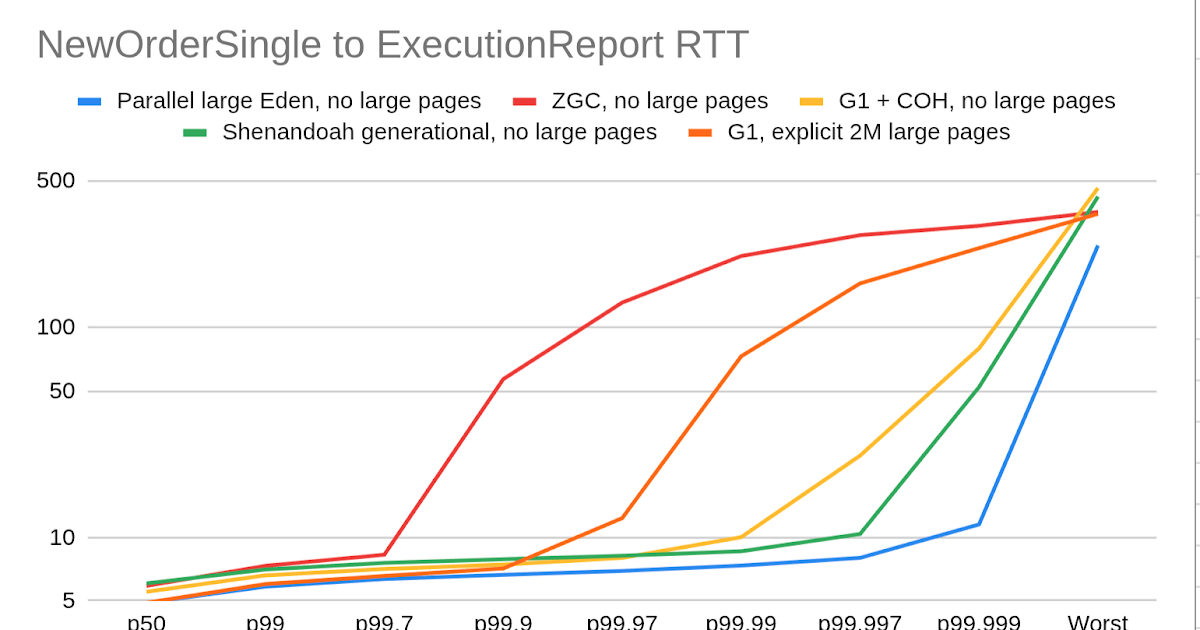
Peter Lawrey demonstrated the potential of using AI (Codex/GPT-5.5) in the role of a "trial developer" to conduct low-level memory management testing in Java. The experiment showed that models are capable of creating specialized benchmarks for closed libraries, relying solely on available documentation.


What Happened
Using AI, the JLBH benchmark was developed for the closed-source Chronicle-FIX library. Testing allowed for the evaluation of the impact of various Garbage Collectors on message round-trip latency (W→D and D→8). During the tests, a throughput of 50,000 messages per second was recorded for market data of approximately 512 bytes and new order signals of approximately 160 bytes.
Context
The case demonstrates the potential of LLMs in automating QA within niche domains, such as high-frequency trading or low-latency messaging systems, where documentation is often the only source of knowledge regarding proprietary software.
Why It Matters for the Industry
For the industry, this opens up possibilities for using AI as a "fresh pair of eyes" to identify flaws in APIs and documentation, as the model lacks the biases of an experienced developer. This allows for the automation of performance and usability testing even for closed-source systems.
Why It Matters for Users
Developers and performance engineers can use AI to accelerate the writing of specific low-latency benchmarks, reducing the system verification cycle without requiring direct access to the libraries' source code.
What Is Not Yet Known / Limitations
At this stage, the case is a Proof of Concept (PoC) and requires further verification of result reproducibility, as well as consideration of the legal and technical aspects of implementing AI into mission-critical processes.
Sources
Author
Look at AI, Editorial Staff