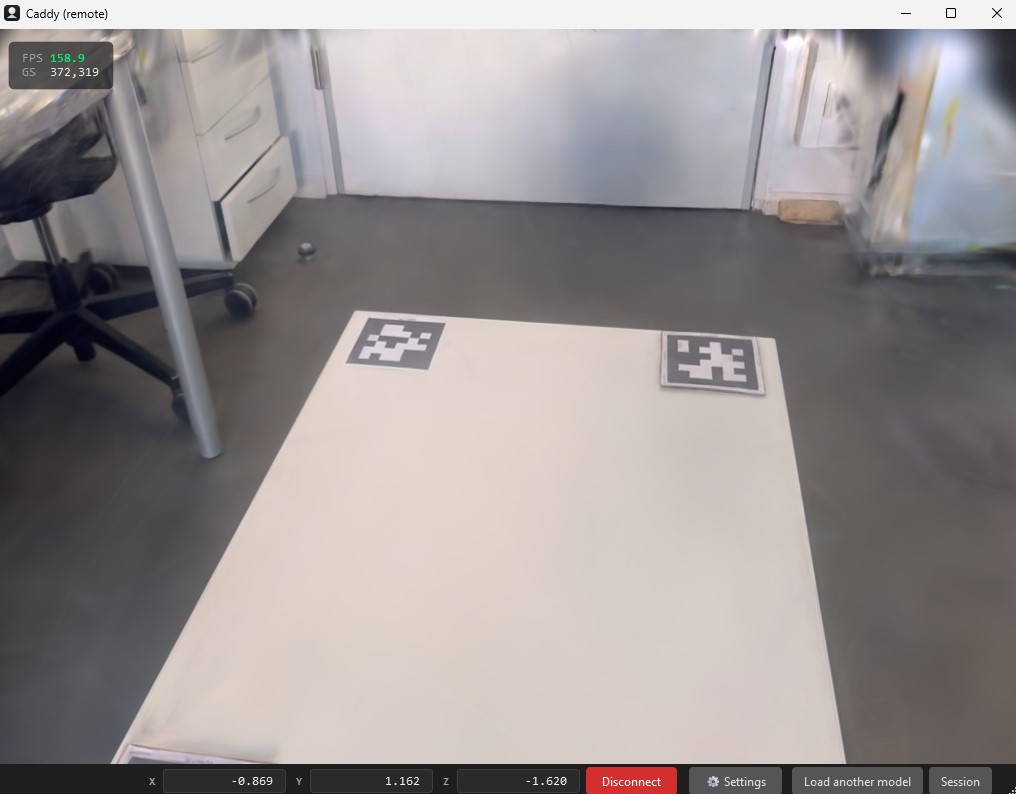
Caddy has been introduced—a flexible tool for visualizing complex 3D Gaussian Splatting (3DGS) scenes, allowing heavy computational workloads to be offloaded to a server while viewing results on any client device.


What Happened
Caddy, a modular viewer supporting various 3D data formats and the creation of session graphs to link multiple models together, has been developed. The tool supports remote rendering via SSH, enabling the use of GPU server power to display scenes. Thanks to its modular architecture, developers can extend functionality by connecting their own renderers via Python plugins.
Context
3D Gaussian Splatting (3DGS) technology requires significant GPU computational resources for high-quality visualization of complex scenes. This creates a barrier for researchers and users who do not have access to powerful local graphics cards, limiting the ability to quickly debug and demonstrate models.
Why It Matters for the Industry
Caddy simplifies research pipelines and the debugging process for 3DGS models by providing a tool for visualization and linking rendering results into a single structure. Support for remote rendering lowers the barrier to entry for the industry, opening possibilities for creating cloud-based visualization platforms where heavy computations are moved to a server while the user interacts via a lightweight client.
Why It Matters for Users
Users can quickly view heavy 3D scenes on a standard laptop or a low-end device by connecting to a remote server. Interactive session graphs allow for convenient switching between different versions or types of models, accelerating the experiment cycle and the demonstration of results.
What Is Not Yet Known / Limitations
There are security questions regarding the use of SSH access and the need to address data licensing compliance in corporate environments.
Sources
Author
Look at AI, Editorial Staff