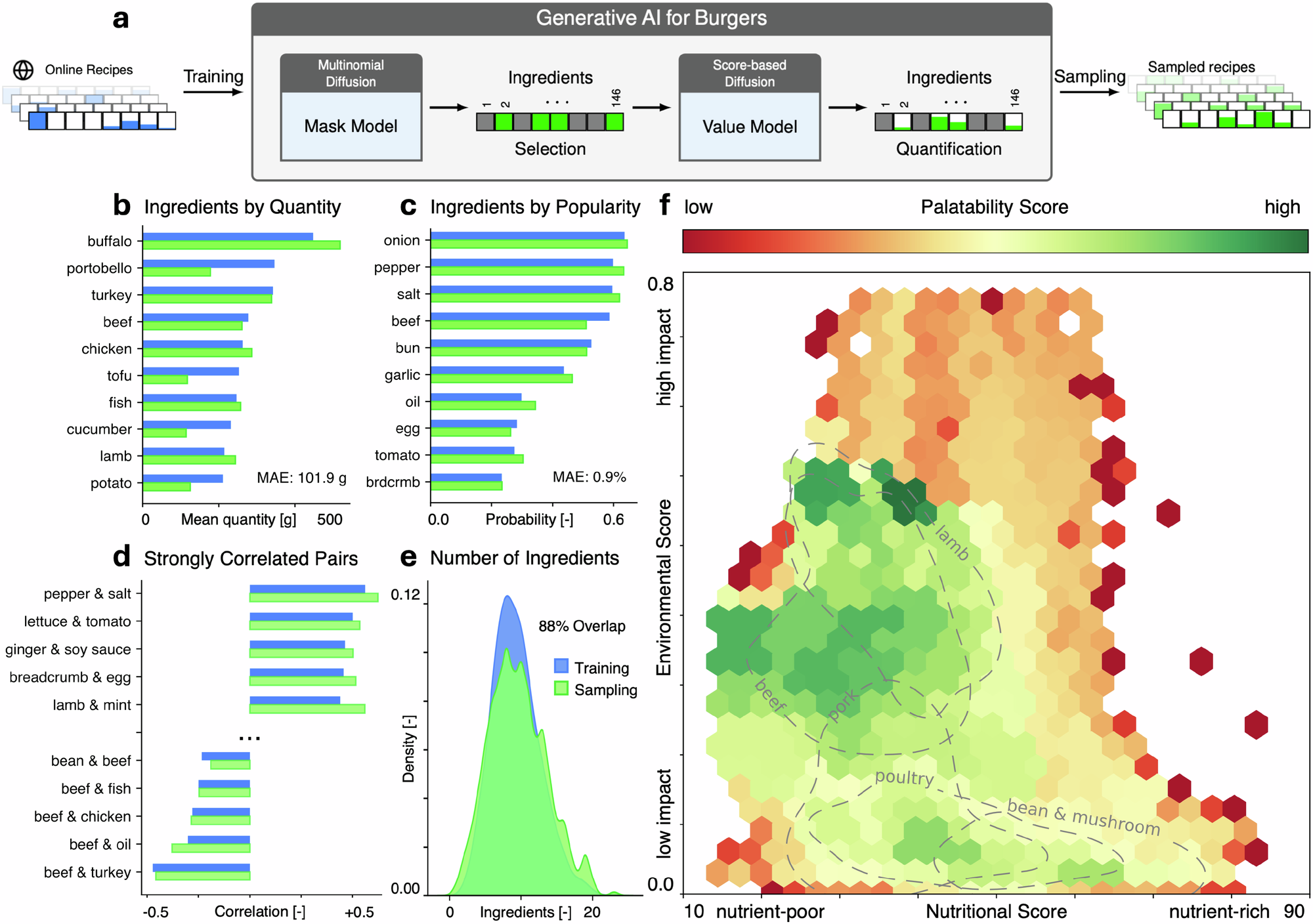
Researchers from Stanford have presented an innovative two-stage diffusion model capable of designing food recipes while simultaneously optimizing for taste, nutrition, and environmental sustainability.
What Happened
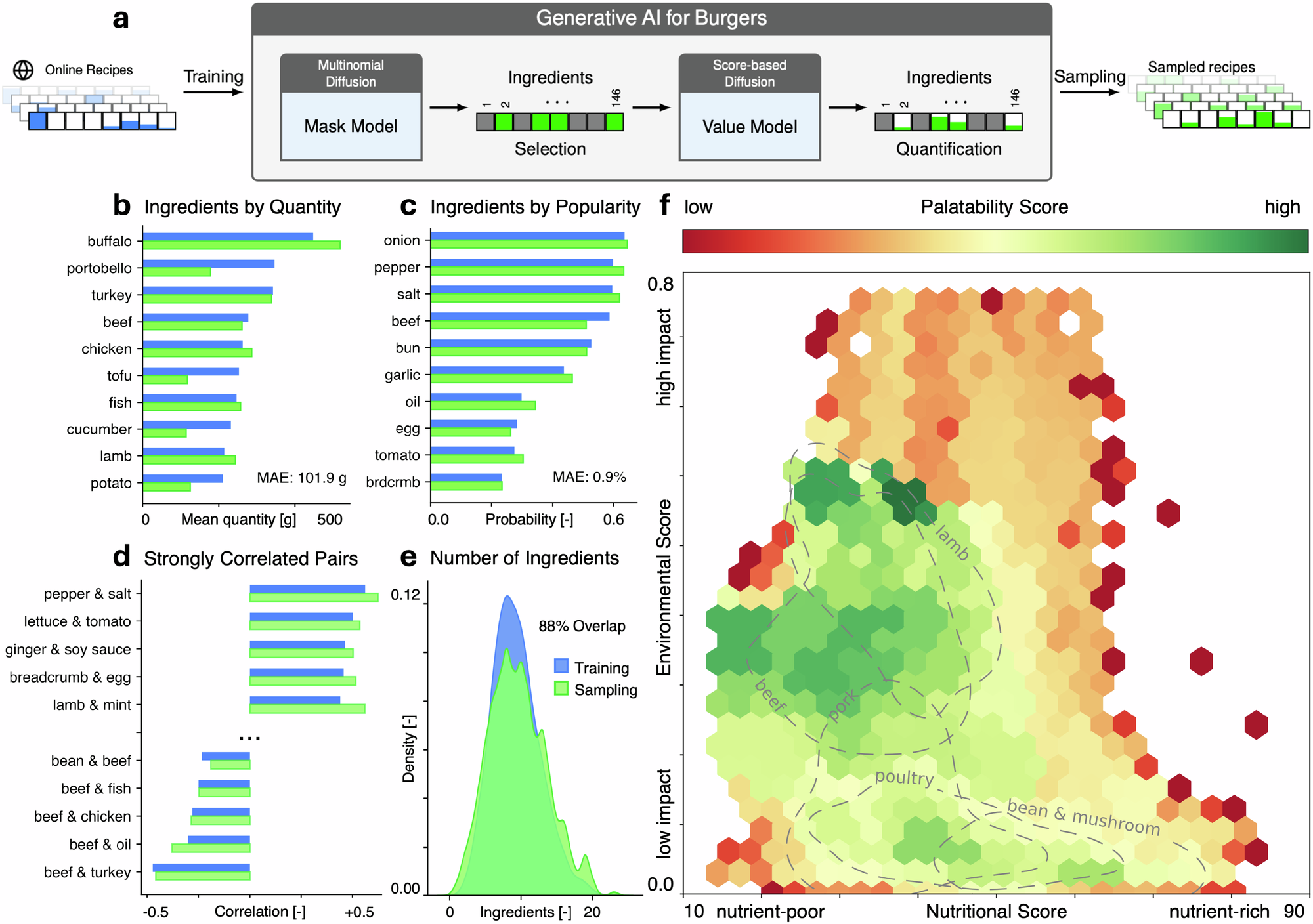
The model developed by the scientists uses a combination of multinomial diffusion for ingredient selection and score-based diffusion to determine their precise weights. During testing, AI-generated mushroom-based burger recipes not only outperformed the classic Big Mac in taste characteristics but also reduced environmental impact by 10 times and doubled the Healthy Eating Index (HEI).
Context
Traditional text-based LLMs are limited to working with discrete tokens, whereas designing complex physical objects, such as formulations, requires processing hybrid data—a combination of categorical ingredients and continuous physical parameters (mass, volume).
Why It Matters for the Industry
For the FoodTech industry, this signifies a shift from empirical recipe selection to automated product engineering design. The use of specialized diffusion models paves the way for new R&D systems capable of rapidly developing complex food structures and personalized nutraceuticals.
Why It Matters for Users
For consumers, this technology promises the emergence of affordable and delicious eco-friendly alternatives to familiar foods, as well as the possibility of creating highly personalized diets designed by an AI technologist for specific health goals.
What Is Not Yet Known / Limitations
At the current stage, the technology demonstrates a Proof-of-Concept in the optimization of physical food properties; however, expert discussions are shifting focus from architectural features to questions of scaling business models and reducing R&D costs.
Sources
Author
Look at AI, Editorial Staff