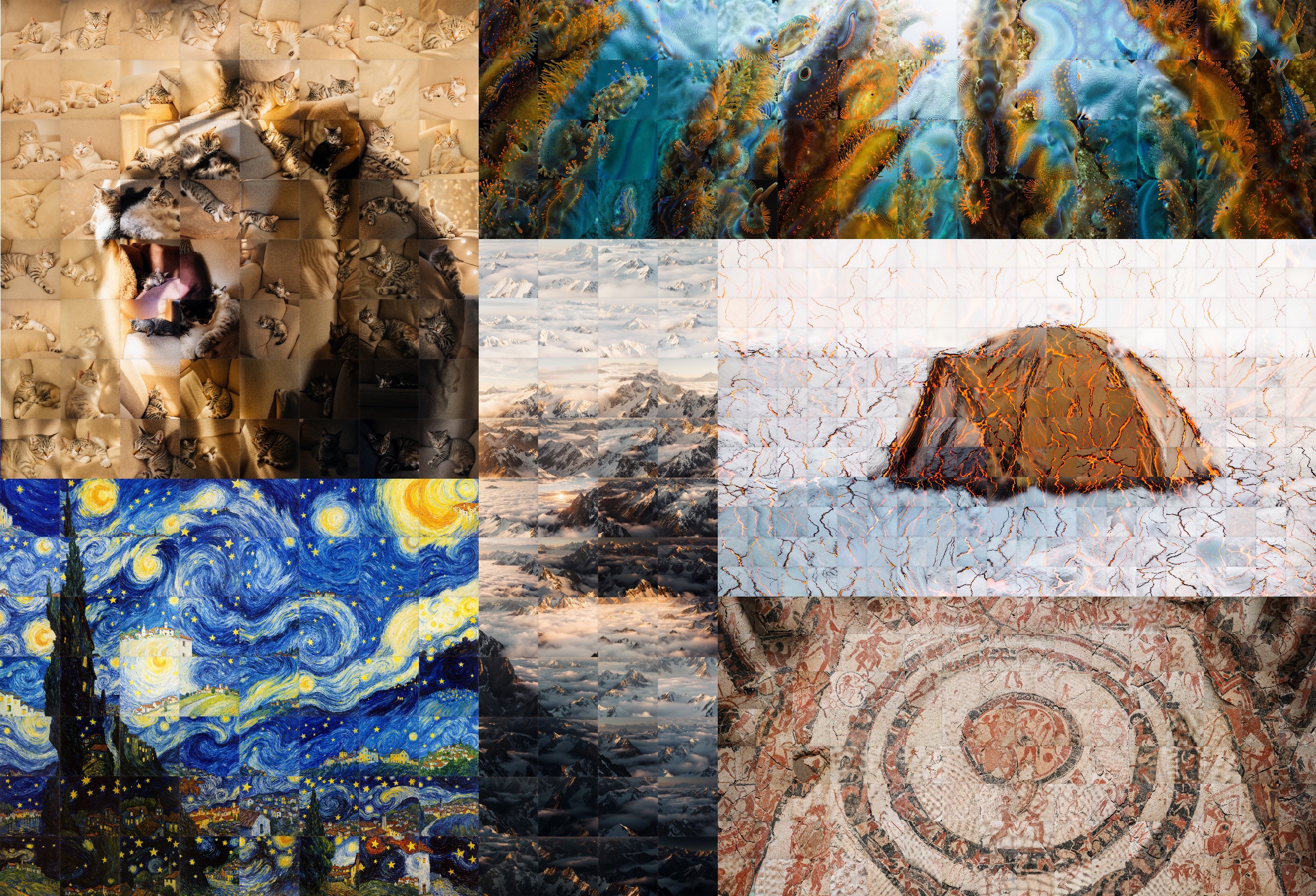
PhotoQuilt has been introduced—an innovative framework that allows for the generation of photo mosaics at arbitrary resolutions, including ultra-high figures exceeding 14K. The technology works without prior model training, using the Bootstrapped Tiled Denoising method to ensure a balance between global composition and local detail.

What Happened
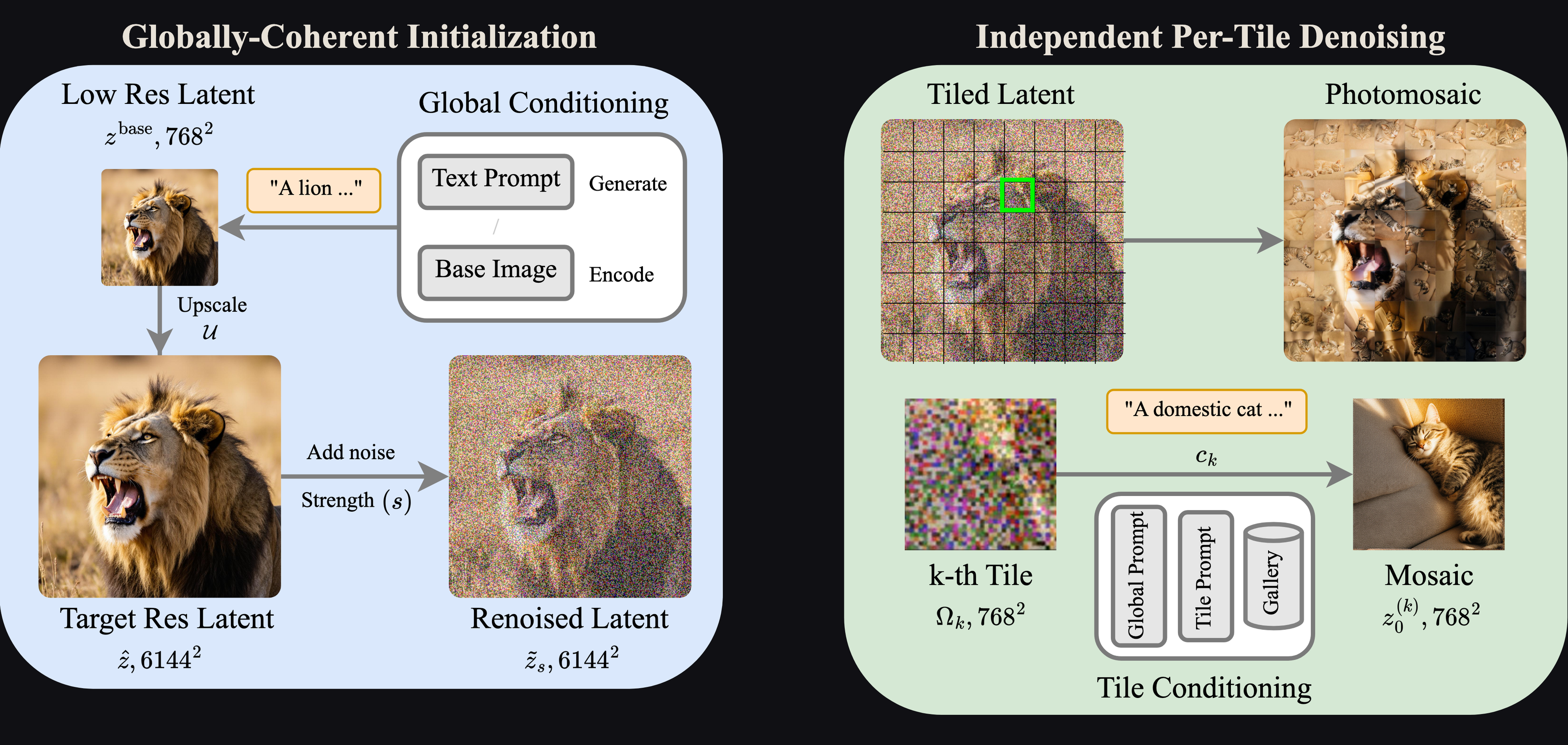
Developers have introduced PhotoQuilt, a system that first forms a global composition at a low resolution, then scales it in the latent space with re-noising, and completes the process via tiled denoising. The framework supports popular backends such as FLUX.1, FLUX.2 (Klein), and Stable Diffusion 2.1, allowing for the creation of ultra-high-definition images without a quadratic growth in computational costs.
Context
Standard diffusion models face a fundamental problem: when attempting to generate ultra-large images, an imbalance arises between the overall scene structure and the quality of fine details. Furthermore, traditional scaling methods often require colossal computational resources and specialized training of upscalers to work with massive resolutions.
Why It Matters for the Industry
For the AI industry and developers, this signifies a shift toward the concept of arbitrary resolution as a standard. The method enables the creation of print-ready, ultra-high-quality content without the need for massive GPU clusters to train specialized models, significantly lowering the barrier to entry for startups and creative businesses.
Why It Matters for Users
Users gain access to a tool capable of creating incredibly detailed mosaics, where every individual element remains sharp while the overall canvas forms a unified picture in resolutions of 14K and above. The project is available via GitHub and a demo version on Hugging Face, allowing for the immediate integration of highly detailed content into projects.
What Is Not Yet Known / Limitations
There are legal and regulatory risks associated with intellectual property (IP) and the use of source images when creating mosaics, as noted by data protection and legal specialists.
Sources
Author
Look at AI, Editorial Staff