
A new method, GenRecon, has been introduced that allows turning ordinary RGB image sets into detailed 3D scenes using powerful generative 3D priors. The technology enables the creation of ready-to-use PBR meshes suitable for professional use in graphics engines.
What Happened
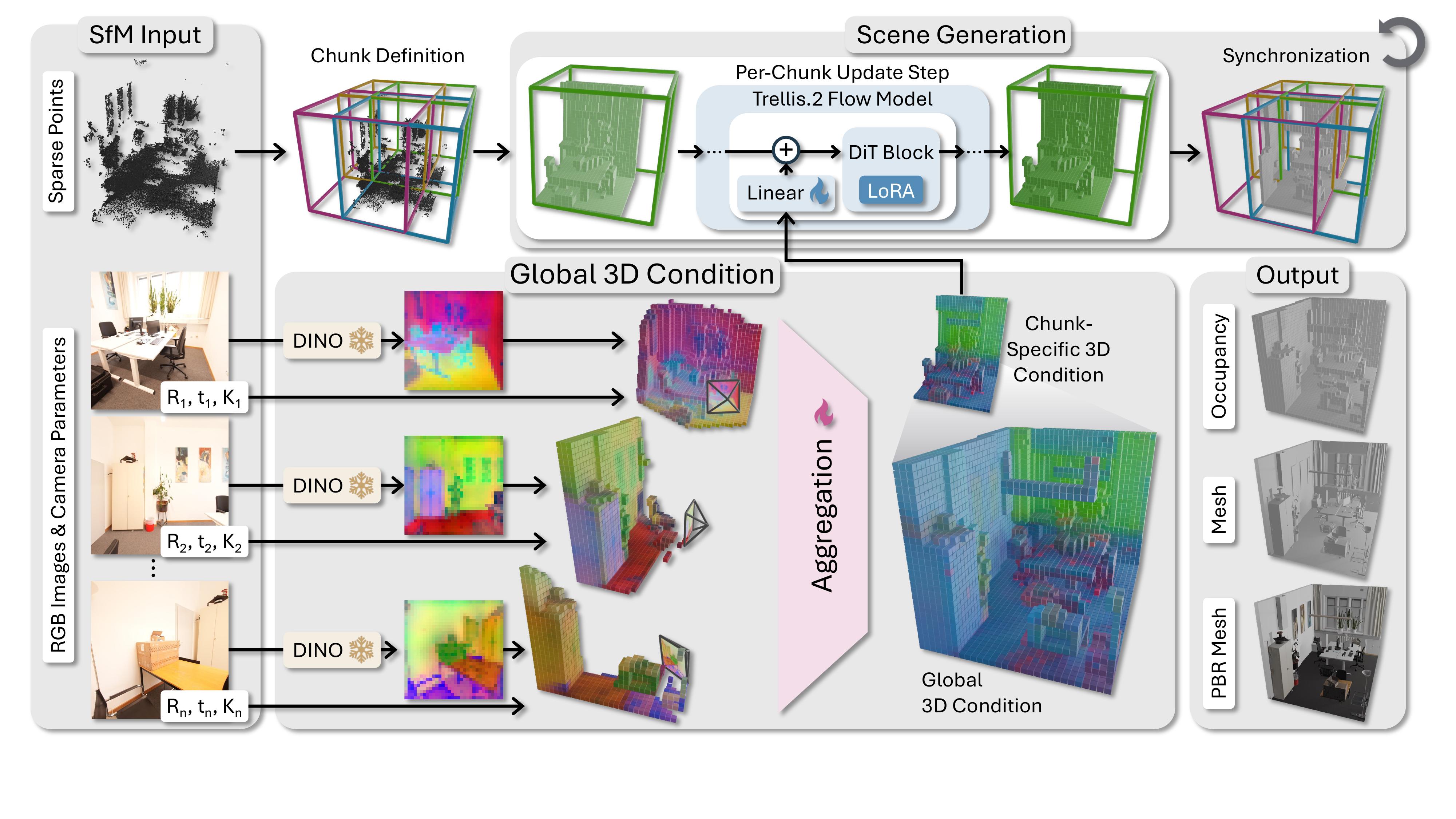
The GenRecon method has been developed, which breaks a scene into overlapping 3D chunks and merges them in a common latent space. Relying on the TRELLIS.2 model, the system generates highly detailed geometry and creates a ready-to-use PBR (Physically Based Rendering) mesh that supports realistic lighting.
Context
Unlike traditional methods, which are often limited to creating simplified meshes or point clouds, GenRecon uses strong generative prior knowledge to fill in missing data when reconstructing complex objects and environments.
Why It Matters for the Industry
This technology significantly accelerates content pipelines in AR/VR and game development, allowing a transition from simple scanning to creating full PBR scenes from ordinary smartphone videos. This paves the way for decentralized and rapid creation of high-detail user-generated content (UGC) and digital twins.
Why It Matters for Users
Users can now turn a random video recording of a room or object into a full 3D model with correct materials, which can be immediately imported into Blender or other game engines for editing and use.
What Is Not Yet Known / Limitations
At the moment, detailed data regarding latency, inference cost, and the scalability of the pipeline for full-scale industrial implementation (production-ready) is unavailable.
Sources
Author
Look at AI, Editorial Team