
NVIDIA has introduced NeuMatEx—an innovative differentiable inverse rendering method that allows for the extraction of high-quality neural materials from a set of multi-view images. The technology enables the modeling of complex physical effects, such as dust, haze, fuzz, and intricate reflections, directly through latent space, bypassing the limitations of traditional methods.
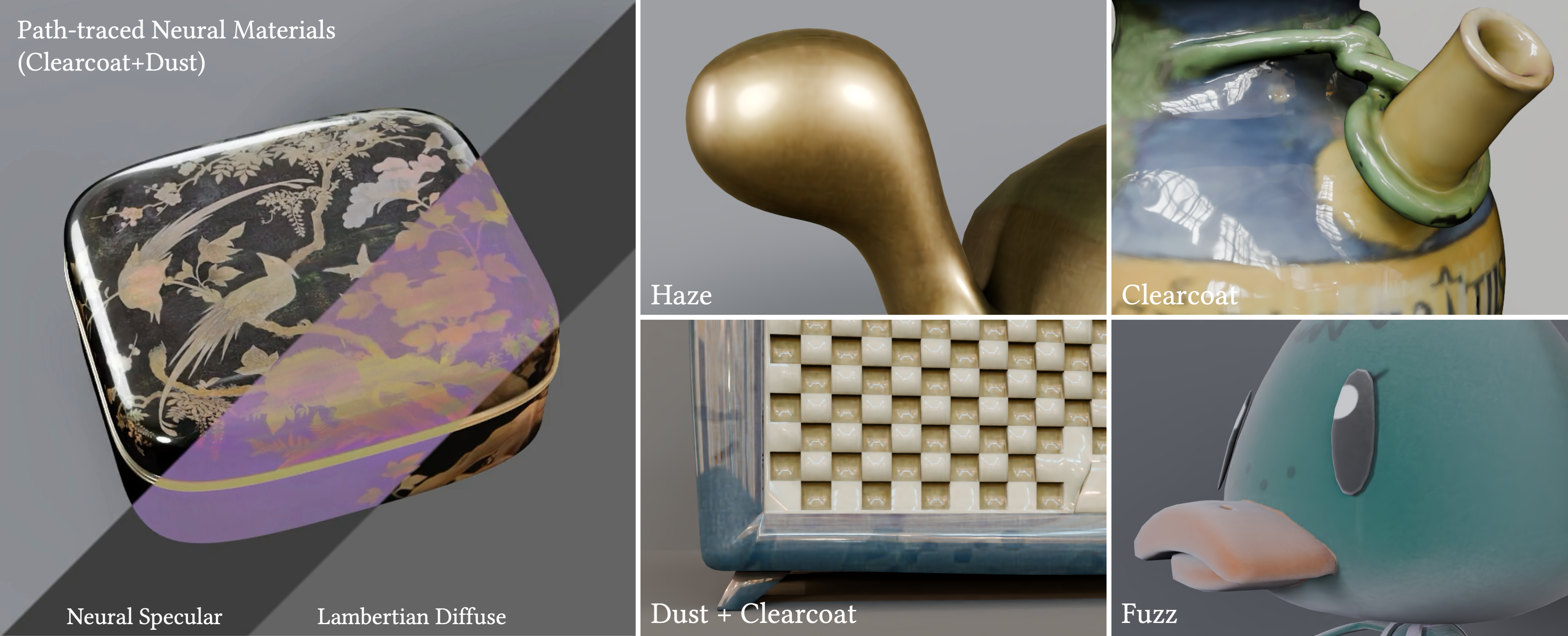
What Happened
The NeuMatEx method has been developed, utilizing a Large Material Reconstruction Model (LMRM) to initialize the process, followed by optimization via differentiable inverse path tracing. Unlike classical PBR, this approach does not "bake" effects like dust or sheen into the base color (albedo), but instead models them as distinct material properties.
Context
Traditional PBR (Physically Based Rendering) pipelines often encounter artifacts when attempting to bake complex surface micro-details into textures. NeuMatEx proposes a shift from manual modeling and simulation to neural reconstruction of material physical properties directly from visual data.
Why It Matters for the Industry
The technology addresses the problem of artifacts when creating photorealistic assets and paves the way for the automated production of complex materials (clearcoat, scattering). This could radically simplify pipelines in large graphics studios and R&D departments, setting a new industry direction toward neural rendering.
Why It Matters for Users
Creating ultra-realistic 3D objects becomes accessible without deep knowledge of rendering physics or intensive manual labor: it is now sufficient to upload several photographs of an object to obtain a high-quality digital material that accounts for all nuances of lighting and texture.
What Is Not Yet Known / Limitations
At this stage, the project is purely research-oriented. There is no open source code, API, or specific performance data available, which prevents its immediate implementation into production processes.
Sources
Author
Look at AI, Editorial Staff