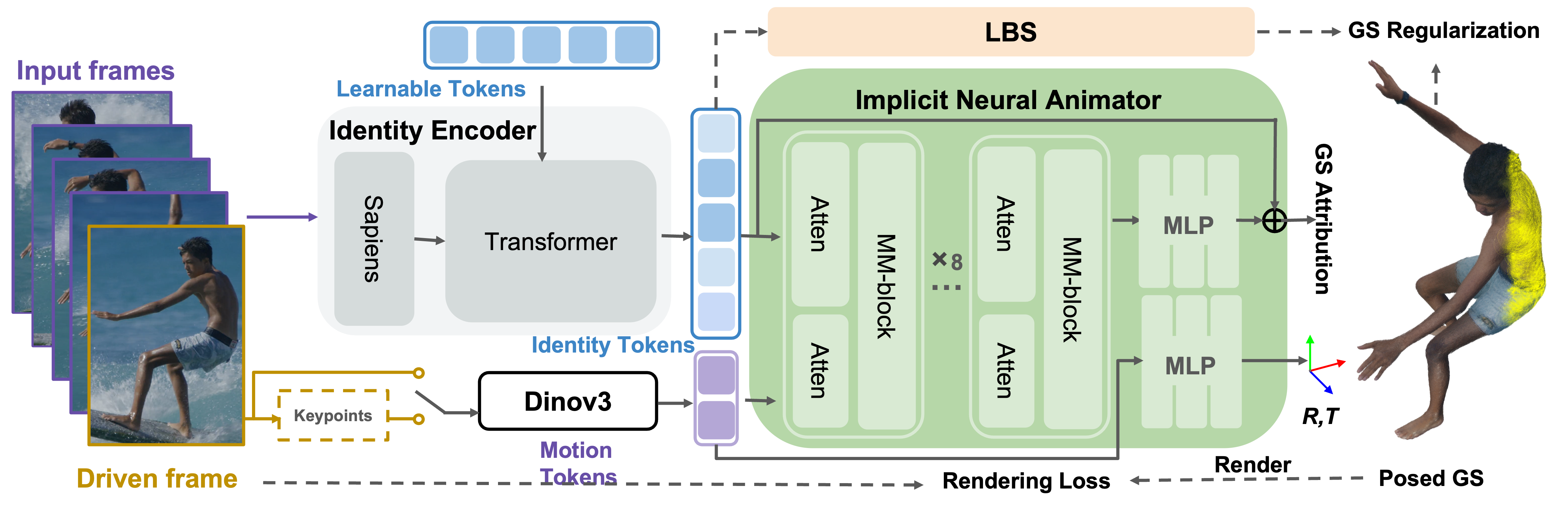
Presented at ECCV 2026, LUNA (Learning Universal 3D Human Animation Beyond Skinning) is an innovative model that radically changes the approach to 3D animation by replacing traditional methods with direct control over 3D Gaussian deformations.
What Happened
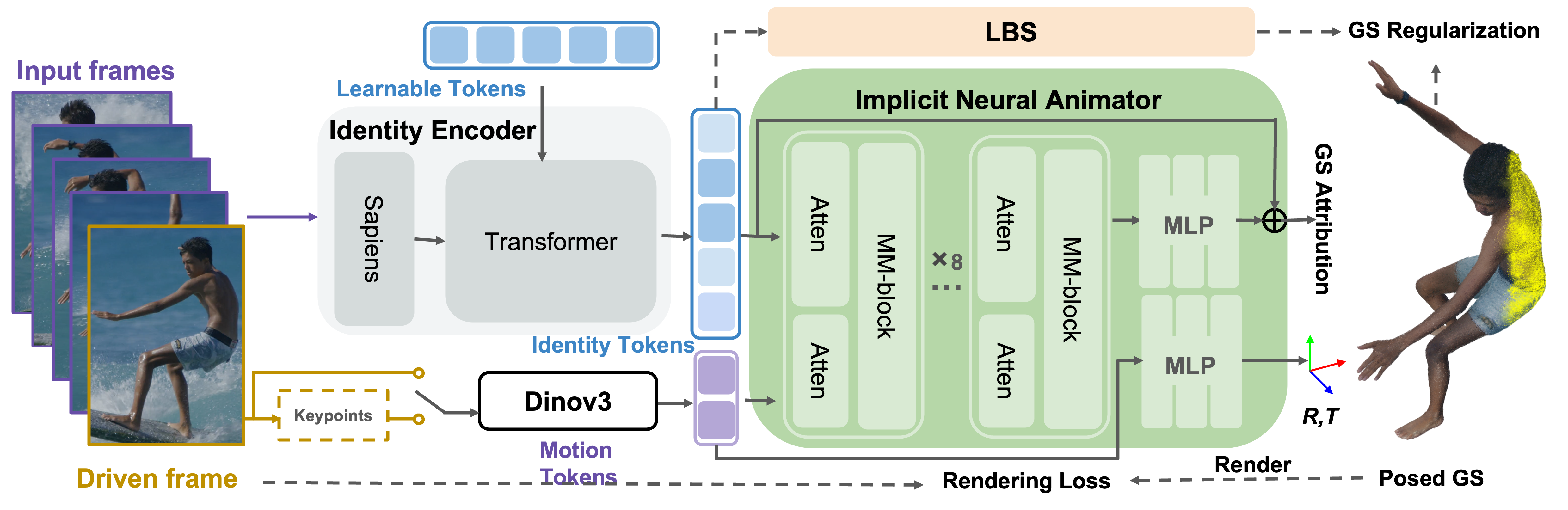
Researchers introduced the LUNA model, which transforms 2D signals (images, keypoints, or sketches) directly into 3D Gaussian deformations. The system utilizes a transformer-based motion regressor that allows for the separation of global rigid movement and fine local character dynamics, ensuring high-quality animation even for models not present in the training set (zero-shot generalization).
Context
Traditional 3D animation methods rely on Linear Blend Skinning (LBS) and parametric body models, which often lead to visual artifacts such as mesh pinching or geometry tearing. The preparation process for such models requires labor-intensive manual tuning of "skin" weights and the character's skeleton.
Why It Matters for the Industry
LUNA offers a solution to the fundamental problem of skinning artifacts and the rigid dependency on parametric models. Moving toward control via Gaussian deformation paves the way for more flexible animation of complex characters without the need for complex preliminary skeleton preparation, which could become a new research standard in high-quality 3D visualization.
Why It Matters for Users
This technology enables the creation of high-quality digital avatars using only a simple sketch or video. This significantly lowers the barrier to entry for content creators, eliminating the need to spend hours on manual rigging and skinning setup for complex 3D models.
What Is Not Yet Known / Limitations
At the moment, the technology is at the research publication stage (ECCV 2026). The absence of open weights, code, and performance data makes immediate implementation into existing production pipelines impossible.
Sources
Author
Look at AI, Editorial Staff